A one-way turnstile powered by ATP
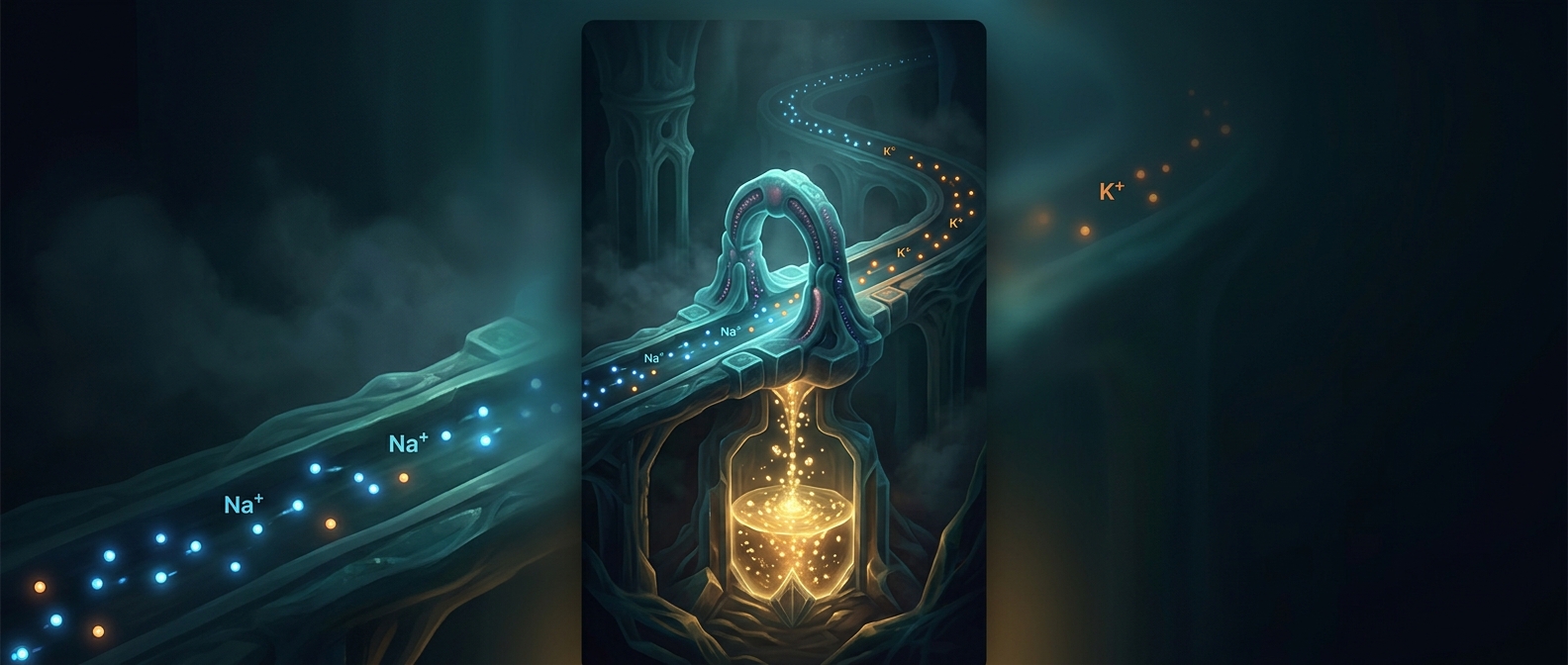
A sodium–potassium pump is a protein embedded in a cell’s outer membrane. It does not simply let ions drift where they are most concentrated: it uses energy from ATP, the cell’s immediate fuel, to move them against that natural flow. Each cycle sends three sodium ions out and brings two potassium ions in.
That uneven exchange maintains different concentrations on the two sides of the membrane. Because the ions carry electrical charges, it also helps make the cell’s interior electrically negative relative to its surroundings. The pump is therefore less like a door left open than a powered turnstile that preserves a useful imbalance.
The gradient does work elsewhere
That imbalance is stored potential. When a nerve cell sends a signal, channels in its membrane briefly open and sodium rushes inward, changing the cell’s voltage. Potassium then moves out as the signal passes. The pump’s ongoing work restores the original distribution so the cell can signal again.
Muscle cells rely on the same electrical changes to trigger contraction. The sodium gradient also helps drive other transport: some proteins use sodium’s movement back into a cell to carry substances such as glucose along with it. In this way, one pump helps power several kinds of cellular activity.
Why the bill adds up
A single pump is microscopic, but cells contain many of them, and active tissues must keep their ion gradients ready even between signals. The brain, muscles, and kidneys all have substantial demands for this kind of transport. Across the body, maintaining these gradients accounts for a significant share of energy use—often summarized as roughly a fifth of calorie expenditure.
The cost is continuous because the gradients are continually being spent: ions leak or move through channels, and the pumps rebuild the difference. That molecular upkeep is what lets a nerve fire again, a muscle respond, and a cell keep its internal chemistry distinct from the fluid around it.