The sacral chakra links desire with creative flow
In chakra teachings, the second energy center is commonly called Svadhisthana, a Sanskrit name often translated as “one’s own dwelling.” It is placed in the lower abdomen and associated with water: a symbol for feelings, attraction, pleasure, and the capacity to adapt. This is a spiritual map of human experience, not a physical organ or a measurable source of energy.
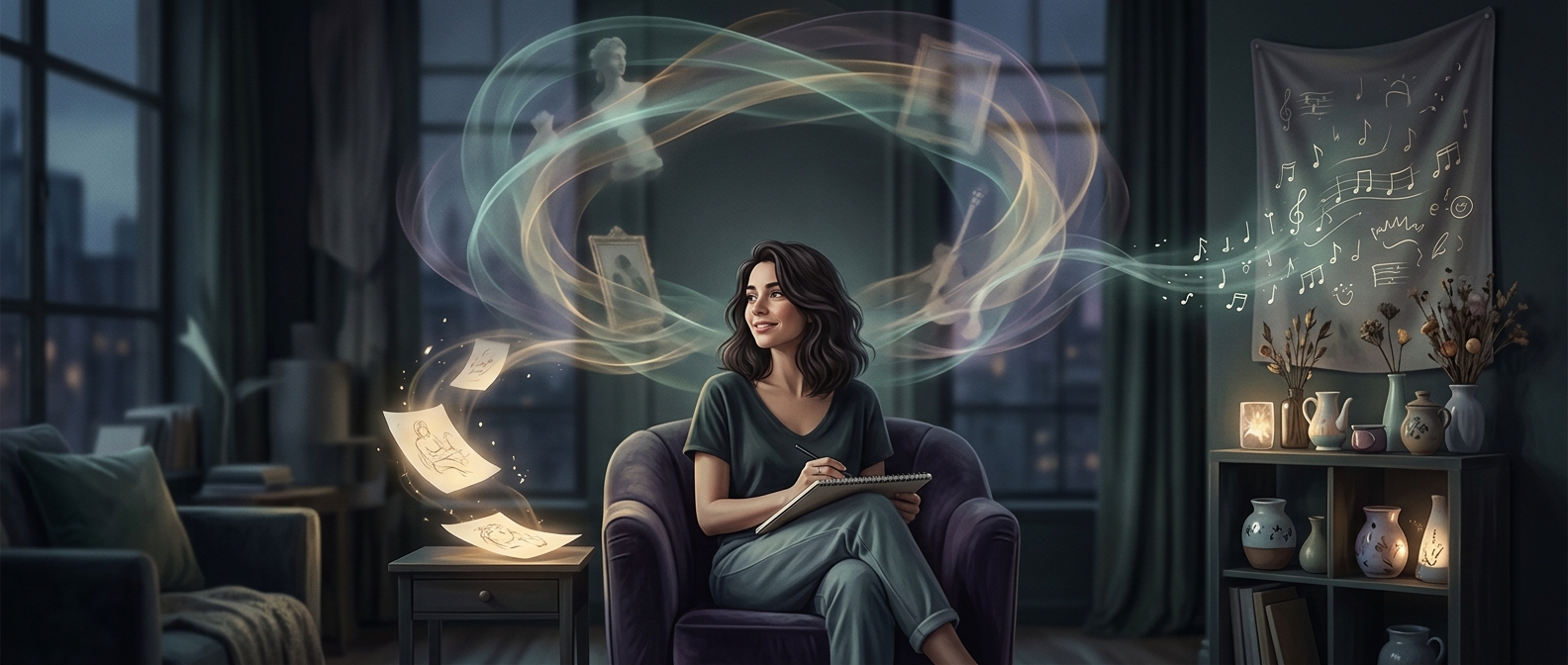
The connection to artistic inspiration follows the same logic as the connection to desire. Both involve being moved by something—an image, a person, a sensation—and wanting to respond. In this framework, creative work and romantic choices draw on a shared field of appetite and emotion. The “battery” metaphor points to intensity, not a literal charge.
When feeling becomes impulse
A balanced sacral center is often described as allowing pleasure and emotion without being ruled by them. Its supposed imbalance can look like either suppression—avoiding intimacy or creative risk—or excess, such as chasing novelty and acting before considering consequences. That makes the chakra a prompt for self-reflection: Is this desire helping me make something meaningful, or pushing me toward a choice I may regret?
The idea’s practical appeal is that it treats art and relationships as connected expressions of vitality rather than separate compartments. Whether or not someone accepts the chakra system, the metaphor offers a memorable distinction: feeling a strong urge is not the same as deciding what to do with it.