The nodes are crossing points, not celestial bodies
The Moon’s orbit is tilted slightly relative to the apparent path the Sun traces across the sky, called the ecliptic. The two paths meet at two points: where the Moon crosses northward and where it crosses southward. Those are the lunar nodes. They are calculated positions, not planets or objects in space, and they always sit opposite each other in an astrology chart.
Their astronomical role is tied to eclipses. A new or full Moon can produce an eclipse only when the Moon is near one of these crossings; otherwise, the tilted orbit carries it above or below the Sun’s path.
Why astrologers read them as an axis
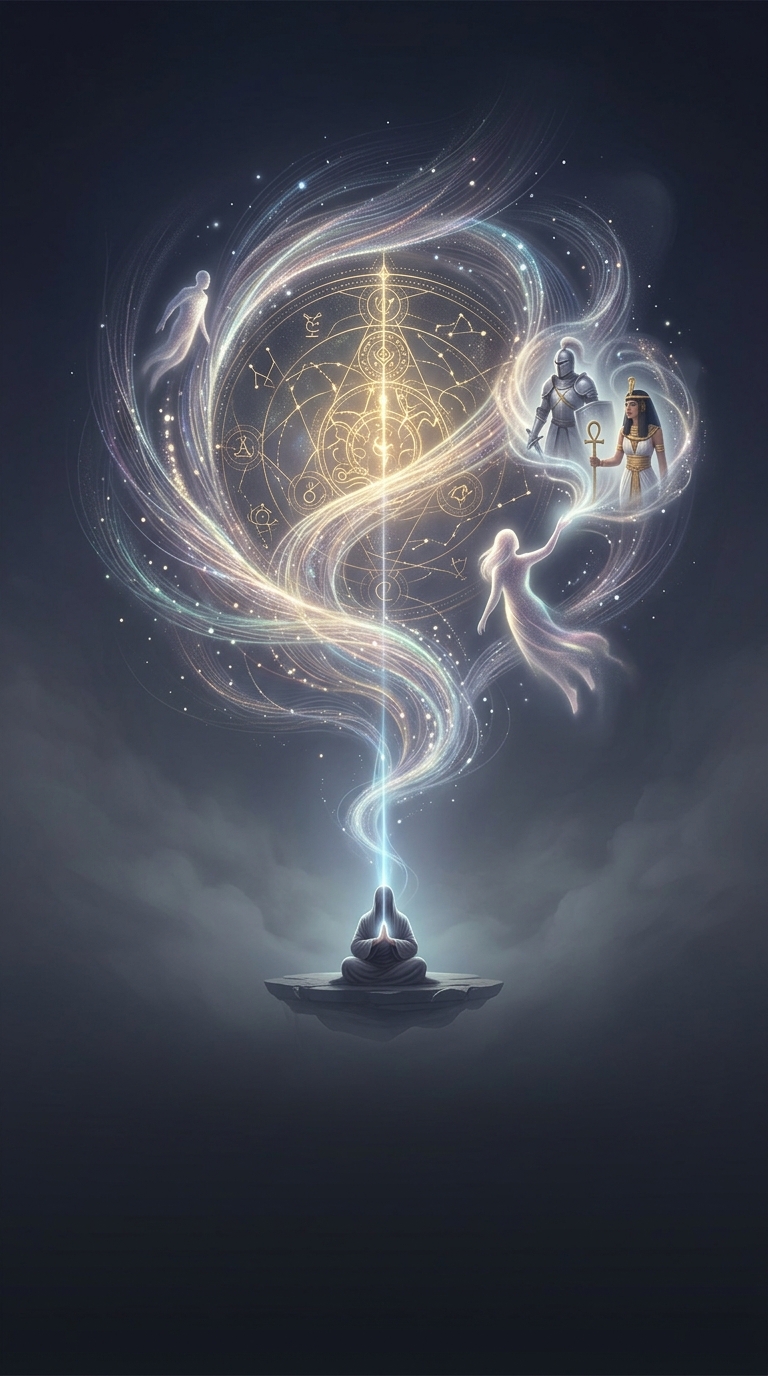
In karmic astrology, the nodes are interpreted together rather than as separate destinations. The South Node is treated as a storehouse of familiar patterns—often described through the language of previous lives—while the North Node represents qualities or experiences a person is encouraged to develop. The opposition gives the reading its shape: what feels instinctive is set against what may feel unfamiliar but growth-oriented.
This makes the nodes less like a promise of cosmic reward than a framework for interpreting tension. An astrologer might read a chart’s signs and houses—the chart sections associated with areas of life—to suggest where a person leans on old habits and where they might stretch beyond them. The astronomical points supply the geometry; the ideas about karma and personal purpose come from astrology’s symbolic tradition.