A Soul That Could Outlast Its Body
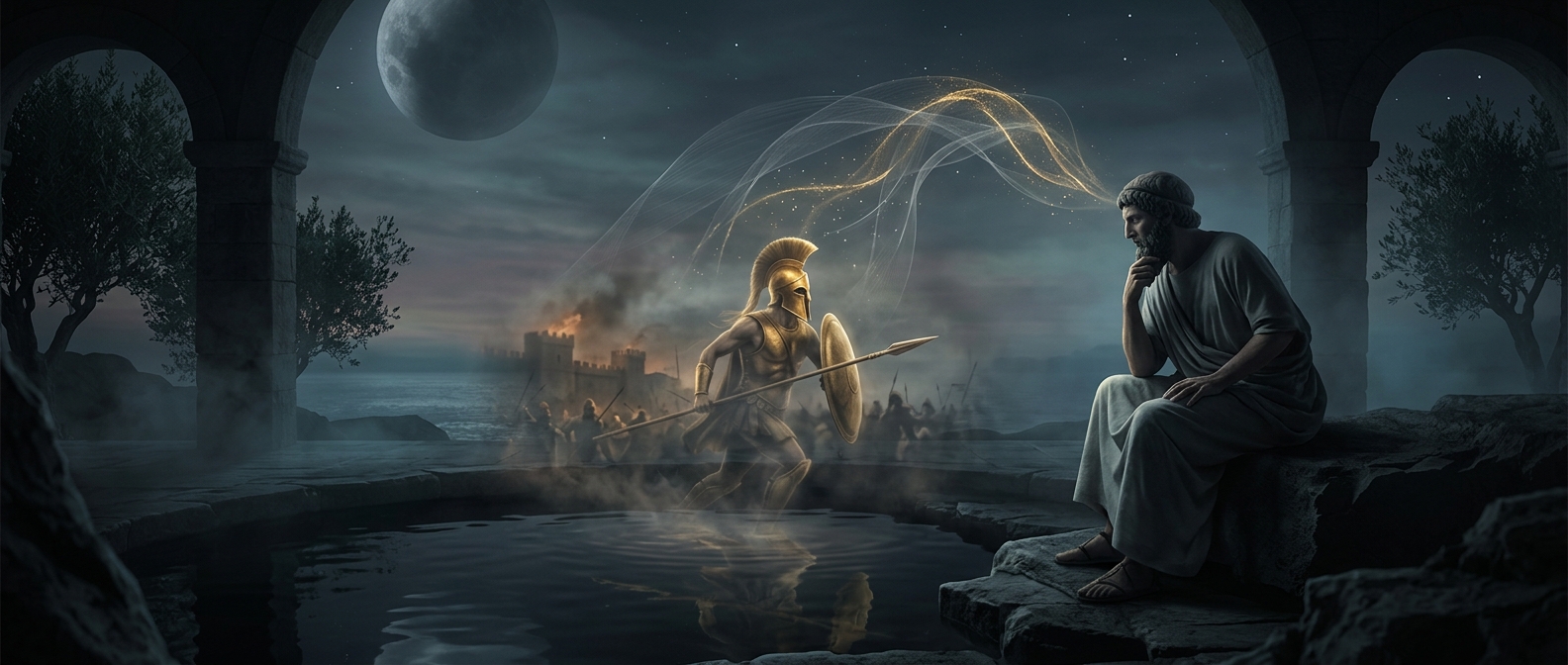
Pythagoras’s reported memory of fighting at Troy was part of a larger idea: the soul did not end when a body died. It could pass into another body, a belief often called transmigration of souls. In this view, a person’s present life was one episode in a much longer existence.
That made identity more complicated than a name or a face. The body changed, but the soul was imagined as the thread connecting different lives. Ancient accounts say Pythagoras identified his earlier self as Euphorbus, a Trojan warrior killed by Menelaus in the Iliad.
Recognition Across Centuries
The story’s memorable test was physical: Pythagoras was said to have recognized Euphorbus’s shield at a temple. The object supposedly linked a philosopher in the Greek world to a warrior from epic poetry. It turned an invisible claim about the soul into a scene of recognition—someone encountering a relic from a life he said he had lived.
These details come through ancient reports, not a surviving account written by Pythagoras himself. The story is best understood as part of how later writers portrayed his teachings and reputation, rather than as independently verifiable biography.
Why the Idea Mattered
If a soul could inhabit different bodies, the boundary between one life and another was less final. Later traditions associated with Pythagorean teaching connected this idea with restraint toward animals: harming an animal might mean harming a being whose soul had once belonged to a human, or could do so in the future.
The Trojan-war memory therefore did more than give Pythagoras an extraordinary personal story. It made the persistence of the soul imaginable as a specific past—complete with a battlefield, a fallen warrior, and a shield that supposedly survived long enough to be recognized.