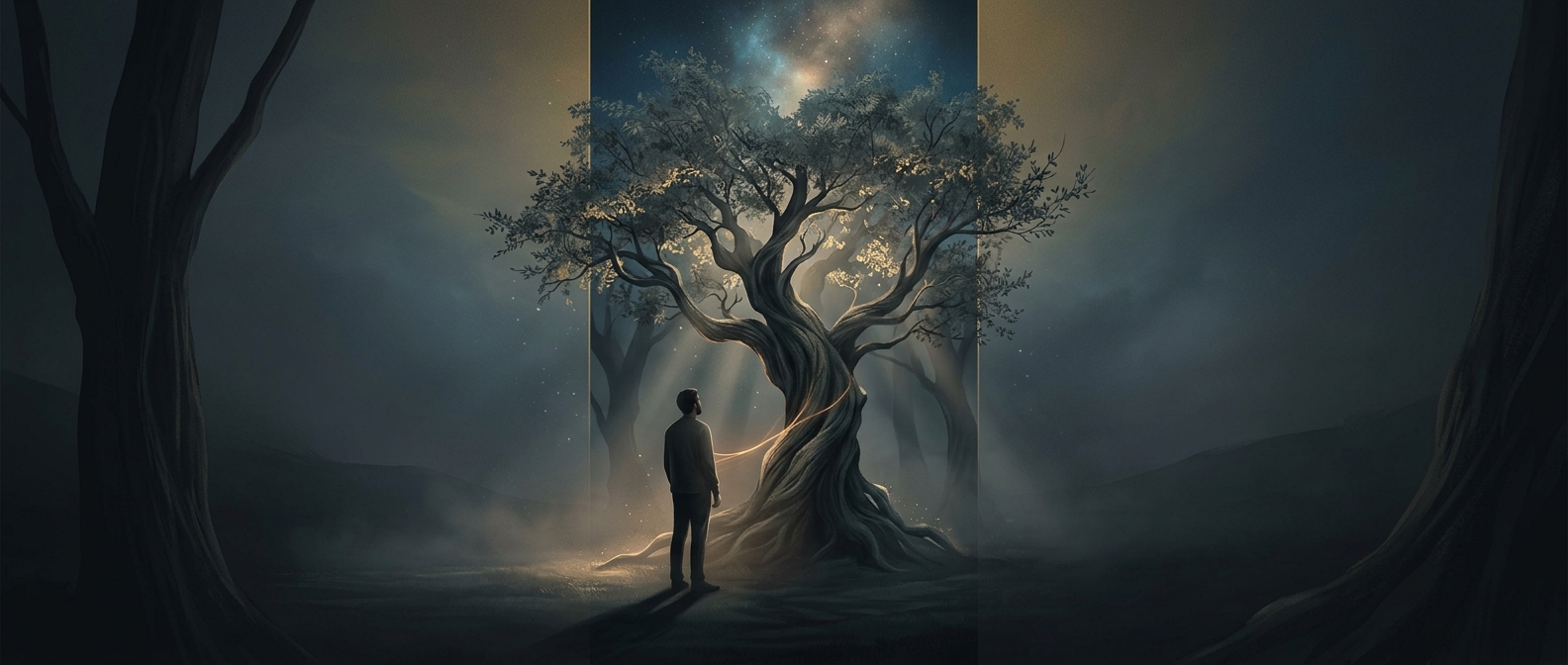
A tree can be more than something to look at
In I and Thou, Martin Buber uses an encounter with a tree to show two different ways of meeting the world. We can notice and describe it—its shape, species, or usefulness. Buber calls this an I–It relation: the tree is something we experience, classify, or use.
But, he argues, a person can also meet the tree as a presence rather than reduce it to a collection of facts. In an I–Thou relation, “Thou” means the other is addressed as a whole, not handled as an object. Buber is not claiming that a tree speaks or has human thoughts. The point is that the quality of the encounter changes when attention is directed toward the living thing itself, rather than only toward what can be known or gained from it.
Why the tree matters to human relationships
The distinction is not simply between thinking and feeling. We need practical, analytical ways to deal with the world; an I–It relation is unavoidable. The danger, for Buber, is letting it become the only way we relate. When another person is treated only as a role, a problem, or a means to an end, the encounter loses the reciprocity that makes it a meeting between persons.
The tree offers a small-scale example of that shift in attention. It makes an abstract philosophical idea tangible: the difference between collecting information about something and becoming present to it. Buber extends this possibility to relationships between people and, ultimately, to the divine—not as a formula for proving God, but as a way of describing a direct, relational encounter.
That is why the tree is more than a poetic image in the book. It asks whether, even in an ordinary moment outdoors, we are meeting what is before us—or merely turning it into an object for our purposes.