What “darkness” means in the Kali Yuga
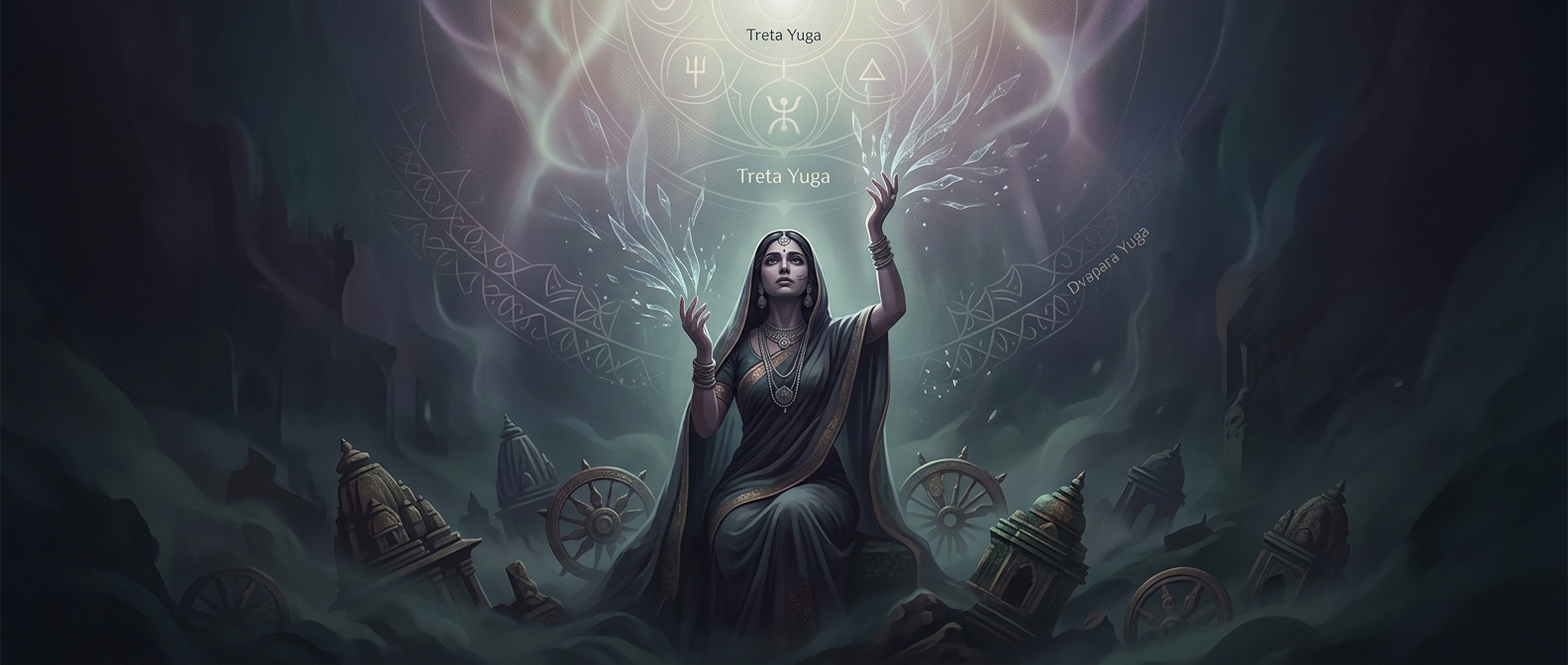
In Hindu cosmology, a yuga is an age within a vast cycle of time. The Kali Yuga is commonly described as the final and most troubled age in a four-age sequence: as the cycle progresses, dharma—the order, duty, and moral conduct that sustain life—is said to weaken. “Darkness” therefore points chiefly to spiritual and ethical decline, not necessarily to a literal end of the world.
The name can be confusing: Kali Yuga refers to an age associated with strife and discord, not simply to the goddess Kali. Accounts differ across Hindu texts and traditions, including how the ages are calculated and when they begin. Many traditions identify the present as Kali Yuga, but that is a religious cosmological understanding, not a claim shared by every Hindu community.
A bleak age with a practical implication
The cycle offers a way to interpret a world where greed, conflict, and neglect of duty seem unusually powerful. It can make present troubles feel like part of a larger pattern rather than isolated failures. Some teachings also emphasize that spiritual practice remains possible in this difficult age; decline does not mean that goodness has vanished or that people have no agency.
That combination is the striking point: Kali Yuga describes a world tilted toward disorder, while still leaving room for choices that resist it.