Dvapara Yuga and the Decline of Spiritual Capacity
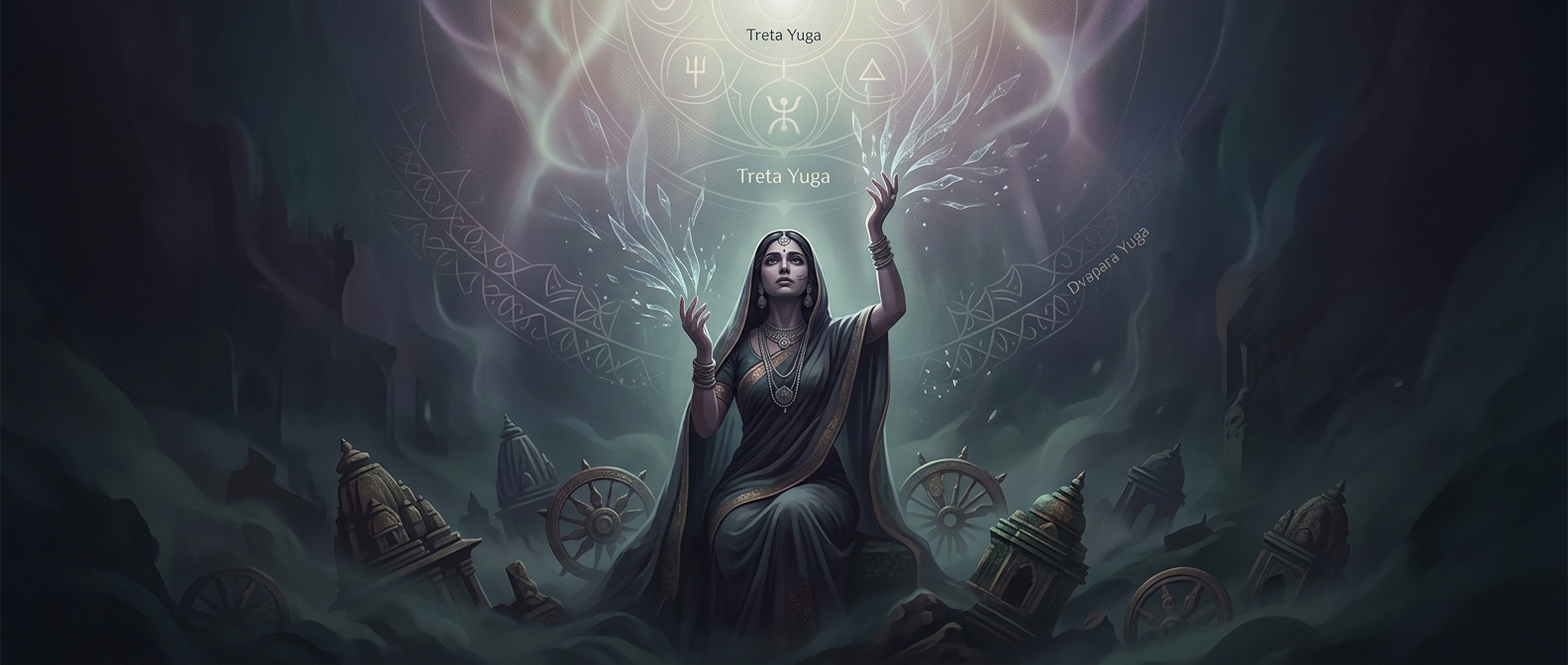
In Hindu cosmological traditions that describe time as a cycle of four yugas, or world ages, Dvapara Yuga is the third age. It follows the more spiritually complete Satya Yuga and precedes Kali Yuga, the age associated with the greatest decline. The cycle presents spiritual life as something that becomes harder to sustain as an age progresses.
Saying that people in Dvapara Yuga retain half their spiritual capacity is not a claim about a measurable human faculty. It expresses a traditional picture of diminished access to truth, discipline, or direct awareness of the divine. The loss is gradual: people still seek spiritual life, but can no longer rely on the effortless closeness attributed to the earliest age.
Why Temples Matter in This Age
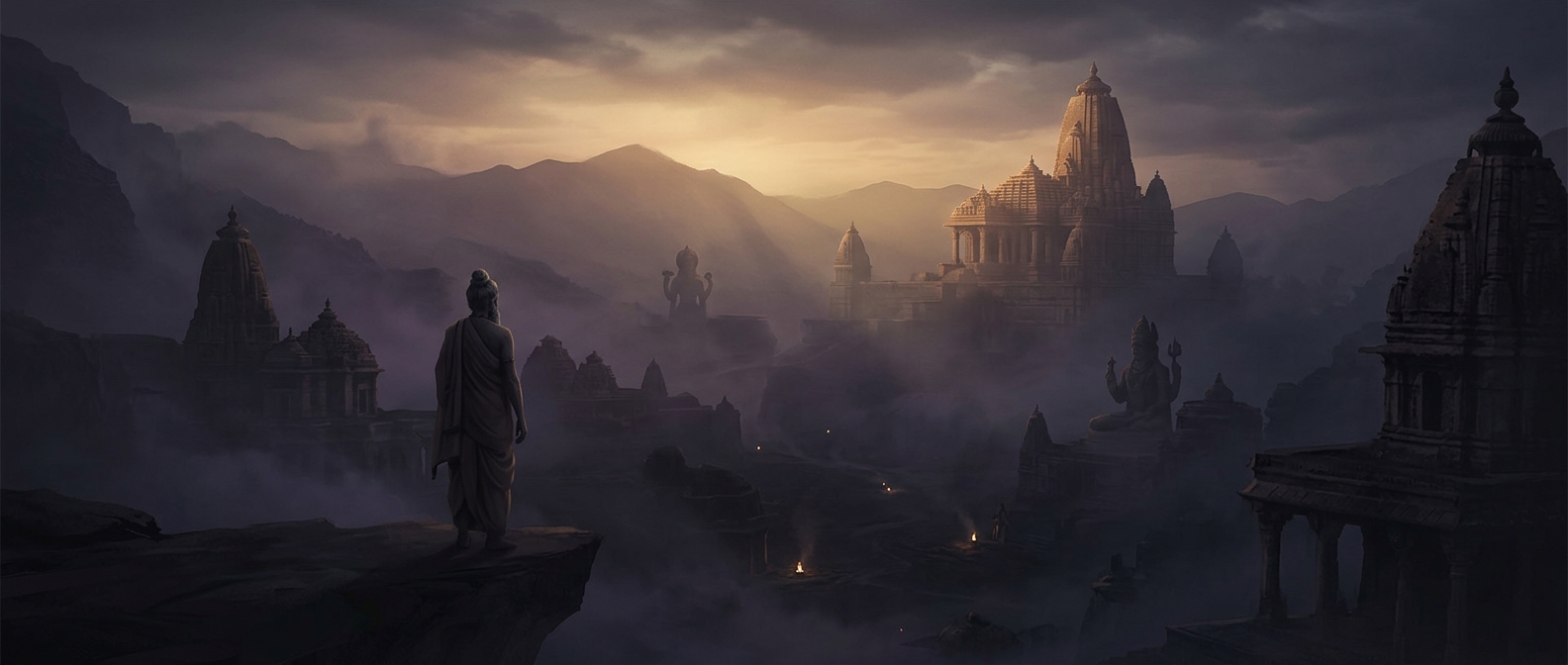
That change helps explain the role assigned to temples. Rather than encountering the divine through an unmediated inner experience, people are said to depend more on shared practices: approaching a sacred image, taking part in ritual, and gathering in a consecrated place. A temple makes devotion tangible and repeatable, offering a setting where individuals can direct attention and participate in religious life together.
The idea is therefore not simply that people become less spiritual. As spiritual access is imagined to weaken, religious practice becomes more structured and embodied. In this account, the temple is a response to the conditions of the age: a place that helps sustain connection when direct realization is no longer assumed to come naturally.