Why Treta Yuga marks a change in the cosmic order
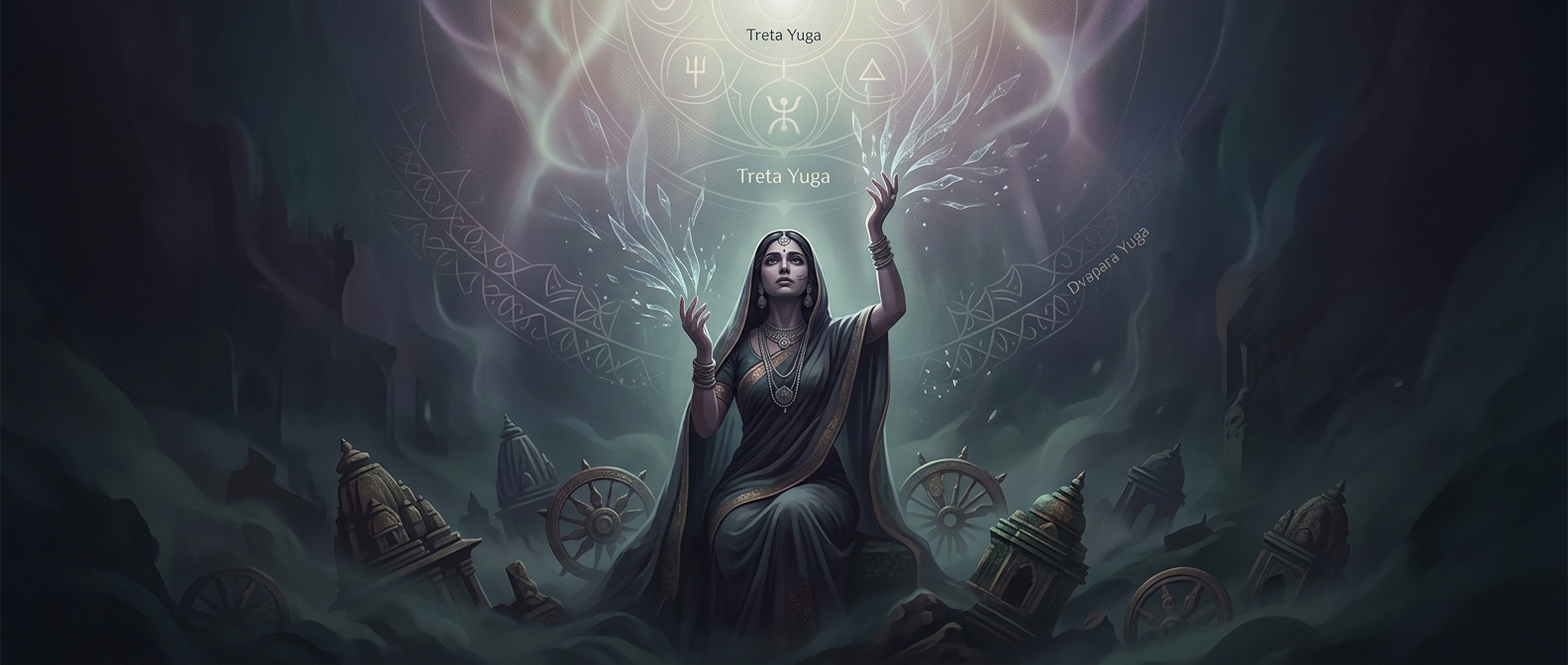
Hindu accounts of the four yugas describe not just successive periods of time but a gradual weakening of dharma—a word that can mean moral duty, right conduct, and the order that sustains the world. Treta Yuga is the second age, following the age of fullest virtue. Its name is often connected with the image of dharma standing on three of its four legs: goodness remains, but it is no longer complete.
The lost quarter is not usually treated as a sudden catastrophe. It signals that people can no longer be expected to act rightly as effortlessly as before. Desire, conflict, and error have more room to shape ordinary life.
Why ritual becomes more important
In this cosmological picture, ritual offers a disciplined way to uphold order when personal virtue is less dependable. Prescribed rites—especially offerings made according to established procedures—link human actions to duties toward the gods and the larger world. Their precision matters: the ritual is not merely a private expression of belief, but a practice meant to maintain relationships and obligations.
That shift gives Treta Yuga its distinctive tension. Order can still be preserved, but it requires deliberate effort and inherited forms of practice rather than resting wholly on people’s natural goodness. The age therefore makes ritual both a religious discipline and a sign of a world in which virtue has become harder to sustain on its own.