Why Past-Life Stories Are Often Linked to Early Childhood
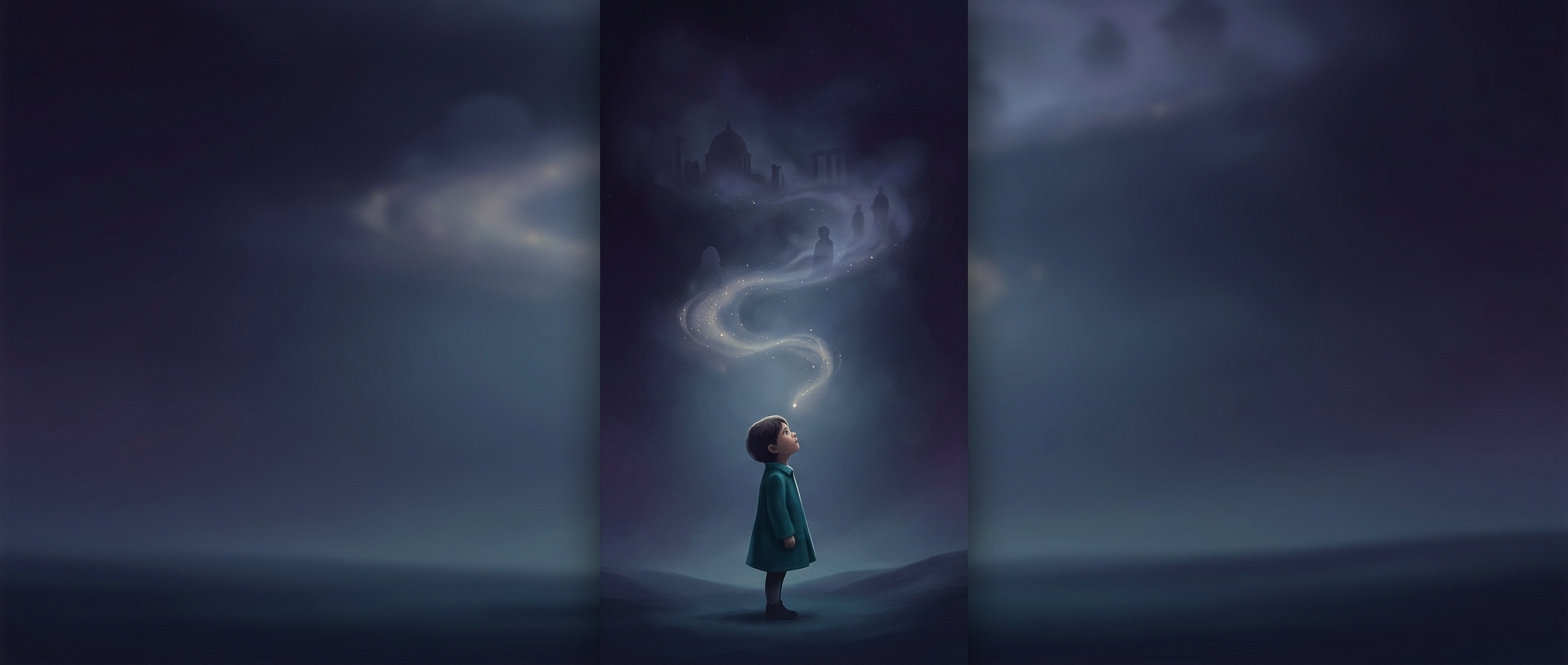
Accounts of supposed past-life memories often describe very young children speaking about another identity, a former home, or a death. In traditions that take reincarnation seriously, these statements can be understood as memories carried from one life into another. The detail that they tend to fade by around age five gives the stories a particular shape: a child seems to remember vividly, then gradually stops bringing it up.
That timing also matters because early childhood is when a person’s ordinary autobiographical memory—the ability to recall events as part of a personal life story—is still developing. Young children can remember experiences, but their accounts may be fragmentary and change as they grow. This helps explain why early recollections can be hard to preserve in a stable form; it does not, by itself, establish where any particular memory came from.
How a Memory Can Fade From the Family Story
A child may stop mentioning a story as attention shifts to new people, routines, and experiences. Adults may also ask about it less often, especially when the child no longer seems interested. Over time, the original remarks can become difficult to separate from later conversations about them. Families who interpret the account as a past-life memory may see its fading as part of the phenomenon, rather than as a reason to dismiss what the child once said.
The result is a brief window: a striking claim may be remembered by relatives long after the child has moved on. That gap between an early statement and a later adult recollection is one reason these stories are compelling—and why the child’s original words and the family’s interpretation are important to distinguish.