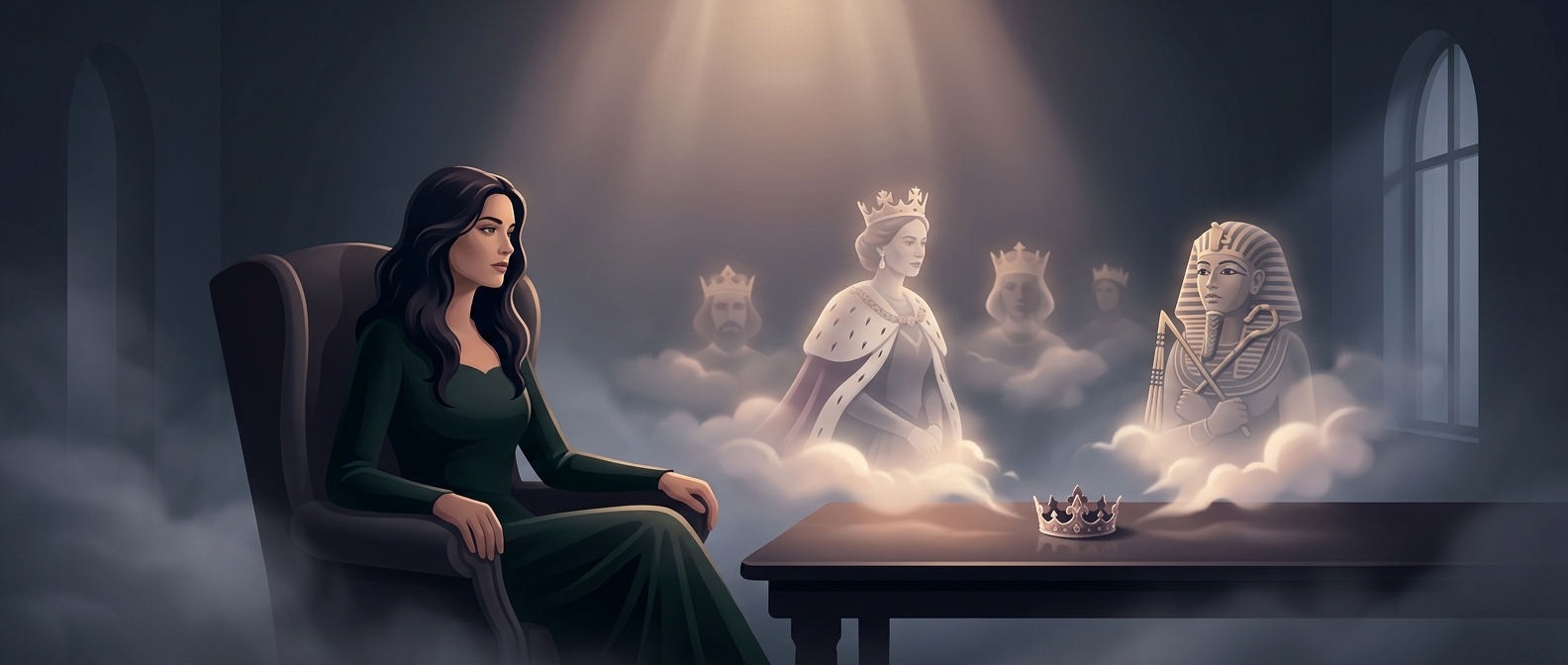
Why past-life stories often come with a title
In Western hypnotic past-life regression, people may describe themselves as Egyptian priestesses, medieval knights, or other memorable figures. These accounts draw on images that already carry strong stories: temples, armor, courtly rank, and dramatic historical settings. An ordinary life—whose details may be harder to picture—offers fewer ready-made scenes to recount.
Status can also make a remembered identity feel especially vivid. A person who imagines being a queen or warrior has a clear role and a plot: duties to perform, dangers to face, and a world to inhabit. That does not mean the account is consciously invented; it helps explain why certain kinds of past lives make compelling narratives.
What hypnosis contributes
Hypnosis can make a person absorbed in images and ideas, but it is not a device for replaying an independently verified record of the past. In regression, a practitioner’s questions and the participant’s expectations help shape what comes to mind. Familiar books, films, school lessons, and cultural stories can supply the setting and characters, while imagination fills in missing details.
For people who believe in reincarnation, the resulting experience may carry spiritual meaning. Its vividness, however, does not by itself establish that the person held that identity in another life. The striking detail is how readily a past-life account can arrive already cast as a story—with a recognizable role, a dramatic setting, and a name worth remembering.