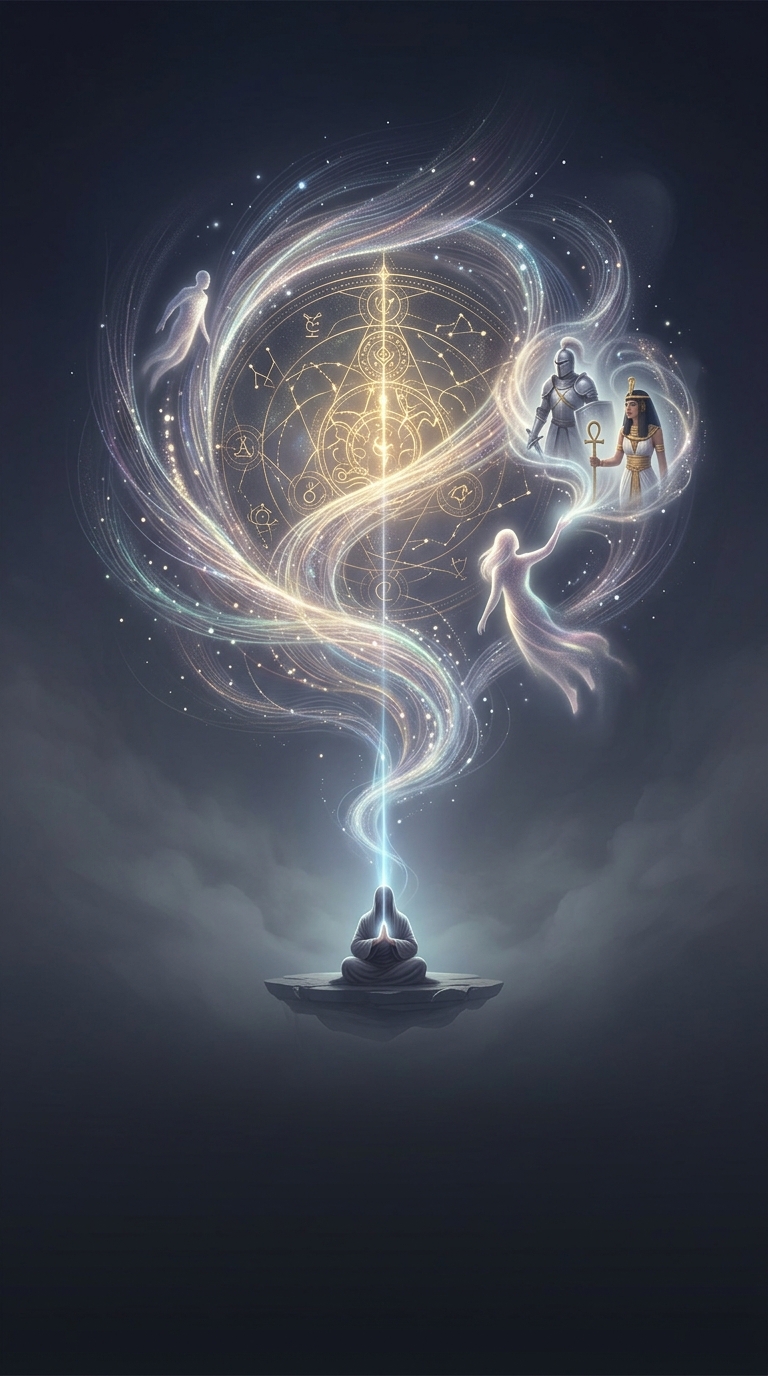
From “Akasha” to a cosmic archive
Theosophists gave an older Sanskrit word a distinctive modern occult meaning. Akasha can refer to space or a subtle element in Indian philosophical traditions; it did not originally mean a universal library containing biographies of every soul. In Theosophical writing, the idea was reshaped into an invisible medium that could preserve events and impressions beyond ordinary memory.
That shift turned a broad metaphysical concept into a kind of cosmic record. If thoughts and actions leave traces in a subtle plane, then the past need not vanish completely: it might remain available to someone able to perceive that plane.
Why the idea appealed
The Records offered a way to imagine personal history as part of a larger spiritual order. A life could be understood not as an isolated stretch of time, but as one chapter in a continuing journey across lifetimes. In this framework, meditation was more than quiet reflection; mystics described it as a means of refining perception enough to reach knowledge unavailable to the ordinary senses.
Later occult and New Age writers helped make “Akashic Records” a familiar name for this spiritual archive, often presenting access as a form of intuitive reading. The concept remains a matter of religious and esoteric belief, not an established method for retrieving verifiable historical information. Its lasting appeal lies in a vivid promise: that no experience is entirely lost, because the universe itself remembers.