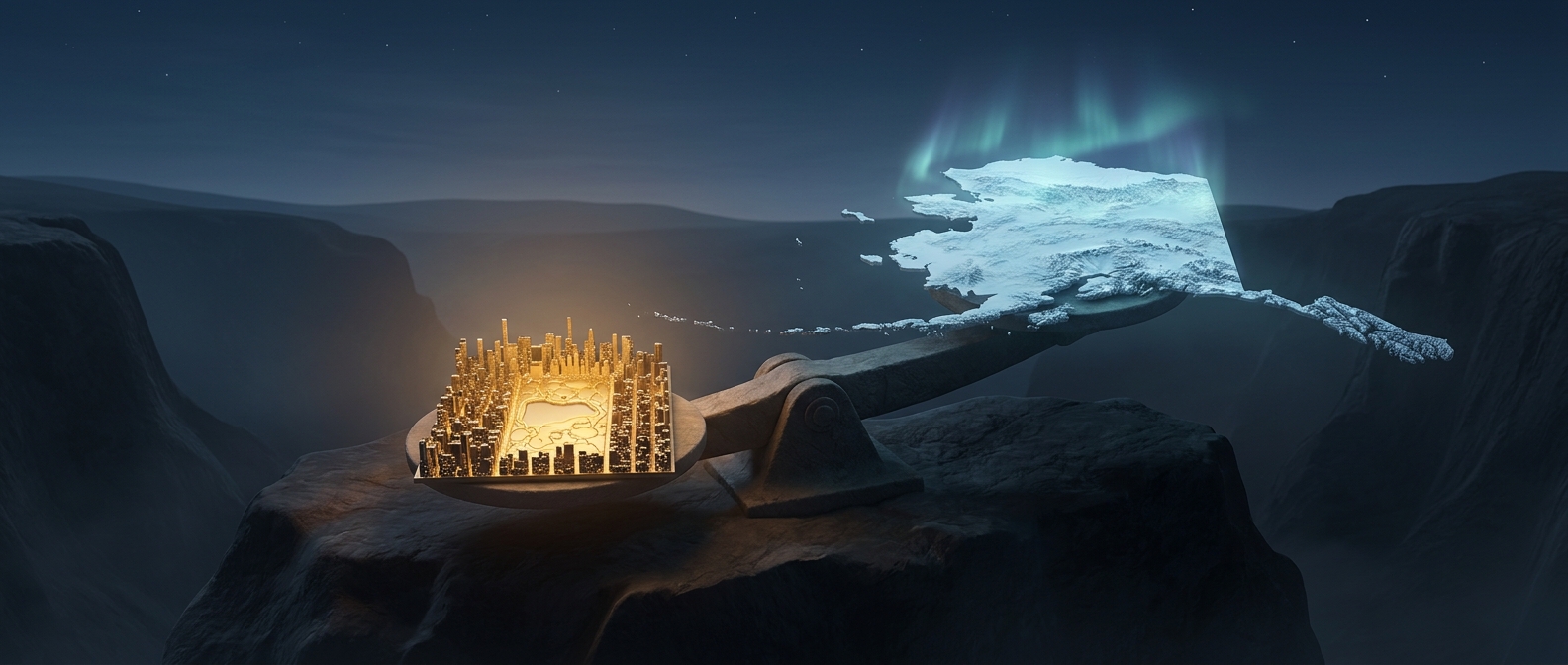
Why Central Park’s land can command a Manhattan-scale estimate
The striking figure is a measure of location and opportunity cost, not a price tag for a park that is actually for sale. Central Park occupies a large, continuous stretch of Manhattan, where land is scarce and nearby property is valuable. An estimate based on surrounding real-estate values asks what the ground might be worth under a different use—not what the public could collect by selling the park as it exists.
That distinction matters because the park’s value depends on keeping it intact. Its paths, lawns, reservoirs, and wooded areas serve millions of visitors and provide open space amid dense development. Splitting the land into building lots would erase the very feature that makes Central Park useful and recognizable.
Two radically different kinds of land value
Alaska’s vast acreage and Central Park’s compact footprint invite an eye-catching comparison, but they describe different economic situations. Alaska’s purchase price covered an enormous territory; Central Park’s estimate reflects a small parcel in one of the world’s most valuable urban settings. Acreage alone cannot explain either figure.
The comparison makes the urban land premium vivid: a relatively small patch of Manhattan can carry an enormous hypothetical value because so much demand is concentrated around it. Yet the park’s most consequential worth is not captured by a sale estimate. Its land remains valuable to New York precisely because it is reserved for shared public use rather than put to its most profitable private use.