A square becomes a neighborhood dance floor
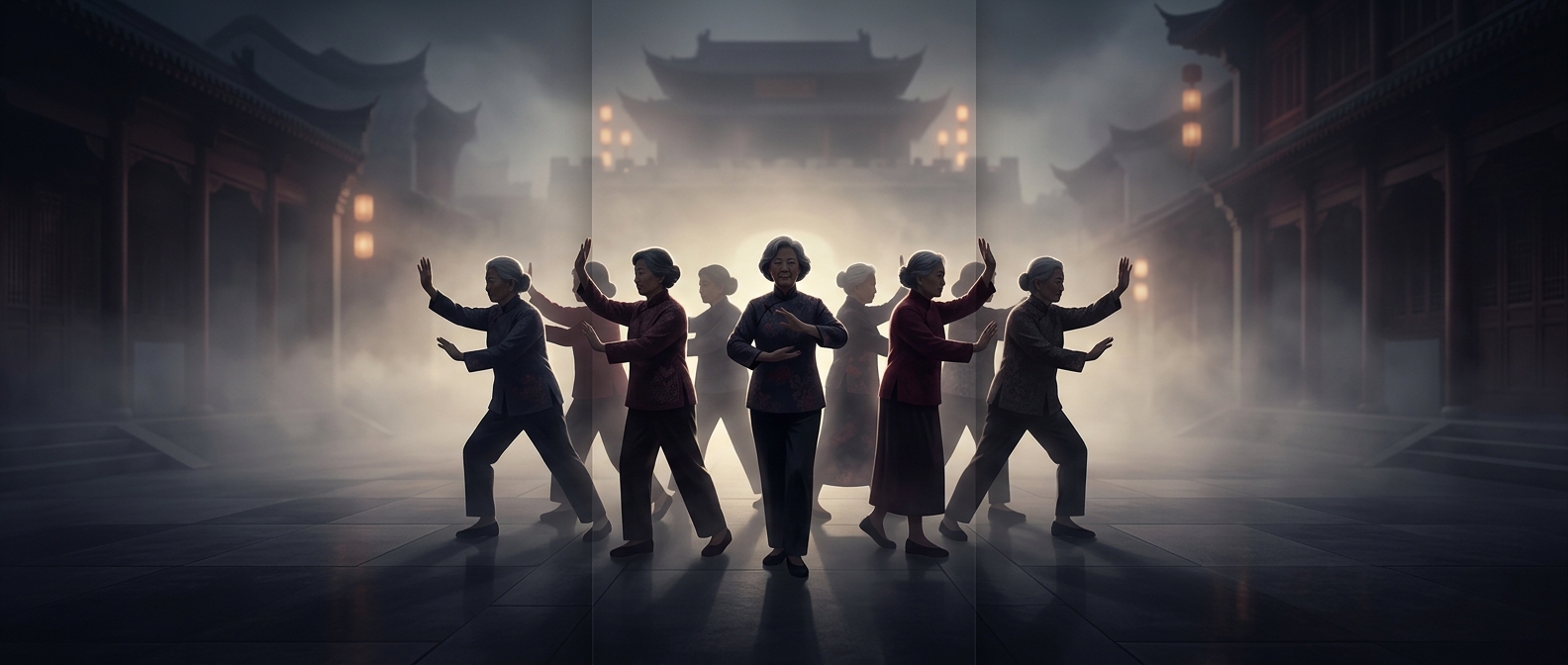
In many Chinese cities, a public square is not just a place to pass through. Its open, level ground gives neighbors room to gather without reserving a venue or paying for a class. After daytime use gives way to evening, groups may arrive with a speaker and repeat a practiced routine together. The activity is often called guangchang wu, meaning “square dancing.”
For older women, the format makes exercise social: familiar steps can be learned and repeated in a group, while the same time and place bring people together regularly. The square’s everyday accessibility is part of the appeal. There is no formal boundary between audience and participants; the dancers occupy a shared civic space.
Why crossing through can cause friction
Synchronization depends on keeping a little room around the group and hearing the music. Someone cutting across the dancers can interrupt the routine, which helps explain why a passerby may be challenged. But the square is also a route and gathering place for others. Loud speakers and competing claims on the same open space can turn a convivial evening activity into a neighborhood negotiation.
That tension is part of what makes the scene distinctive to visitors: the square is not merely scenery. It is being used, in real time, as exercise space, meeting place, and public stage.