A Small Fold, a Personal Visit
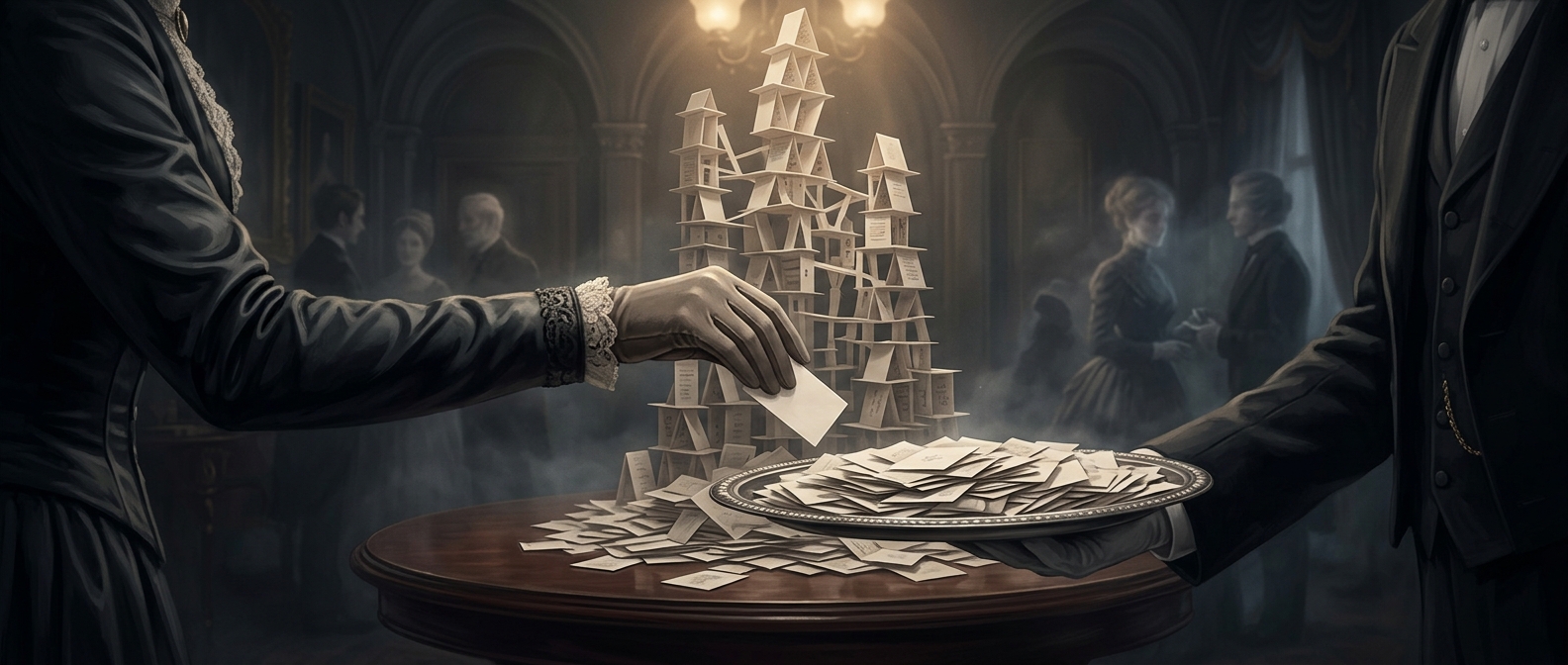
In the age of calling cards, a visitor did not always meet the person whose home they had come to. A card could be left at the door and carried inside by a servant, announcing the caller and recording the visit without requiring a conversation. Turning up one corner marked a different kind of delivery: the visitor had brought the card in person.
Etiquette at the Threshold
The fold made a quiet distinction between sending one’s name and appearing oneself. In a social world organized around formal calls, that difference mattered. The card told the household who had called; its bent corner added a small piece of context about how the call had been made.
This was useful precisely because the exchange could be brief. A caller might leave a card when the household was unavailable or when a visit was meant to be formal rather than social. The mark let the recipient read the card as more than a name on paper: someone had personally come to the door.
Paper as a Record of Social Contact
Calling cards turned visits into visible, manageable acts of etiquette. They could be delivered, received, and kept as reminders of who had called. A single altered corner carried information that otherwise might have been lost between the doorstep and the person inside—a tiny record of presence, made by folding the card itself.