Why Floor Cushions Can Disrupt a Room’s Calm
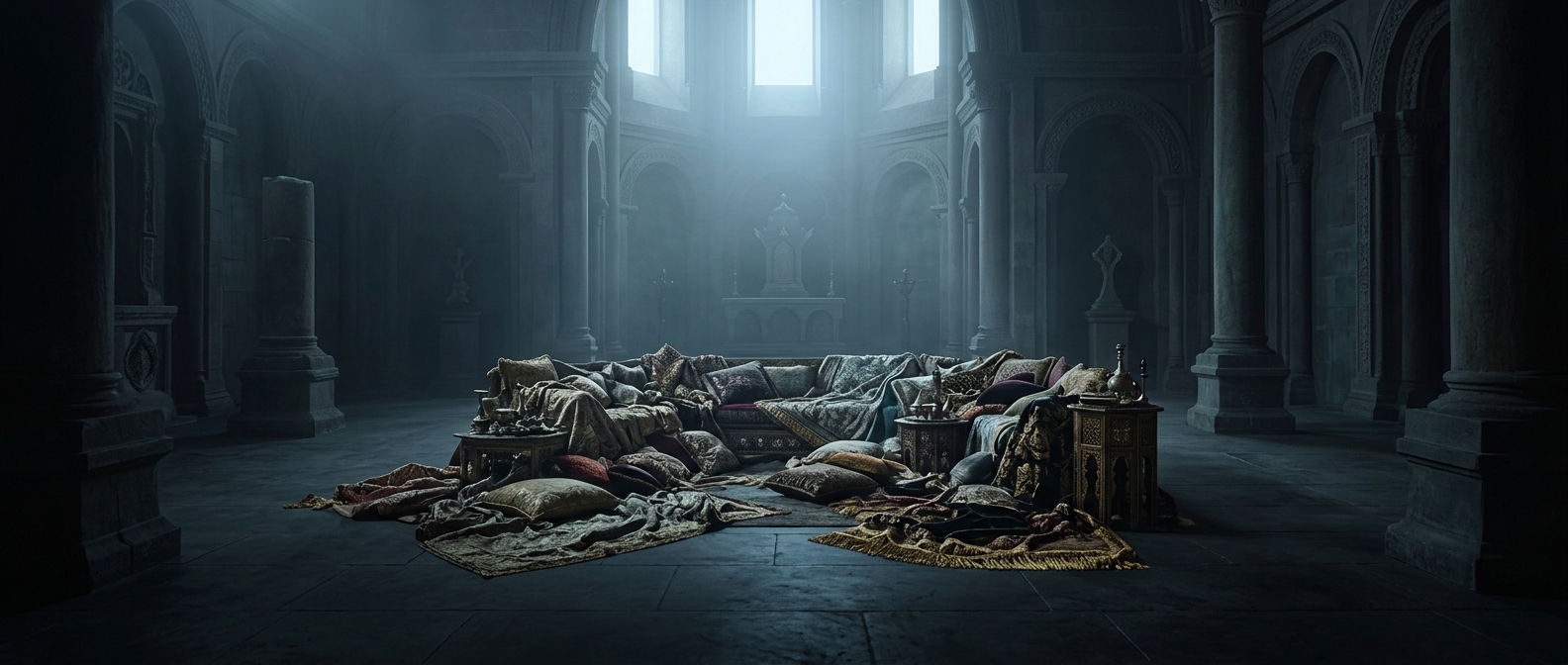
Floor seating changes a room’s visual balance. Unlike chairs, which hold their shape and keep a clear outline, cushions slump, tilt, and spread when people use them. If they vary in size, fabric, or color—or are left scattered after sitting—the eye has no simple pattern to follow. The space can read as a collection of objects rather than a place arranged for quiet.
Shape and Placement Matter More Than Quantity
A few cushions can still feel deliberate when they share a palette and sit in a defined arrangement, such as a neat circle around a low table. Matching covers create a visual rhythm; a basket or stack gives unused cushions a home. By contrast, oversized, overstuffed cushions can dominate the floor and blur the room’s open areas, even when there are only several of them.
The practical tradeoff is that floor seating needs to be comfortable enough to use but easy to reset. Firmer cushions with consistent proportions tend to keep their outline better, while a simple storage spot makes it possible to clear the floor when the seating is not in use. A calm retreat depends less on having no cushions than on making their placement look intentional.