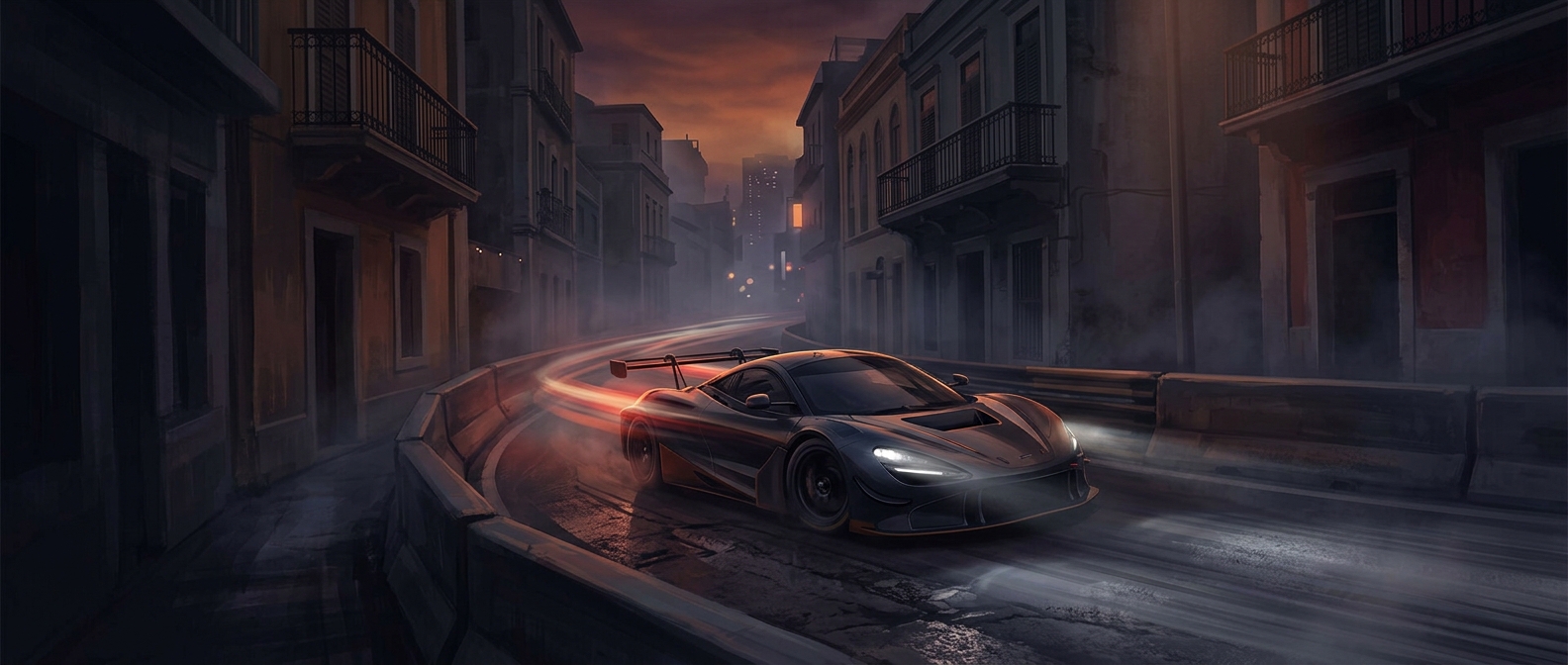
A street layout becomes a racing problem
The Guia circuit is not a purpose-built track with wide paved margins and gravel traps. It uses public streets whose bends, slopes, and available width were set by the city, then closes them for racing and lines the course with protective barriers. That leaves drivers to adapt to the road rather than reshape it for the cars.
The course’s challenge comes from its changing rhythm. Fast sections reward carrying speed, but they lead into tight turns where a driver must brake precisely and place the car close to the inside edge. A small mistake can spoil the next turn—or bring the car into a barrier—because there is little open pavement in which to recover.
Why precision matters more than aggression
On a conventional circuit, a driver who runs wide may still have room to slow down. On a narrow street course, the barrier is close enough that the same error can end a lap immediately. Drivers therefore balance pace against control: braking too early costs time, while braking too late can leave no safe path through the corner.
The barriers also shape how the circuit is raced. They make the usable line feel narrow, especially where the road bends or changes direction, and they leave little opportunity to pass without taking on extra risk. A car’s speed is only part of the equation; the driver must judge its position relative to the walls on every turn.
That is what makes the Guia circuit’s urban setting more than scenery. The city’s fixed street geometry turns ordinary decisions about braking and steering into high-consequence choices, with a barrier sometimes only a small correction away.