Why a Phone Can Delay the Brake
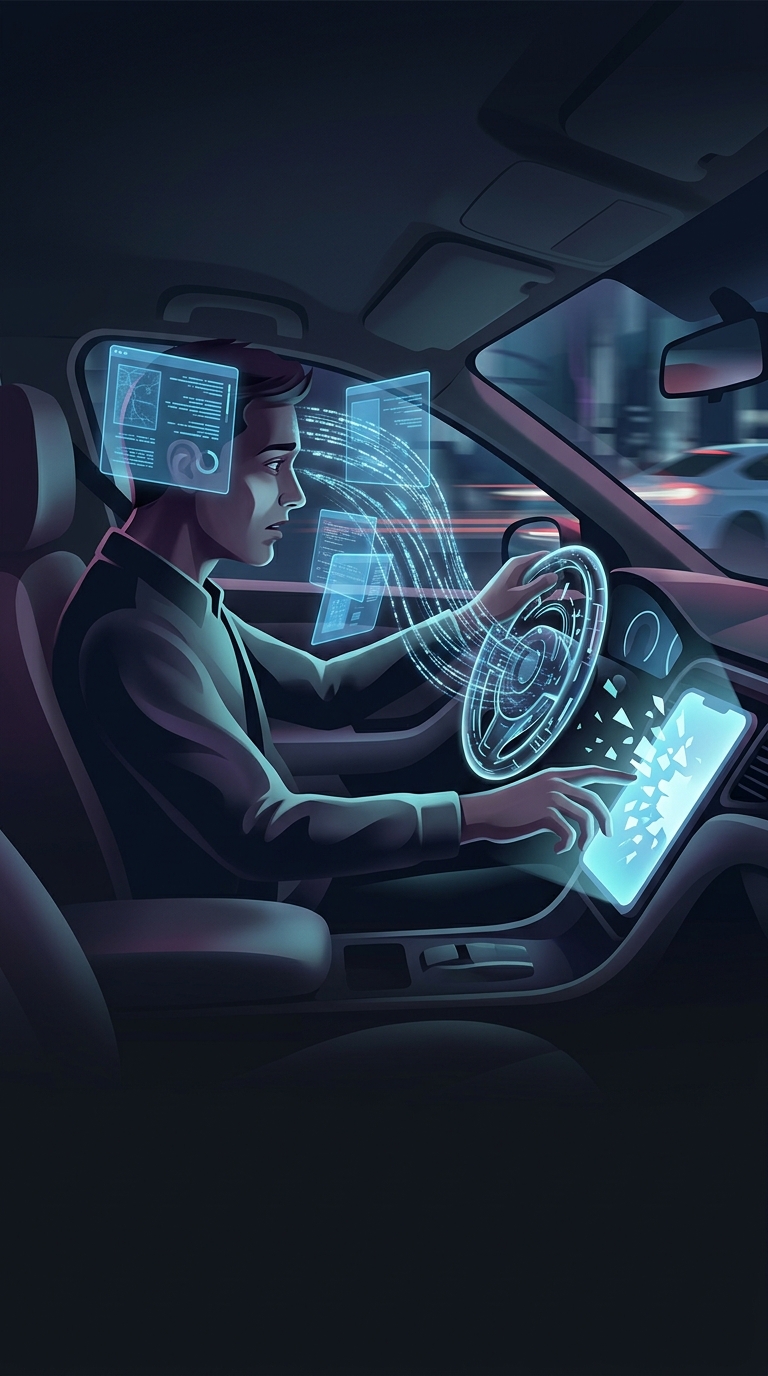
A driver can look at the road and still be distracted. A phone conversation occupies working memory—the mental capacity used to hold and process information—so the brain has less attention available to notice a hazard, decide what it means, and move a foot to the brake.
That delay is especially risky because braking does not begin the instant danger appears. The car keeps traveling while the driver recognizes the threat and reacts. At highway speed, even an extra second means many more feet pass before braking starts.
Hands-Free Does Not Mean Mind-Free
Holding a phone adds a physical distraction, and looking at its screen adds a visual one. But hands-free calls can still impose a cognitive distraction: following a conversation, choosing words, and anticipating a reply compete with the work of monitoring traffic.
The danger is not limited to an obvious emergency. A driver absorbed in a call may be slower to register that the car ahead is braking or that a pedestrian has stepped into the road. Because the driver may still be looking forward, the lapse can be harder to notice than a glance down at a screen.
The Delay Has Consequences
Reaction time is only one part of stopping distance; speed, road conditions, tires, and braking also matter. But a delayed response postpones the start of braking, leaving less room to avoid a collision. A phone’s convenience can therefore change a seemingly ordinary moment—traffic slowing, a light changing—into a situation with fewer seconds and fewer feet to spare.