Why the Open Lane Should Stay Open
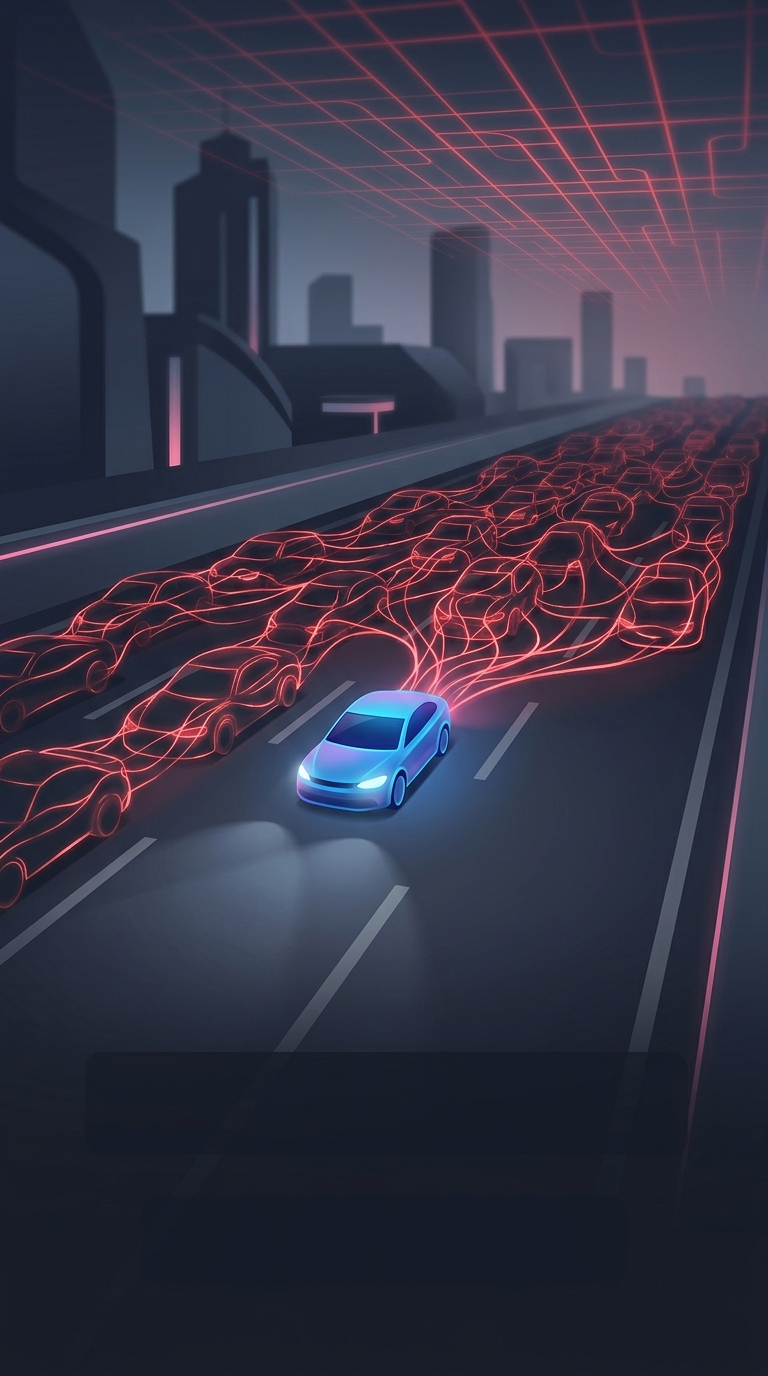
When a lane is about to end, drivers often move over as soon as they see the warning signs. That feels courteous, but it can leave one lane packed while the closing lane sits mostly empty. The result is a long, slow-moving queue that may stretch much farther back than the work zone itself.
Traffic engineers often recommend a zipper merge instead: drivers use both lanes up to the merge point, then take turns entering the remaining lane. Like the teeth of a zipper, vehicles from each lane join in sequence.
How Taking Turns Helps
The merge point is where the road’s full width finally becomes narrower. Keeping both lanes in use until then spreads the waiting vehicles across more pavement. That can shorten the visible backup and reduce the chance that it blocks an intersection, an exit, or another stretch of road upstream.
The merge does not create extra road space, and it cannot make a bottleneck disappear. Its advantage is organizational: instead of forming one long, uneven line early, vehicles approach the narrowing in two lines and combine near the point where one lane must end. Taking turns helps prevent one line from trying to crowd into the other all at once.
The Merge Is a Sequence, Not a Contest
A zipper merge works best when drivers keep a steady, reasonable speed, leave room, and alternate at the merge point. It is not a license to race ahead or force a gap. Drivers should follow signs and traffic control, and move over earlier if directed to do so or if conditions make the closing lane unsafe.
The counterintuitive payoff is mostly about where the queue forms: using the closing lane can keep traffic from backing up as far, even though everyone still has to pass through the same narrow point.