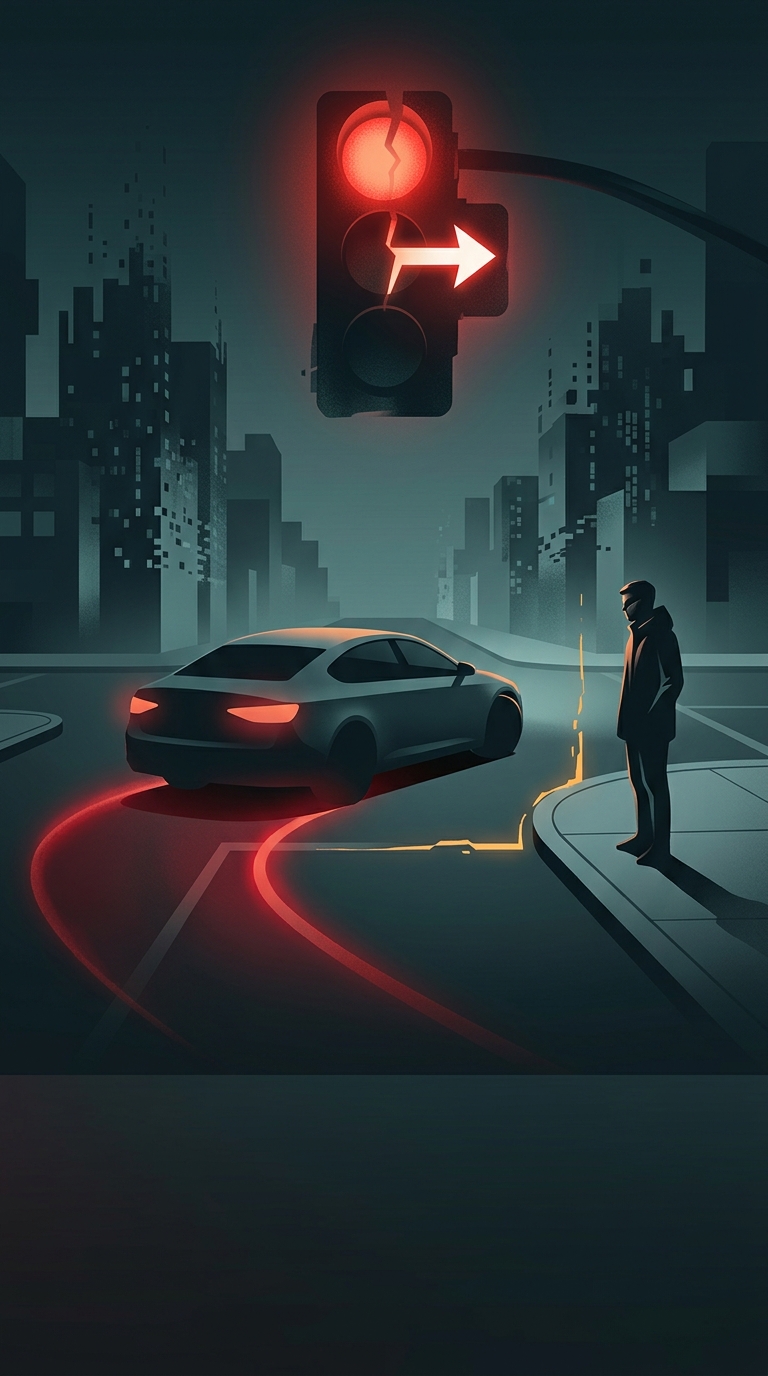
A fuel-saving shortcut at the intersection
The push to allow right turns on red was driven chiefly by energy conservation, not by a new theory of safer or smoother driving. During the 1970s energy crisis, policymakers looked for ways to reduce gasoline use. At a red light, a driver waiting to turn right might be able to go when a safe opening appeared instead of idling until the signal changed. Multiply that small saving across many cars and intersections, and it looked like a practical way to cut wasted fuel and waiting time.
The idea spread through state traffic laws, with federal energy policy helping press states to adopt it. It was a modest intervention: let traffic move during a red light when the turn could be made safely, rather than keep every turning car stationary until green.
The tradeoff built into the rule
A right turn on red is not supposed to mean rolling through without checking. Drivers must stop first, yield to traffic and people crossing, and turn only when permitted and clear. But the maneuver changes what drivers have to watch. Looking left for an opening in oncoming traffic can draw attention away from a pedestrian or cyclist crossing on the right—the direction the car is about to travel.
That tension explains why the policy has proved consequential: a measure intended to save fuel by reducing idle time also put turning vehicles into moments when pedestrians may have the signal and the right of way. Its original appeal was the brief wait it could eliminate; its lasting cost is that the turn still demands careful attention from everyone sharing the intersection.