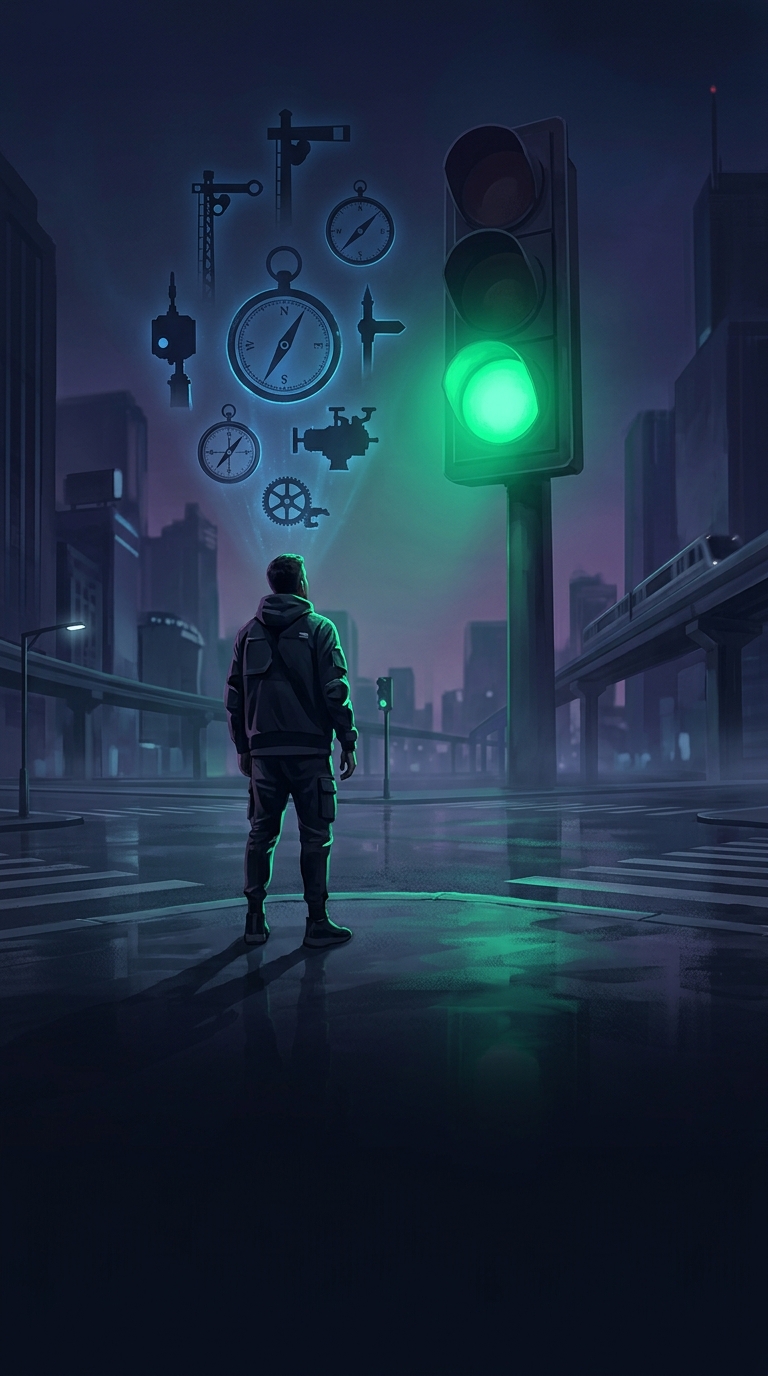
How green became the signal to move
The green light’s role grew out of railway signaling, where operators needed a simple code that could be read from a distance: red meant stop, while green came to mean proceed. As motor traffic grew, road authorities adapted the same basic color vocabulary. Reusing a familiar system made sense: drivers and railway workers could carry the same learned association from one setting to another.
Over time, national and international traffic standards reinforced that convention. The details of road rules still differ by place, but green is now the widely recognized signal that a movement is permitted—not a guarantee that the road ahead is clear.
A permission, not a promise
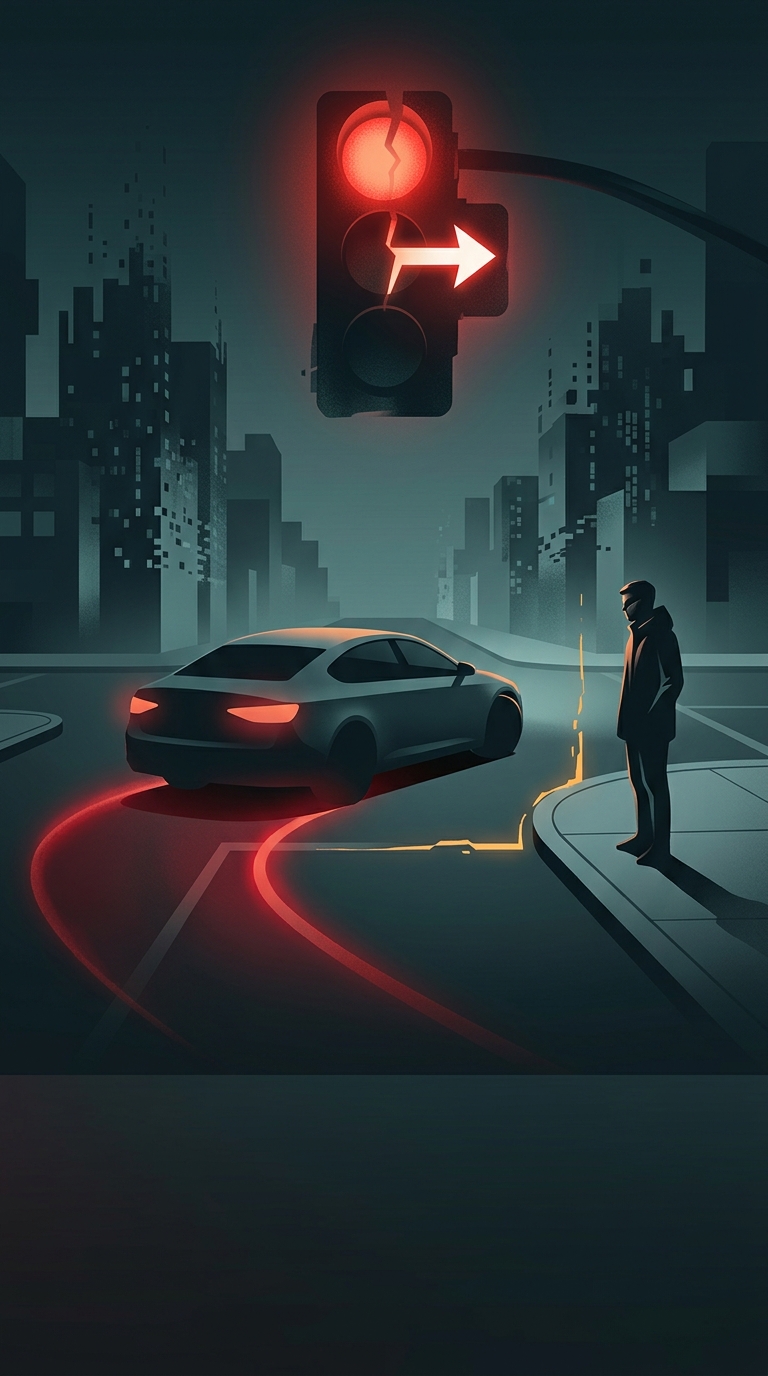
A green light tells drivers that the signal is allowing them to go; it does not tell them that the intersection is empty. A vehicle may still be crossing, a pedestrian may be in the crosswalk, or traffic may be backed up beyond the junction. That is why drivers are expected to check the way is clear before entering.
The colors also need to work for people who cannot distinguish them easily. Traffic lights use a consistent order—typically red at the top or left, green at the bottom or right—so position can help identify the signal even when color is hard to see. Green works as part of a shared visual code, not as a standalone command.