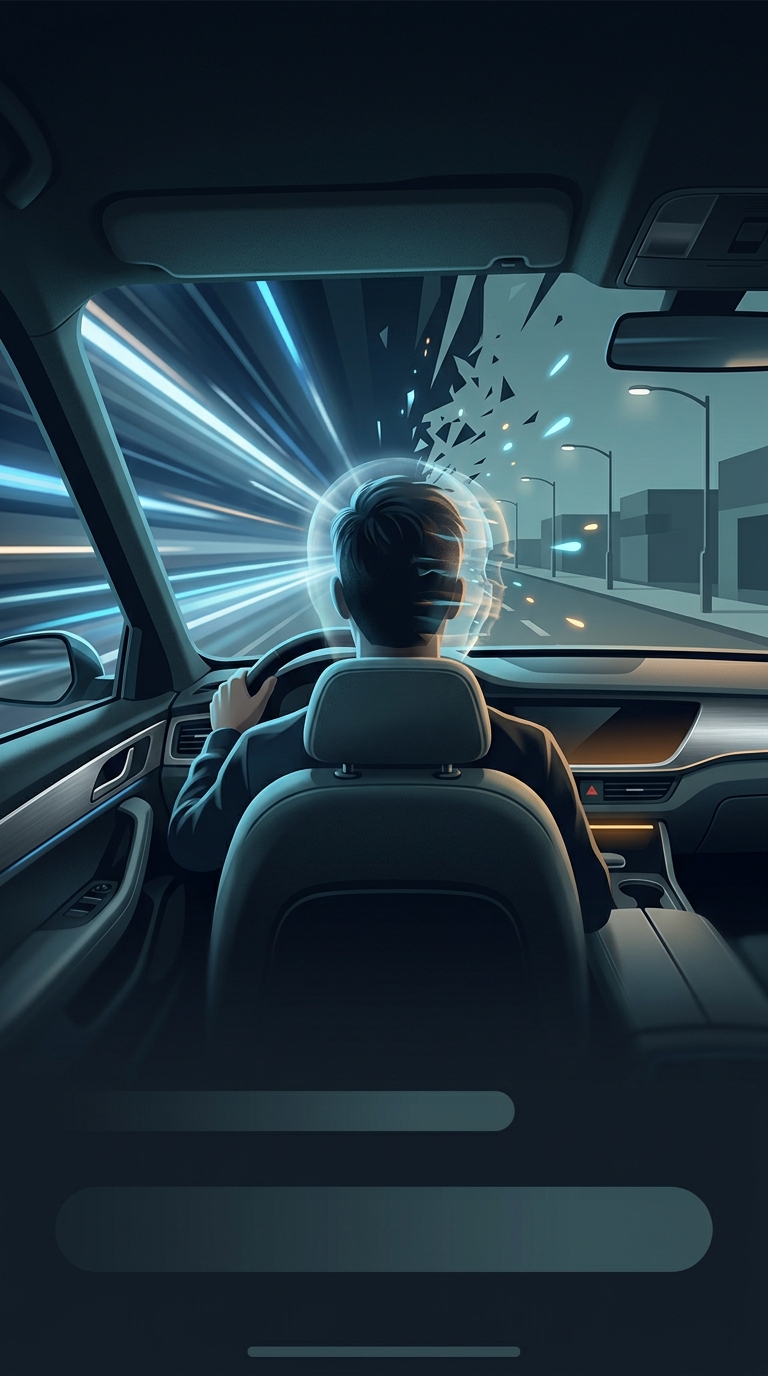
Why the same speed can feel different after a highway exit
At highway speed, roadside objects sweep past quickly, lane markings flash beneath the car, and distant scenery seems to move across your view. Your brain uses this visual motion—called optic flow—along with engine noise and vibration to judge how fast you are going. After a long stretch of fast driving, those cues become your temporary baseline.
Turn onto a narrower local road and the scene changes. Buildings, parked cars, trees, and intersections sit closer to the roadway, giving your eyes more nearby detail to track. At 45 mph, that richer, nearer scene can make the car feel as if it is crawling, even though the speedometer has not changed.
Your sense of speed is calibrated by contrast
The feeling comes partly from comparing the present with what came just before. A speed that would feel brisk after a slow drive may feel sluggish immediately after a highway run. The shift is perceptual, not mechanical: the car is traveling at the speed shown, but your internal reference point has moved.
Road design reinforces the contrast. Highways have broad lanes, long sightlines, and few interruptions; local roads often have tighter edges, junctions, and pedestrians or parked vehicles. Those features change both the visual scene and what the driver must attend to. The road may feel slow while still demanding more careful observation.
Let the road set the pace
That mismatch is useful to recognize because “feels slow” is not a reliable guide to whether a speed is appropriate. Posted limits, curves, visibility, traffic, and nearby people matter more than the pace you have just left behind. Checking the speedometer and actively scanning the closer roadside helps replace the highway’s lingering reference point with the conditions in front of you.