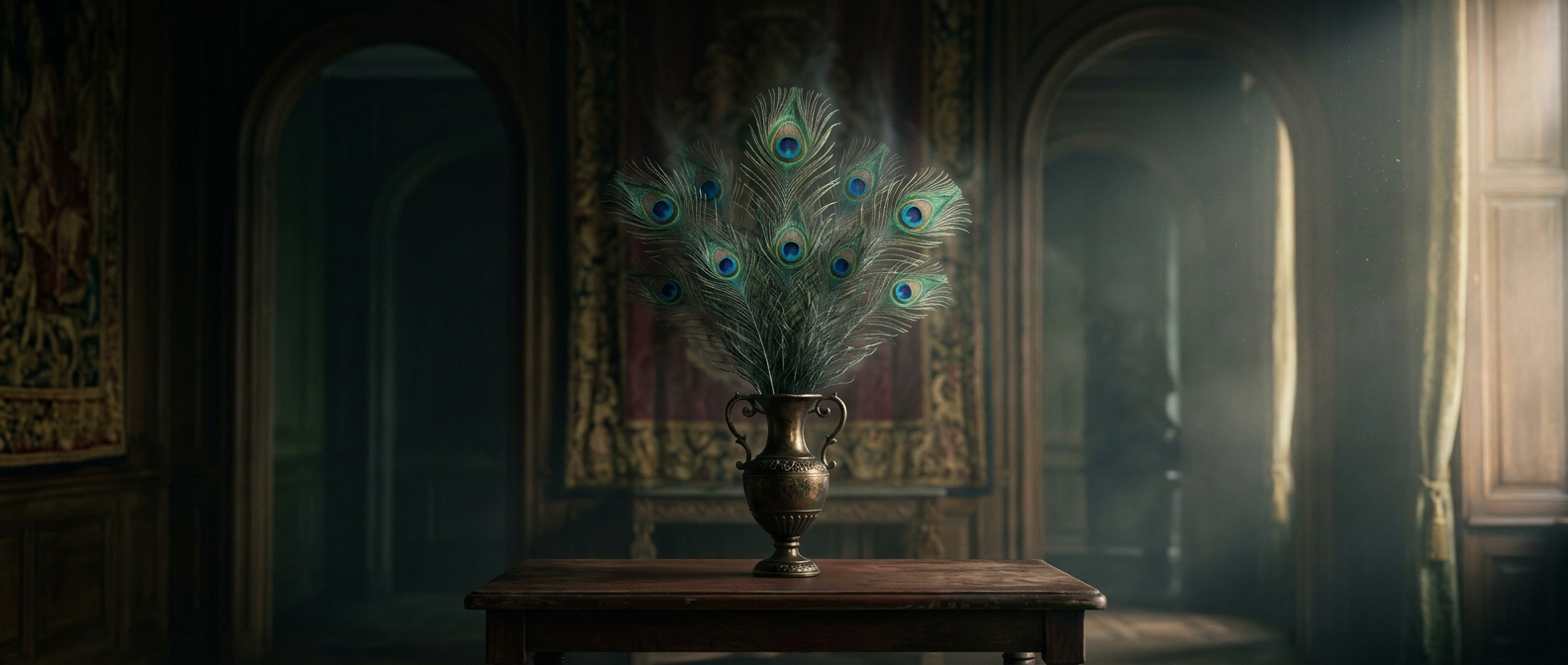
When a feather seemed to watch the room
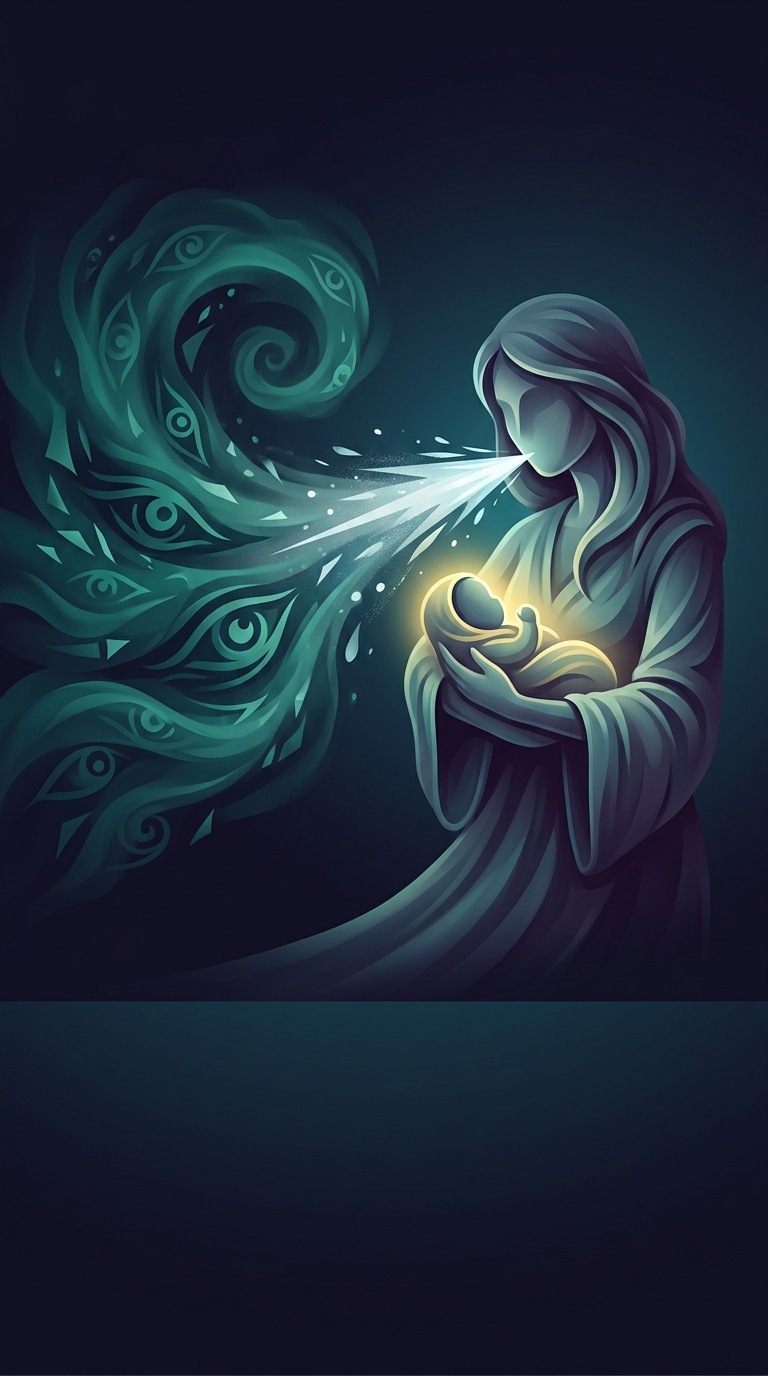
A peacock feather’s “eye” is the rounded patch near its tip, ringed with bands of color. In traditions shaped by belief in the evil eye—harm thought to be caused by a hostile or envious gaze—an eye-like mark could carry more than decorative meaning. Some people treated the feather as an unsettling presence indoors, fearing it might bring misfortune to the household.
A symbol that changed at the threshold
The concern was not simply that peacock feathers looked unusual. In a home, a displayed object became part of the household’s everyday environment, and its appearance could be read as a sign or influence. A pattern resembling an eye might suggest a gaze that should not be invited inside, turning a beautiful feather into a warning rather than an ornament.
This was a belief, not a universal rule: meanings varied across communities and traditions. But it explains why the same vivid marking could inspire admiration in one setting and unease in another. The feather’s eye-like detail made the fear easy to remember—and easy to attach to a room.