A name built from two affirmations
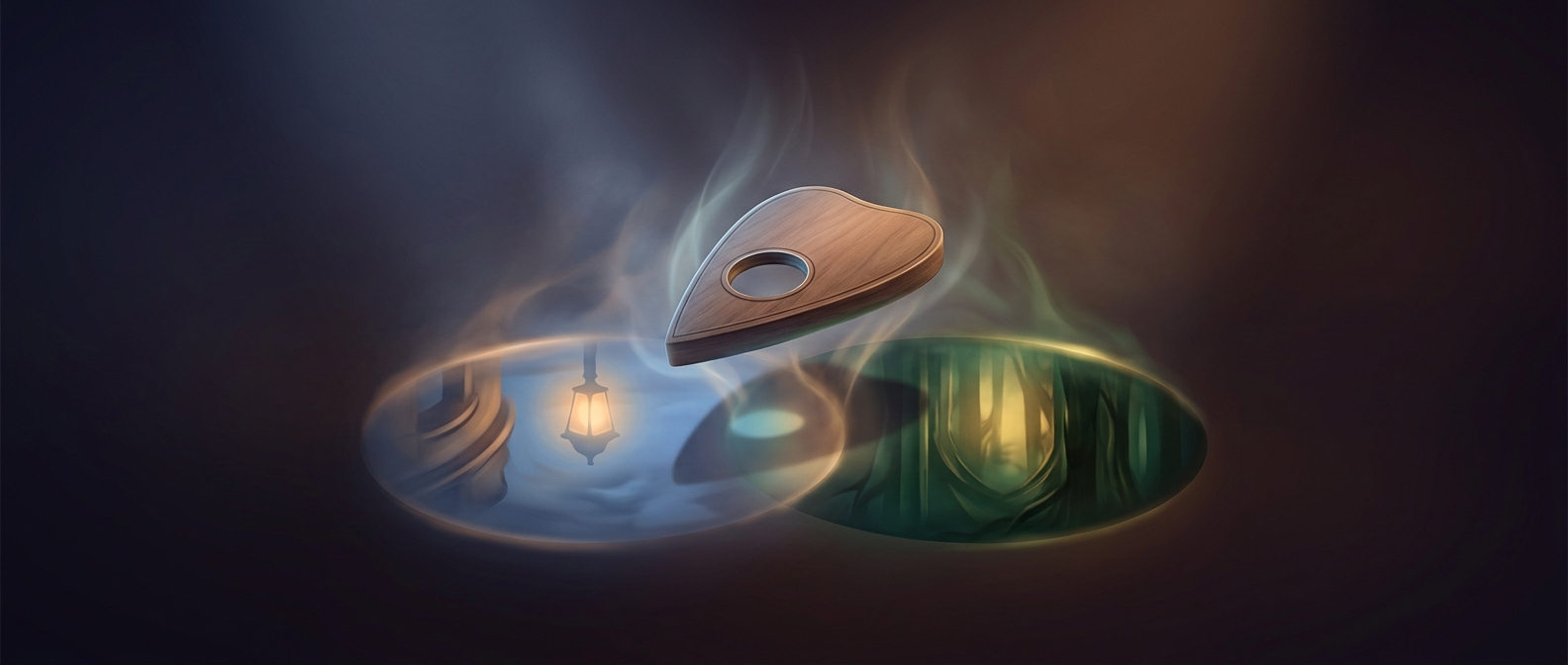
The name “Ouija” joins oui, the French word for “yes,” with ja, its German counterpart. It is a small piece of wordplay: two languages contribute the same answer, creating a name that sounds more mysterious than its parts are.
That meaning fits the board’s basic conversational format. People ask questions and treat the pointer’s movement across letters or toward “yes” and “no” as a reply. The name, then, points to affirmation—not to an ancient spell or a hidden occult vocabulary.
Why the plain meaning feels eerie
A simple “yes” can carry unusual weight when it appears to come from somewhere other than the people touching the pointer. In a séance setting, even an ordinary answer becomes part of a larger story about contact with the unseen. The board’s atmosphere comes from that setting and the way its movements are interpreted, not from anything sinister encoded in its name.
So the contrast is the memorable part: a tool associated with ghosts bears a name assembled from two everyday words for agreement.