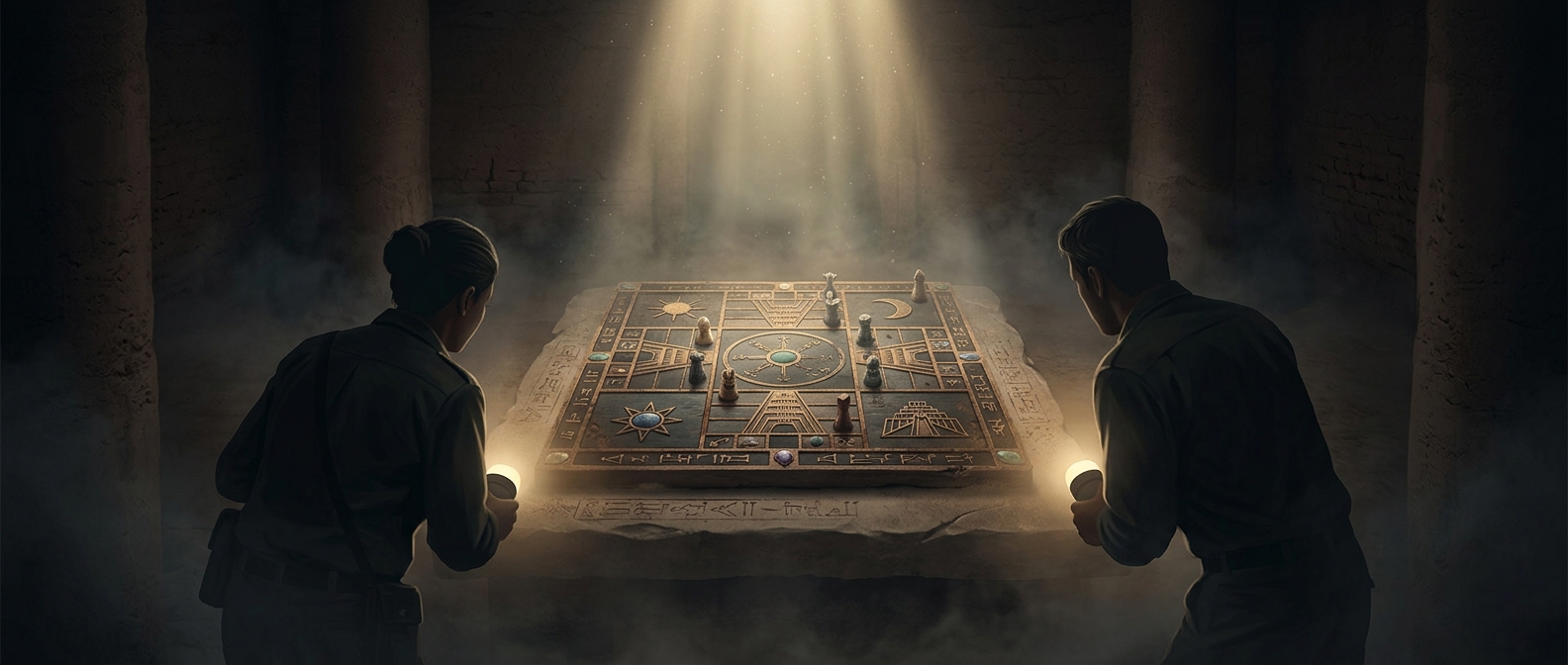
Four boards, one occult game
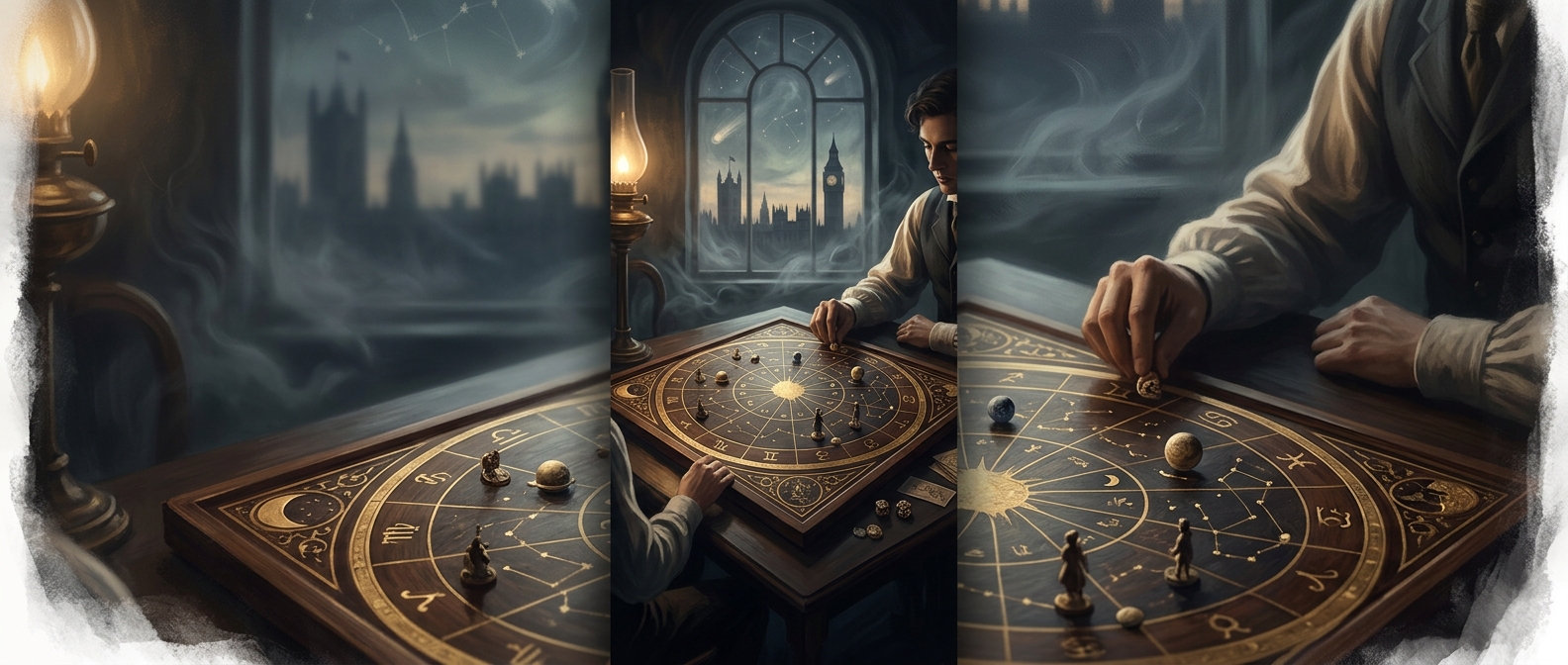
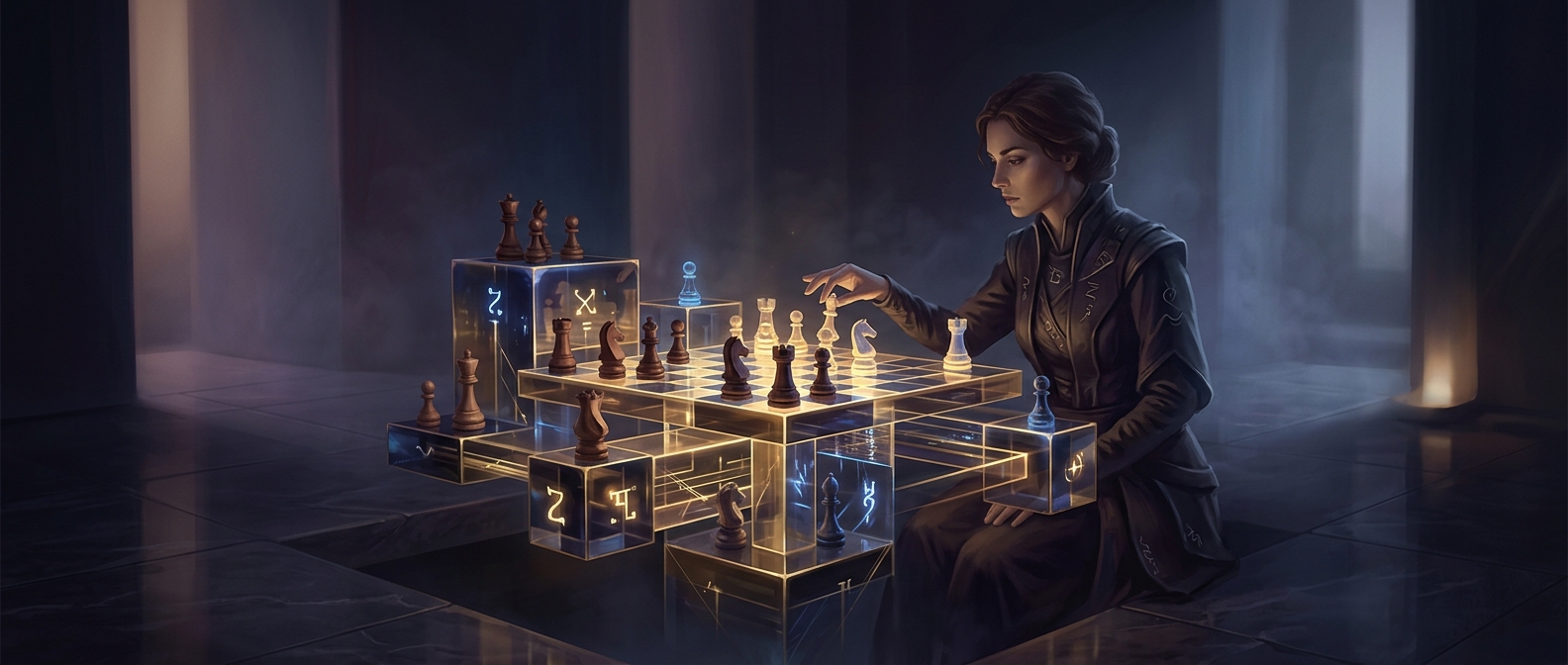
Enochian chess turns a familiar chessboard into part of a larger ritual diagram. Instead of playing on a single board, players use four boards, traditionally associated with the four classical elements: fire, water, air, and earth. “Multidimensional” here describes the game’s layered symbolic arrangement, not boards that move through physical dimensions.
The elemental boards are meant to be read together. A move is therefore more than a tactical step toward capturing an opponent’s king: its meaning can also depend on which board it occurs on and how the pieces are assigned to the game’s elemental framework. The setup makes the board itself part of the system being interpreted.
A game shaped by esoteric study
Enochian chess is associated with the Hermetic Order of the Golden Dawn, a nineteenth-century occult organization whose members studied systems of ritual magic and symbolism. Its name refers to Enochian, an esoteric system of language and magical practice that the game incorporates into its structure. Chess supplied a practical framework for arranging pieces, making moves, and thinking through changing relationships; the added boards and correspondences turned that framework into an exercise in symbolic pattern-making.
There is no single universally fixed rulebook. Accounts from esoteric sources differ in how they organize and explain the game, so descriptions of the boards, pieces, and play can vary. That variation is part of why Enochian chess is better understood as a family of related symbolic games than as one standardized sport.
When a move carries two kinds of meaning
The unusual design asks players to track both ordinary chess problems—position, threat, and response—and the symbolic associations attached to the boards. The game’s real complexity lies in making those two readings coexist: a move must function within play while also fitting the elemental scheme. That is what makes four boards more than an elaborate playing surface.