A language built for revelation
In the 1580s, English scholar John Dee and his scryer, Edward Kelley, recorded what they understood as communications from angels. Kelley described what he saw or heard; Dee wrote it down and questioned the beings for further instruction. The resulting material was not simply a set of prophecies. It offered a framework for contacting and commanding angelic powers through words, names, and ritual actions.
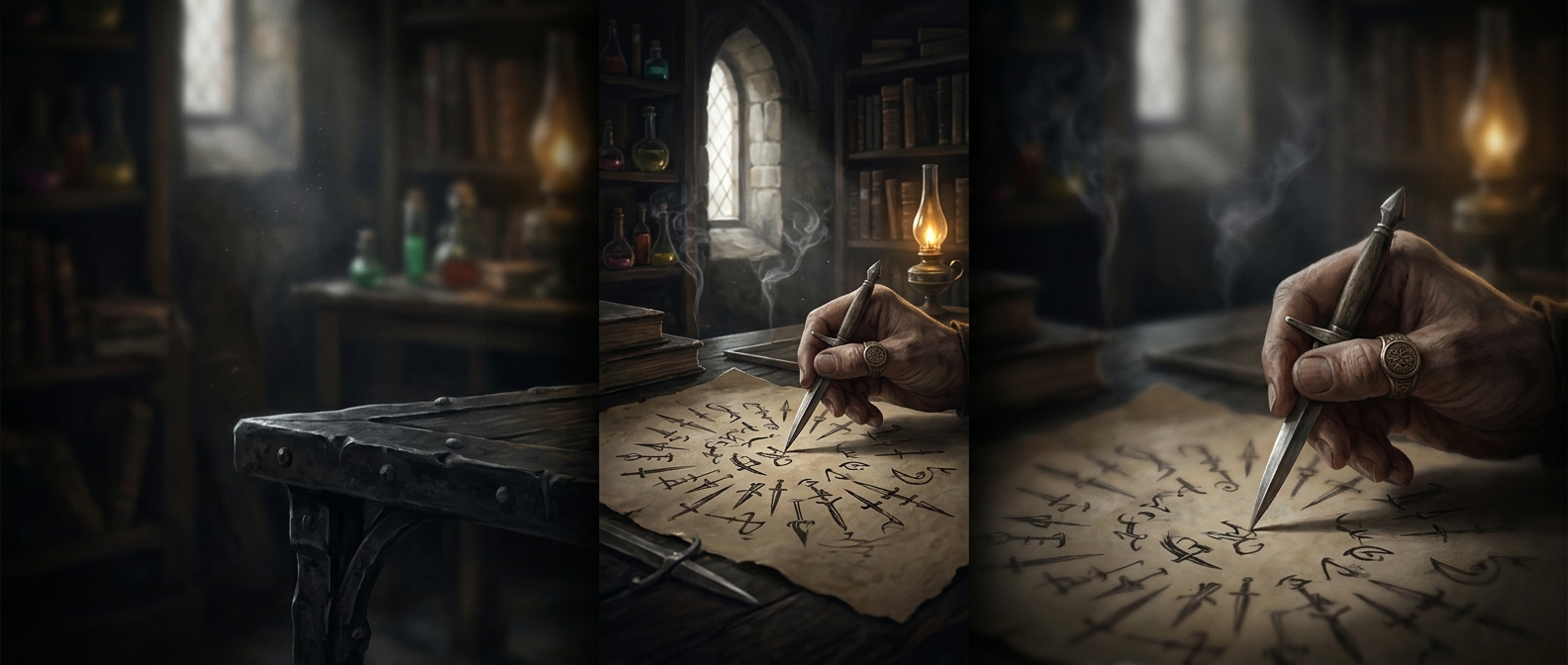
The language now called Enochian was central to that framework. Its words were recorded in a distinct alphabet and arranged in large letter grids. Those grids let practitioners extract names and phrases by following particular patterns, turning a page of letters into a ritual instrument. The language’s grammar and status as a fully independent tongue have been debated, but Dee and Kelley treated it as a language revealed from beyond ordinary human speech.
From dictated words to ritual practice
The records include spoken invocations often called the Calls or Keys. In the system, reciting them was meant to open access to particular spiritual realms and their inhabitants. The elaborate structure mattered: a practitioner was not merely repeating mysterious words, but following a sequence of texts, names, and ceremonial preparations that Dee believed could yield further knowledge.
The messages also fit the religious concerns of their age. Dee sought knowledge that could be both spiritually authoritative and useful to humanity; the angelic communications promised insight into divine order and the future. Their apocalyptic passages therefore belonged to a larger project of revelation, not just predictions isolated from the rest of the system.
That combination of language, grids, and ritual helped Enochian magic endure. Later occultists could treat the surviving records as a practical system—even while disagreeing about whether its language was truly angelic, humanly shaped, or something in between.