A deck becomes a symbolic vocabulary
Cartomancy is the practice of interpreting cards to reflect on a person’s circumstances or possible future. Unlike tarot, which uses a dedicated deck with its own named images, cartomancy can use an ordinary deck of playing cards. The meanings are not printed on the cards; readers learn or choose associations for suits, numbers, and face cards, then interpret them together.
A high card, for instance, might be associated with prosperity. That association is a traditional or personal symbol—not evidence that wealth is actually on its way. The card offers a prompt for interpretation, rather than a reliable forecast.
How a reading takes shape
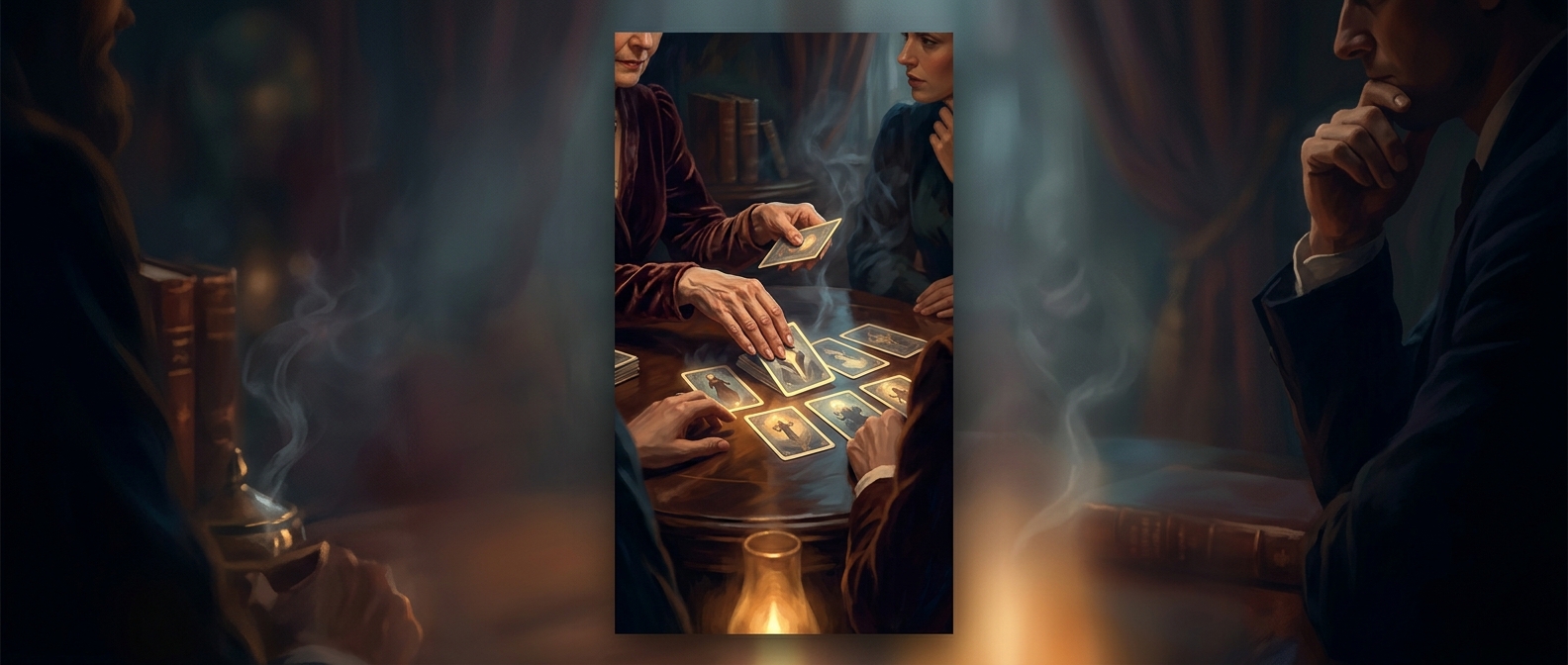
A reader may ask someone to shuffle and draw cards, then lay them out in a pattern. The arrangement gives the reading a structure: a card might be considered in relation to a question, another card, or a position representing a different aspect of the situation. The reader connects these pieces into a narrative, drawing on the deck’s symbolic meanings and the question at hand.
That process helps explain why the same card can suggest different things in different readings. Its meaning depends on the reader’s system and the surrounding cards, much as a word’s meaning shifts with its sentence. The practice can invite reflection, but its interpretations are not established methods for knowing the future.
Why an ordinary deck works
Playing cards are familiar and portable, while their suits and ranks provide enough repeated symbols to build a system of meanings. Turning a shuffled deck into an oracle is therefore less about special equipment than about the interpretive framework a reader brings to it: the cards supply the symbols, and the reader supplies the story.