A race across a board—and a reading of fate
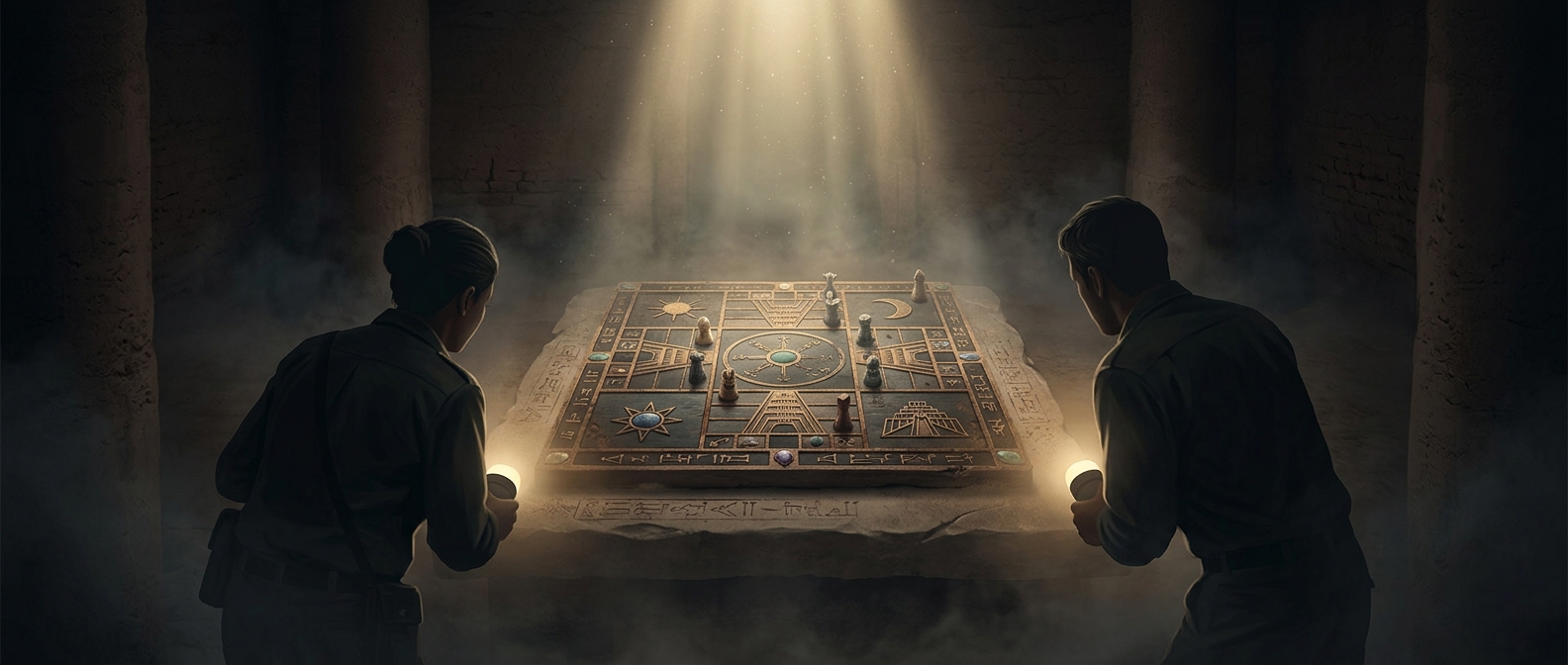
The Royal Game of Ur was a two-player race game: each person moved pieces along a route of marked squares, with throws of dice-like objects determining how far they could go. Players had to get their pieces across the board and off the far end before their opponent did. Some squares were decorated with rosettes, making the board look less like a plain counting track and more like a field of meaningful signs.
That visual language helps explain the game’s connection to fortune. In ancient Mesopotamia, people looked to the heavens and to omens for clues about what lay ahead. A game governed partly by chance offered a small, repeatable version of uncertainty: a throw could open a path, delay a piece, or change who seemed likely to win. The player experienced luck as something that could be watched unfolding move by move.
From play to prediction
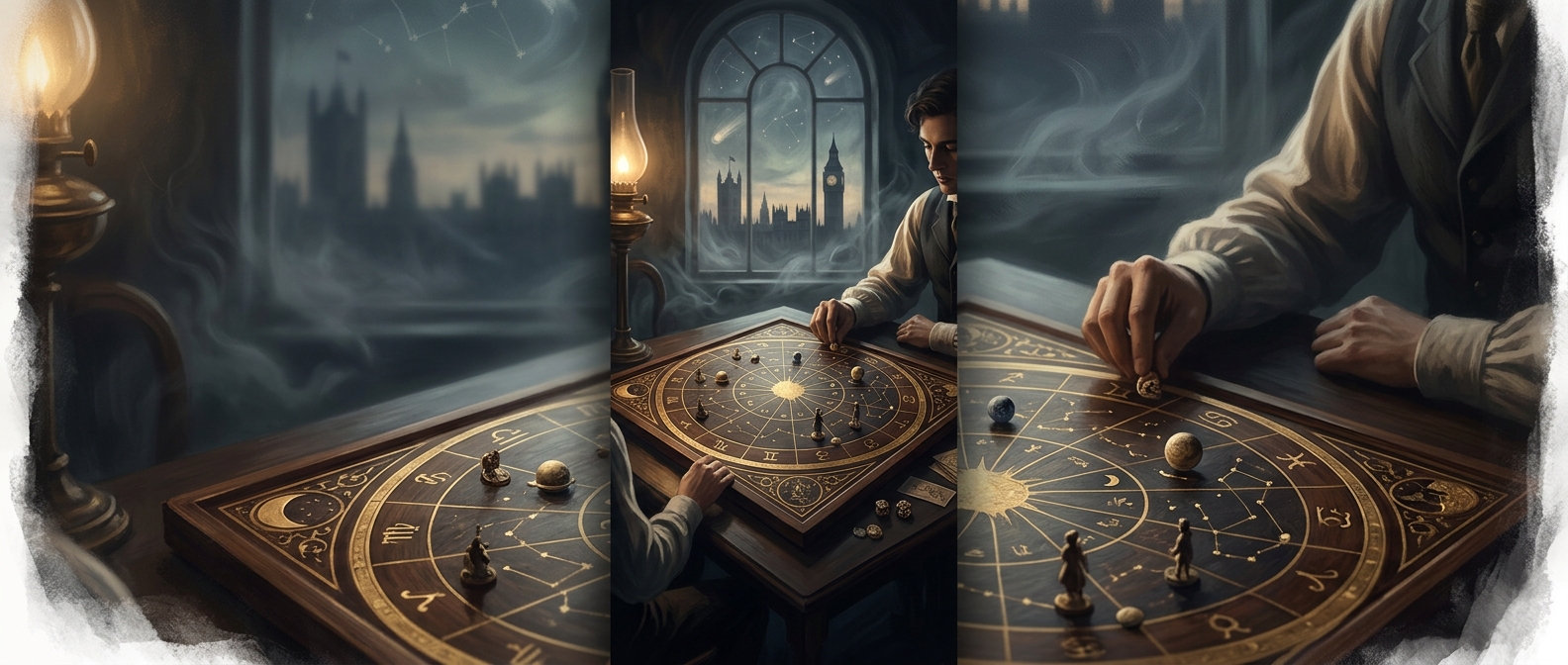
The strongest evidence that the game could carry an astrological meaning comes from a much later Babylonian tablet describing its rules and linking board spaces with celestial and omen-related interpretations. That suggests the game was not only entertainment: its progress could also be read as a sign about a player’s prospects. The surviving board from the royal cemetery at Ur is centuries older than that written explanation, so we cannot know exactly how its original owners understood every symbol.
Still, the combination is striking. The same board could host a contest of skill and luck, while its marked spaces invited players to see chance as part of a larger pattern. A throw of the dice settled the next move; an astrological reading could make that move feel like a hint about what came next in life.