How the Tarim Basin preserved an ancient community
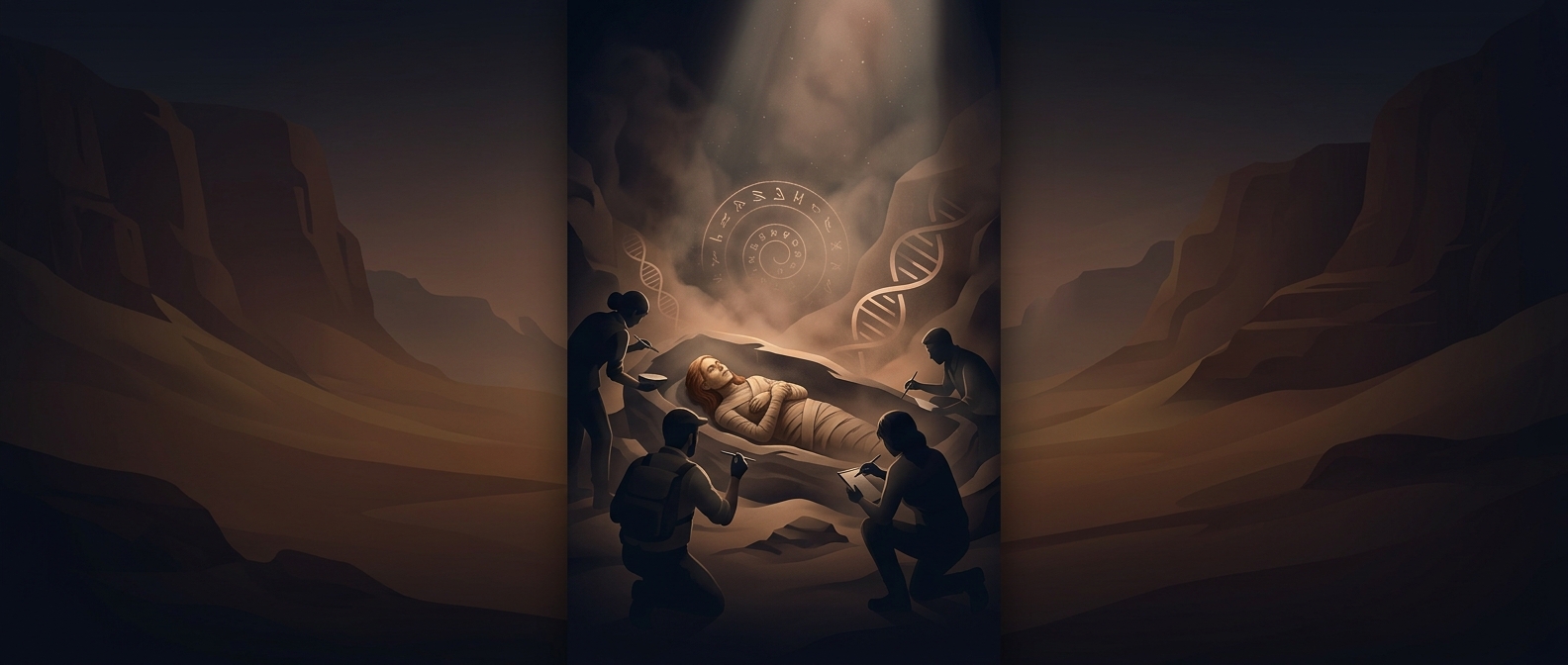
The Tarim Basin, in what is now western China, is so dry that bodies and everyday objects could survive for millennia. At burial sites such as Xiaohe, arid conditions helped preserve hair, clothing, and other details that would normally disappear. That makes the mummies unusually vivid evidence of how people looked and dressed—not just skeletons from which appearance must be inferred.
Their woven garments include checked, or plaid-like, patterns. Such clothing is a clue to local craft and materials, not a label of European identity: similar-looking patterns can arise in different places, and a textile’s appearance alone cannot establish where its wearer’s ancestors came from.
Appearance does not map neatly onto ancestry
Some individuals had light-colored or reddish hair and facial features that observers describe as European-looking. But visible traits do not identify a person’s whole ancestry, and ancient populations cannot be neatly sorted using modern categories. DNA analysis found that the early Tarim Basin people studied were genetically distinctive and had deep roots in ancient populations of northern Eurasia; they were not simply recent arrivals from Europe.
The striking contrast is that a community could be geographically remote and genetically distinctive while still carrying traits that seem familiar elsewhere. The mummies’ preserved hair and patterned clothes make that contrast visible—and remind us that appearance is a poor shortcut for tracing human history.