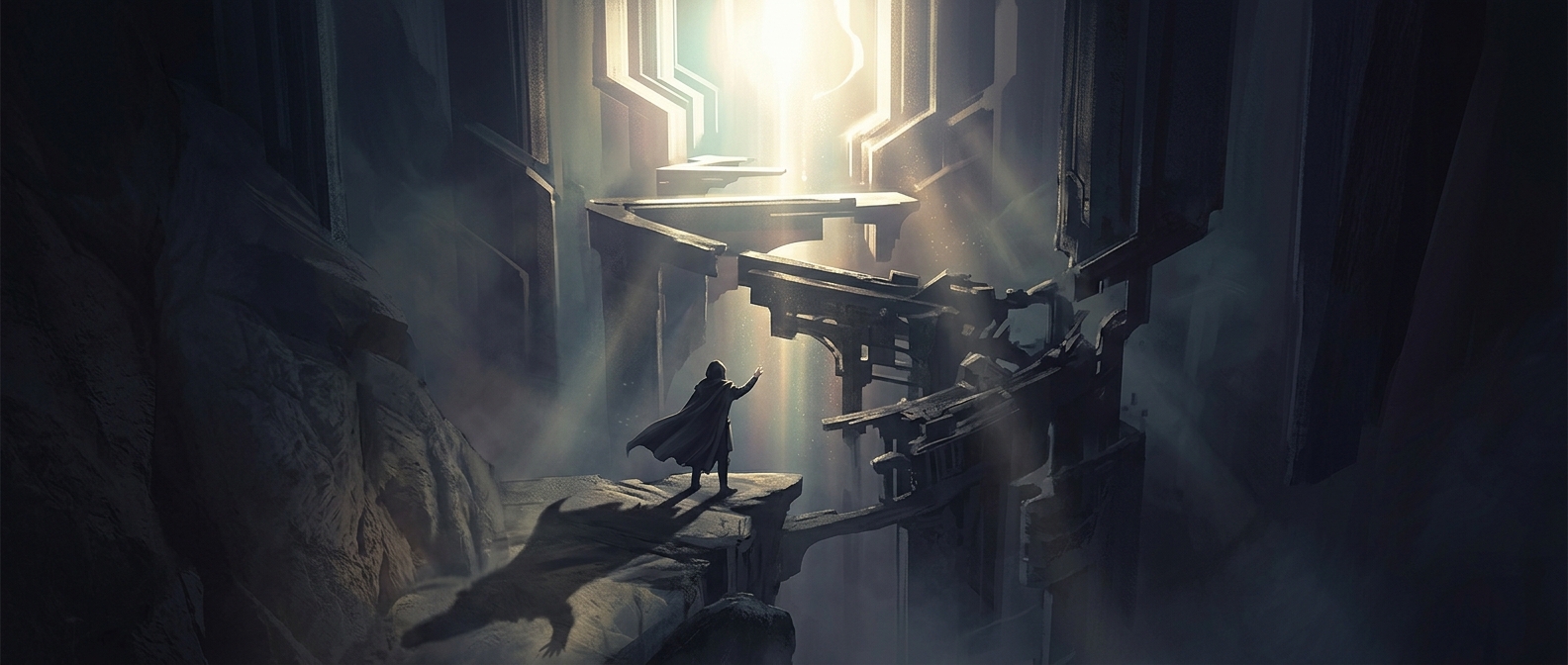
A universe that overflows from unity
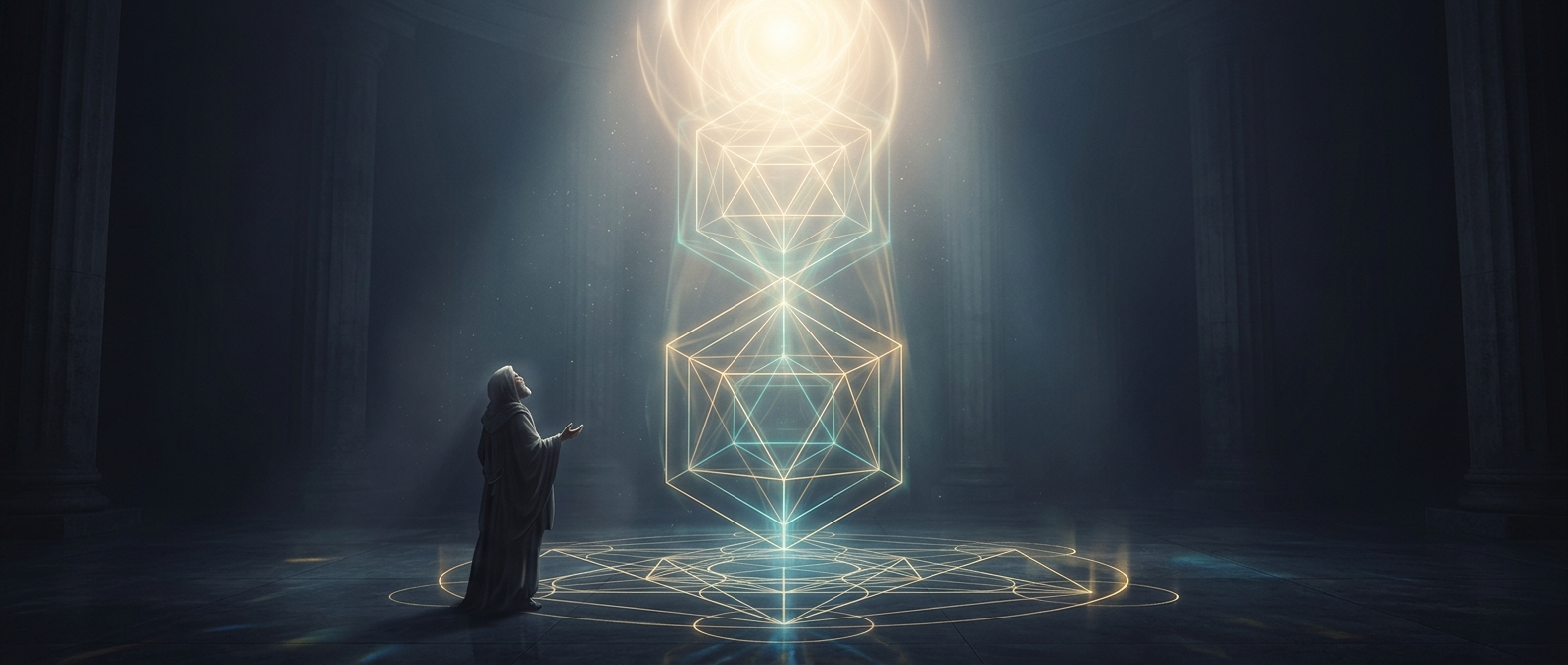
Neoplatonism imagines existence as a cascade from the One: an ultimate source so complete that it is beyond ordinary description. The One does not make the universe by planning and assembling it. Instead, reality proceeds from it by emanation—like warmth spreading from a fire. The source is not used up or changed by what comes from it.
The first level is Intellect, the realm of perfect forms and thought. From Intellect proceeds Soul, which gives order and life to the cosmos. The physical world depends on Soul, but is more variable and divided. Matter lies at the furthest reach of this sequence, where the original unity is least clearly expressed.
Distance means diminished perfection
These levels are not places stacked somewhere in space, nor necessarily stages that happened one after another in time. They describe degrees of dependence and completeness: each level exists through what precedes it, while adding distinction and multiplicity. A physical object, for example, can be understood as participating imperfectly in a pattern held more fully in Intellect.
This helps explain why Neoplatonists could treat imperfection not as a rival force equal to the good, but as a lack of fullness or order. The farther reality is from the One, the more limited and changeable it becomes. The striking implication is that the world is not wholly separate from its source: even its most material things remain connected to the chain of being, though they express that source only faintly.