A wound became a long recovery
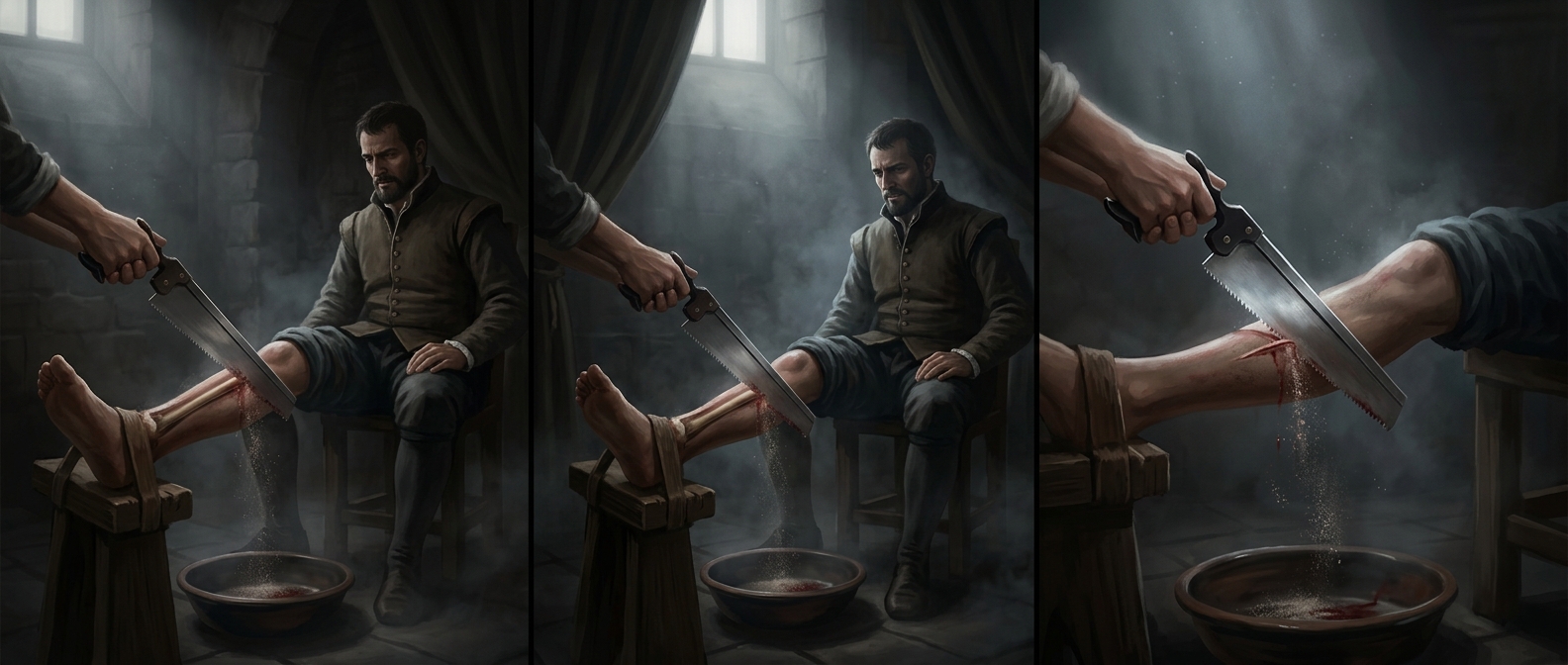
The operation was not the end of Ignatius of Loyola’s ordeal. His leg had been badly injured in battle, and the attempt to remove the protruding bone was part of a painful effort to repair it. In an age before modern anesthesia, surgery could mean enduring the procedure while fully conscious. The injury and treatment left him facing a long period of convalescence at his family home.
That enforced stillness changed what occupied his attention. He had hoped to read tales of chivalry, but instead found accounts of Christ and the saints. He later recalled noticing that imagining a life of worldly achievement left him feeling differently from imagining a life devoted to God. The contrast became an early turning point in his religious life.
From recovery to reflection
Loyola came to treat those shifts in feeling as clues worth examining: which thoughts brought lasting purpose, and which faded after their initial excitement? This practice of attending to the effects of different thoughts became central to the spiritual approach he developed later.
The leg operation therefore sits at the start of a chain of consequences, not as a neat cure. It helped confine him to a sickbed, where a lack of the books he wanted redirected his reading—and, in time, his sense of what kind of life to pursue.