A recipe held by people, not a public formula
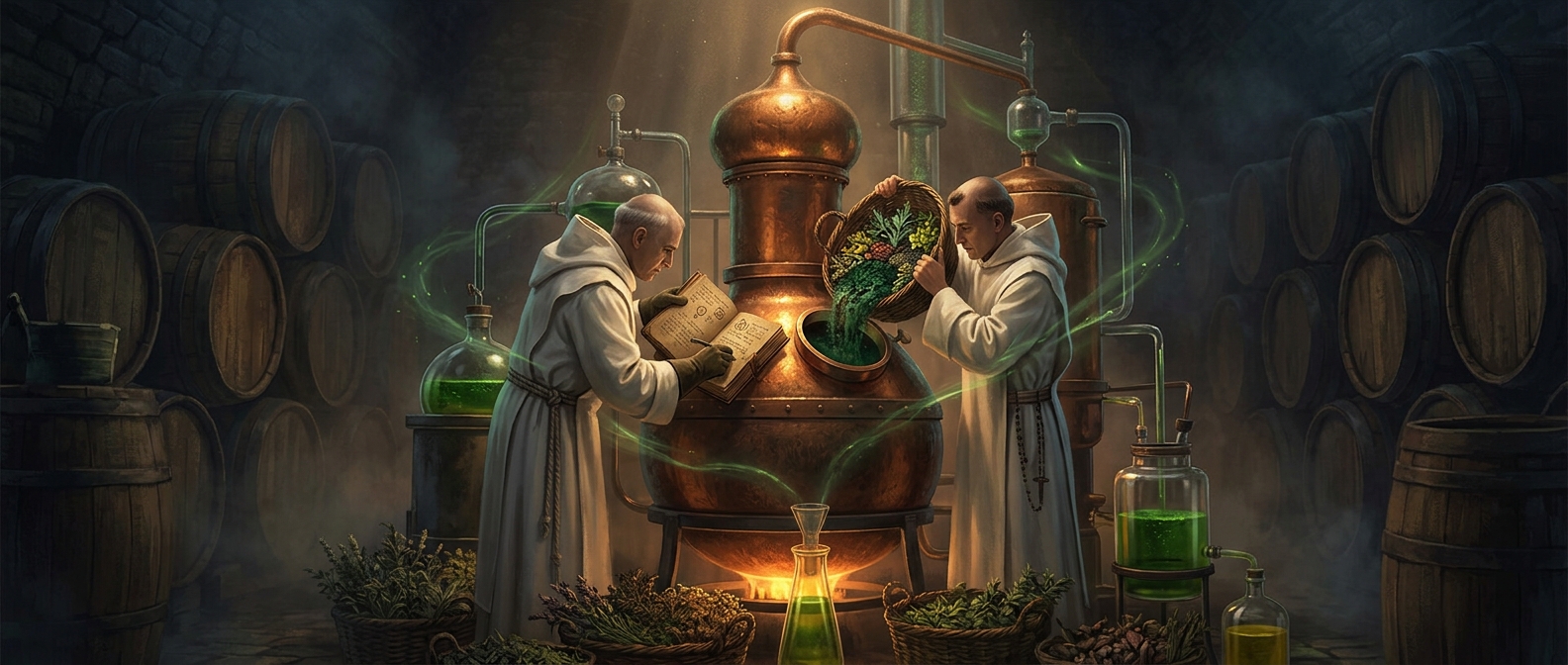
Chartreuse’s secrecy is unusual because it is maintained through a very small circle of custodians. The recipe’s knowledge is entrusted to two monks at a time, rather than published as a formula that any producer could consult. That makes the monks’ role more than ceremonial: they are the link between the recipe and the people responsible for making the liqueur.
Secrecy shapes how production is governed
A complex recipe is not just a list of ingredients. It can also depend on how ingredients are prepared, combined, and handled. Keeping those instructions within a tiny group limits how widely the full method is known. The public can encounter the finished drink, but cannot use a complete written formula to reproduce it independently.
This arrangement also makes continuity important. The knowledge must remain with the designated custodians as one generation of monks gives way to another. The small number of people who hold it creates a clear point of responsibility—and a practical constraint: production depends on preserving expertise that is deliberately not distributed broadly.
The safeguard is also the story
The secrecy does not make the liqueur’s ingredients supernatural; it makes access to the method controlled. Its distinctive feature is the combination of a recipe involving many herbs and an unusually narrow chain of human knowledge. In effect, the monks safeguard not only a formula but the conditions under which it can be passed on and used.