A New Name Needs a Clean Break
In maritime folklore, a boat’s name is more than a label: it is treated as part of the vessel’s identity, already known to the sea and its supernatural guardians. Renaming it therefore creates a problem in the story sailors tell: the old name may still be entered in the ocean’s imagined records, while the ship now answers to another.
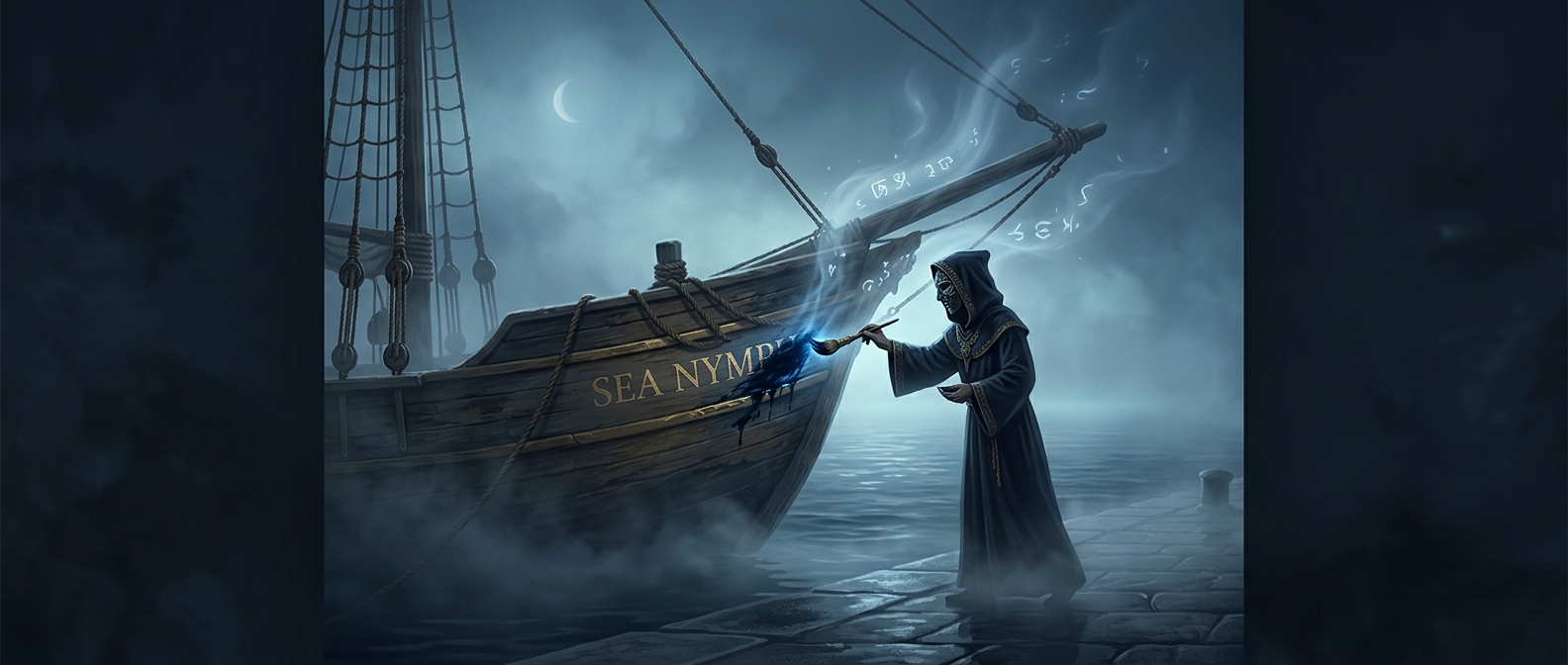
A de-naming ceremony symbolically clears that old identity before the new name is adopted. Its purpose is not simply to celebrate a change, but to mark a boundary between the vessel’s former life and its next one. The precise customs can differ; the central idea is that a name should not be replaced casually, as if the sea could be expected to forget on its own.
Ritual as a Way to Manage Uncertainty
The warning that maritime guardians might punish a ship gives the custom its force. It turns an administrative act—changing a name—into a matter of respect toward powers sailors could not control. The ceremony offers a deliberate way to acknowledge that risk and begin again with the vessel’s new identity.
That logic makes the superstition memorable: in the folklore, the danger lies not in having a new name, but in leaving the old one unresolved. The ship must be cleared of its past before it can safely sail under another name.