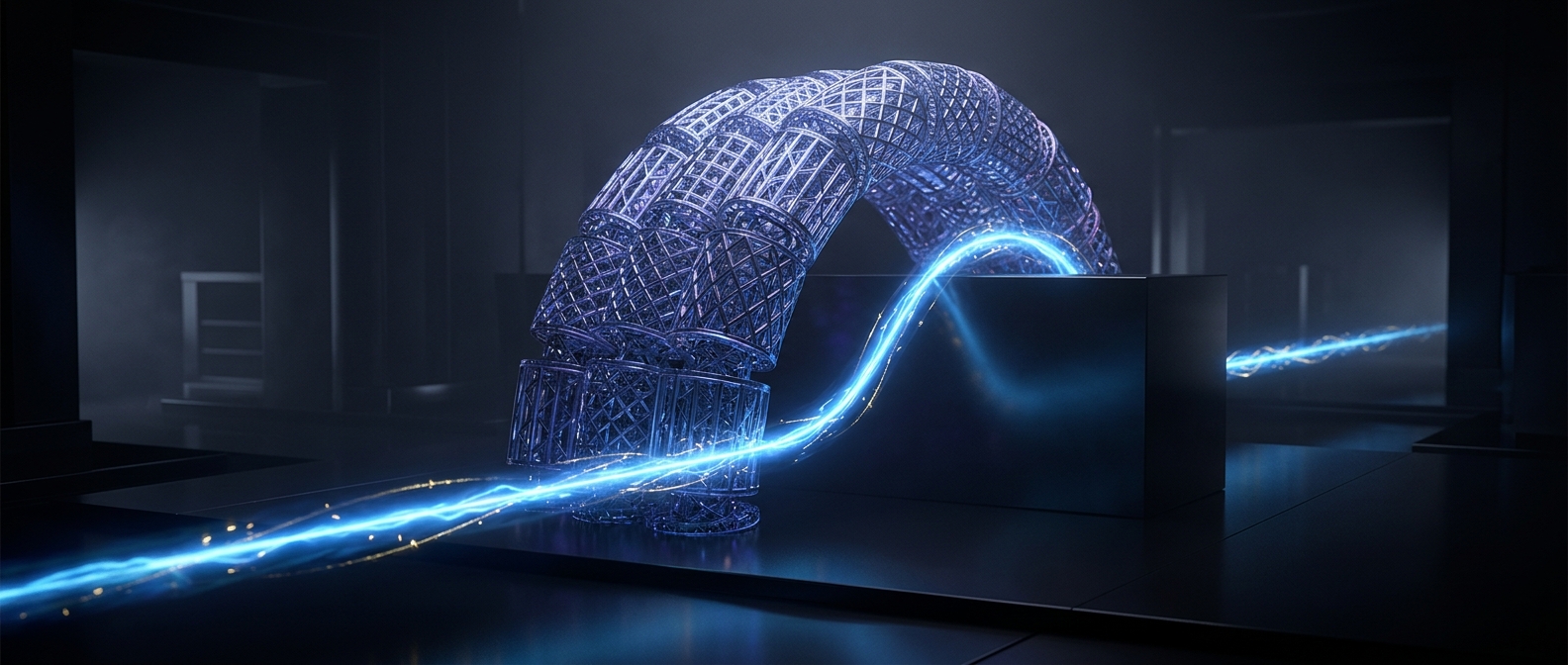
How the cylinders redirect a microwave wave
A microwave signal is an electromagnetic wave, and its path changes when it passes through materials with different electrical properties. By arranging cylinders around an object, researchers can make the region act as though the wave encounters a carefully changing refractive index—the property that determines how quickly a wave travels through a material and how it bends.
The cylinders do not push the wave aside like a wall. Instead, they alter its speed and direction in small steps. Waves that would have struck the hidden object are guided around its sides, then brought back together on the far side. If their timing and direction are close enough to what they would have been without the object, a receiver detects less disruption in the signal.
Why the cloak has limits
The arrangement must be designed for particular wavelengths and viewing angles. A wave of a different wavelength may respond differently to the cylinders; a signal arriving from another direction may not follow the intended route. The cloak therefore does not make the object disappear from every kind of detection. It reduces the object’s effect on a specific microwave signal under specific conditions.
That constraint is part of what makes the demonstration useful: it shows how shaping a material’s properties can steer waves around an obstacle. The object remains in place, but for the selected signal, the wave can emerge with less evidence that it was there.