stackyFACTS
Science

Starfish digest prey outside their bodies

HERE’S THE INTERESTING PART

The starfish looks cute in cartoons, but it is actually a horrific, slow-motion nightmare for clams. When they find an oyster, they pry it open just a fraction of an inch, evert their own cardiac stomach out through their mouth, and slip it inside the shell. They literally vomit their organs onto their prey to dissolve it externally before swallowing the soup.
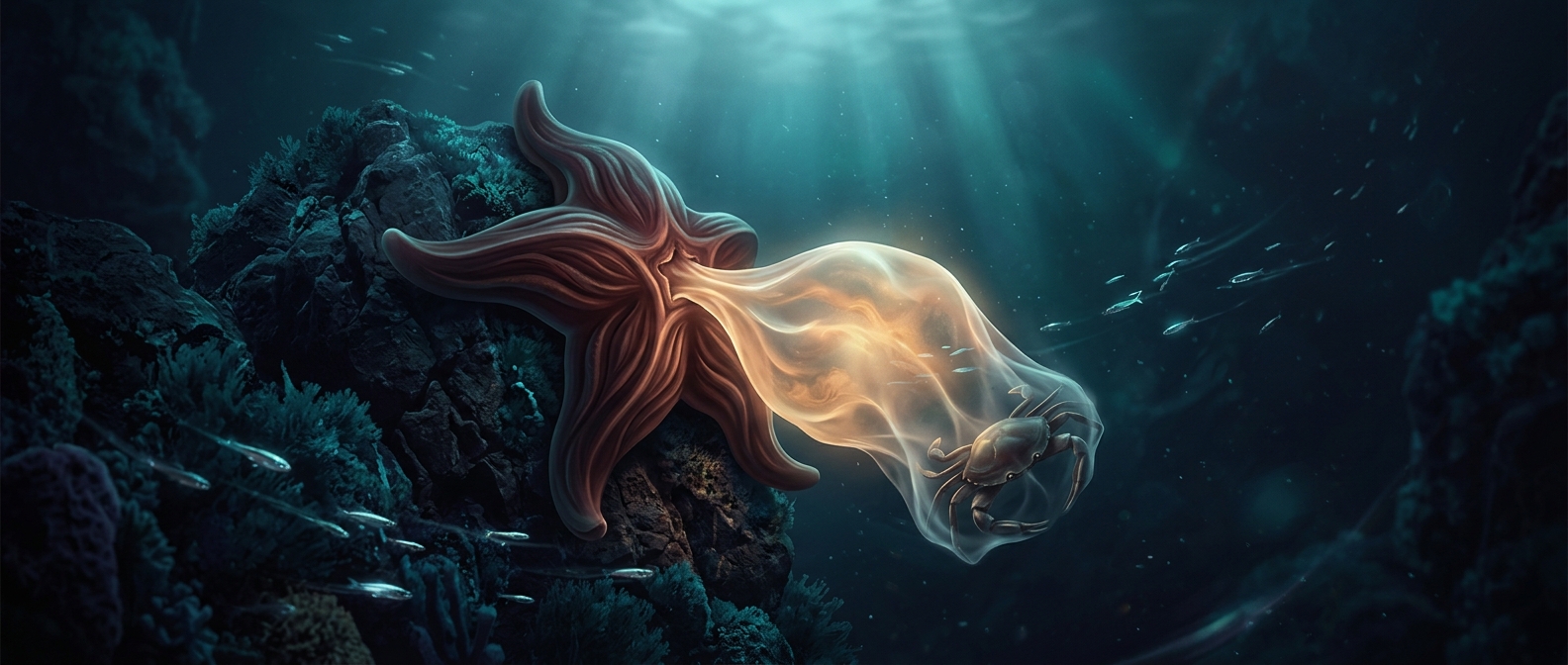
Starfish digest prey outside their bodies
STACKY / Science
One discovery leads to another.

Keep exploring facts in this topic.

Science →

STACKY FOR IPHONE

A bigger world.
One discovery
at a time.

Keep discovering with Stacky. Interesting facts in an app that is always within reach.

Download on the App Store
ONE MORE DISCOVERY?

Keep exploring

All in this topic →
How starfish survive without a brain or blood
Science

How starfish survive without a brain or blood

Starfish operate entirely on vibes and a decentralized nervous system. They possess no central brain whatsoever, instead relying on a network of nerves spread…

Discover more
Sharks wear tiny teeth instead of scales
Science

Sharks wear tiny teeth instead of scales

Because having rows of razor-sharp teeth in their mouths wasn't terrifying enough, sharks decided to wear them as a full-body suit. Shark skin is entirely…

Discover more
Why giant squid need eyes the size of dinner plates
Science

Why giant squid need eyes the size of dinner plates

Being hunted by sperm whales in the pitch-black abyss forces some extreme evolutionary adaptations. The giant squid boasts the largest eyes in the animal…

Discover more
What is happening biologically when you hear your own clear voice in your head while reading silently?
Science

What is happening biologically when you hear your own clear voice in your head while reading silently?

What is happening biologically when you hear your own clear voice in your head while reading silently?

Discover more
The artist who revealed the brain's individual cells
Science

The artist who revealed the brain's individual cells

The foundation of how your brain processes everything was cracked by a guy who really just wanted to be a painter. Santiago Ramón y Cajal spent his days…

Discover more
Herring communicate in the dark by emitting high-frequency bursts of gas from their anal ducts, a phenomenon scientists literally named Fast Repetitive Tick.
Science

Herring communicate in the dark by emitting high-frequency bursts of gas from their anal ducts, a phenomenon scientists literally named Fast Repetitive Tick.

Herring communicate in the dark by emitting high-frequency bursts of gas from their anal ducts, a phenomenon scientists literally named Fast Repetitive Tick.…

Discover more
StackyMore discoveries in the app
Download on the App Store