A water-powered system beneath the arms
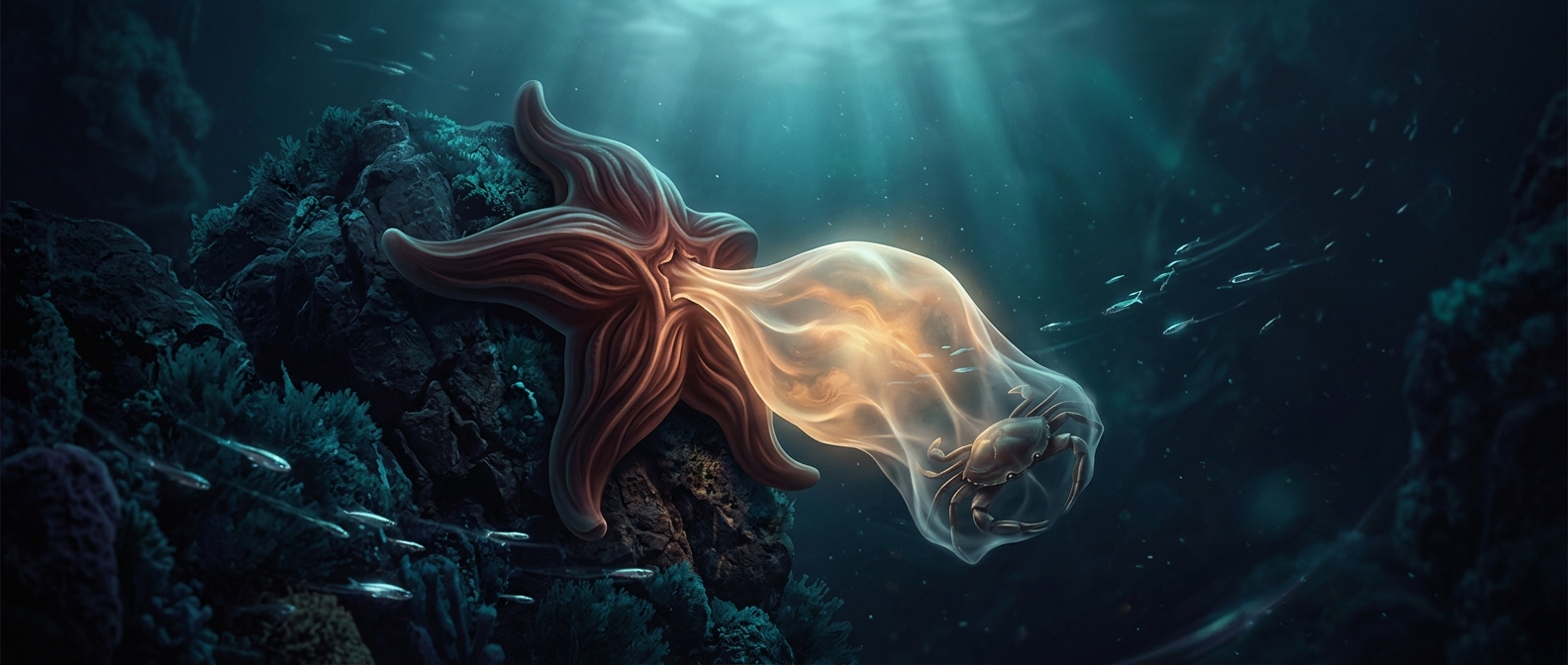
A starfish—more accurately called a sea star—does not rely on blood to move its tube feet. Seawater enters a network of internal canals called the water vascular system. Muscles and flexible body walls change pressure within that network, sending fluid into the feet and extending them. Muscles then help bend or retract each foot.
At the tip of a tube foot, a small sucker can grip a surface. Many feet working together let a sea star crawl over rocks, hold on in currents, or get a purchase on prey. The system is not simply seawater sloshing freely through the body: it is a controlled hydraulic network, with valves and pressure changes directing movement.
Many small actions replace one central command
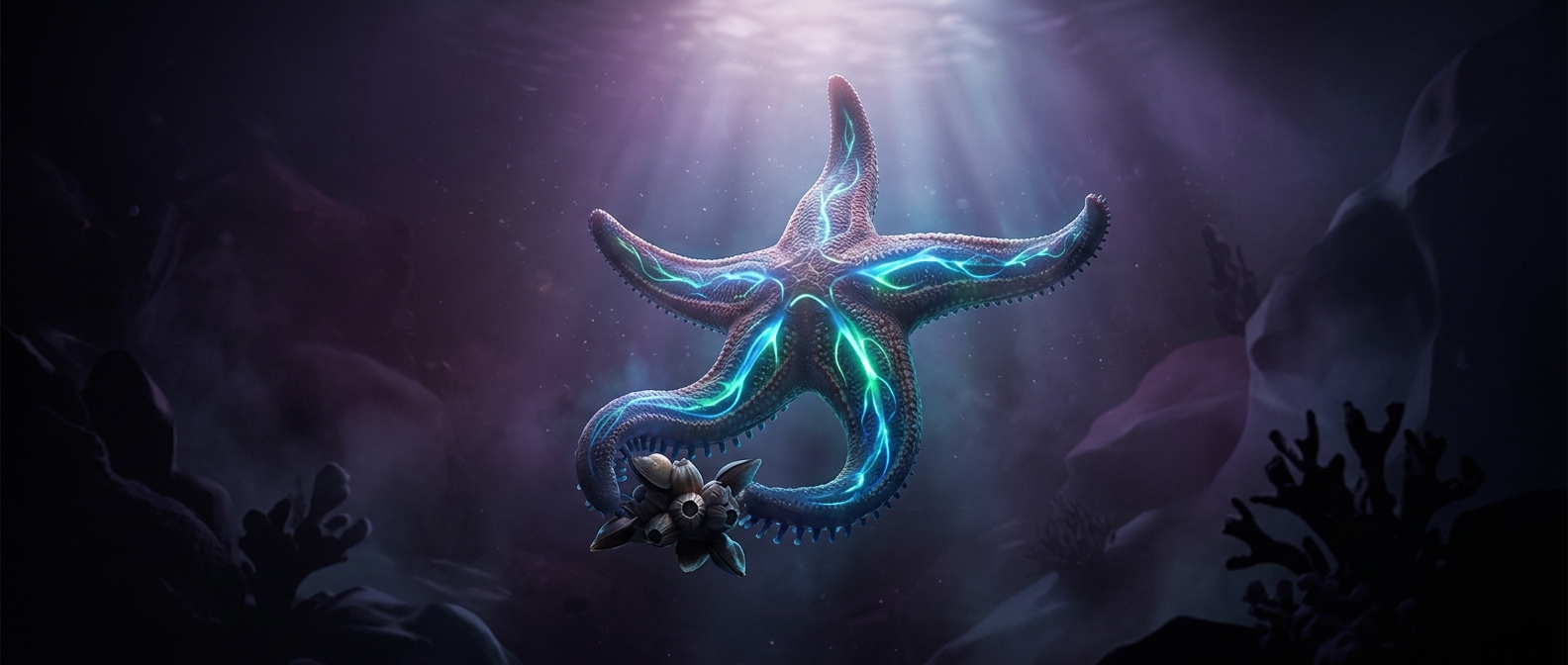
Sea stars also lack a centralized brain. Instead, nerves run through the body, including a nerve ring around the mouth and radial nerves extending into the arms. Sensory cells in the skin and tube feet detect local cues such as touch and chemicals in the water. Nerve signals coordinate the feet, so an arm can respond to nearby conditions without a brain issuing every individual instruction.
That arrangement helps explain how a sea star can keep moving even though its nervous system is spread out. Its arms are not independent animals, but each contains much of the machinery needed to sense and act locally.
The payoff is coordinated grip
A sea star’s strength comes from coordination rather than speed. As tube feet attach and release in sequence, the animal can steadily pull itself along or maintain a firm hold. When feeding on prey such as a mussel, many feet can grip the two shells and apply sustained force. A body powered by seawater and distributed nerves can therefore perform precise, persistent work without either blood or a brain.