How a hornless rhino relative reached the canopy
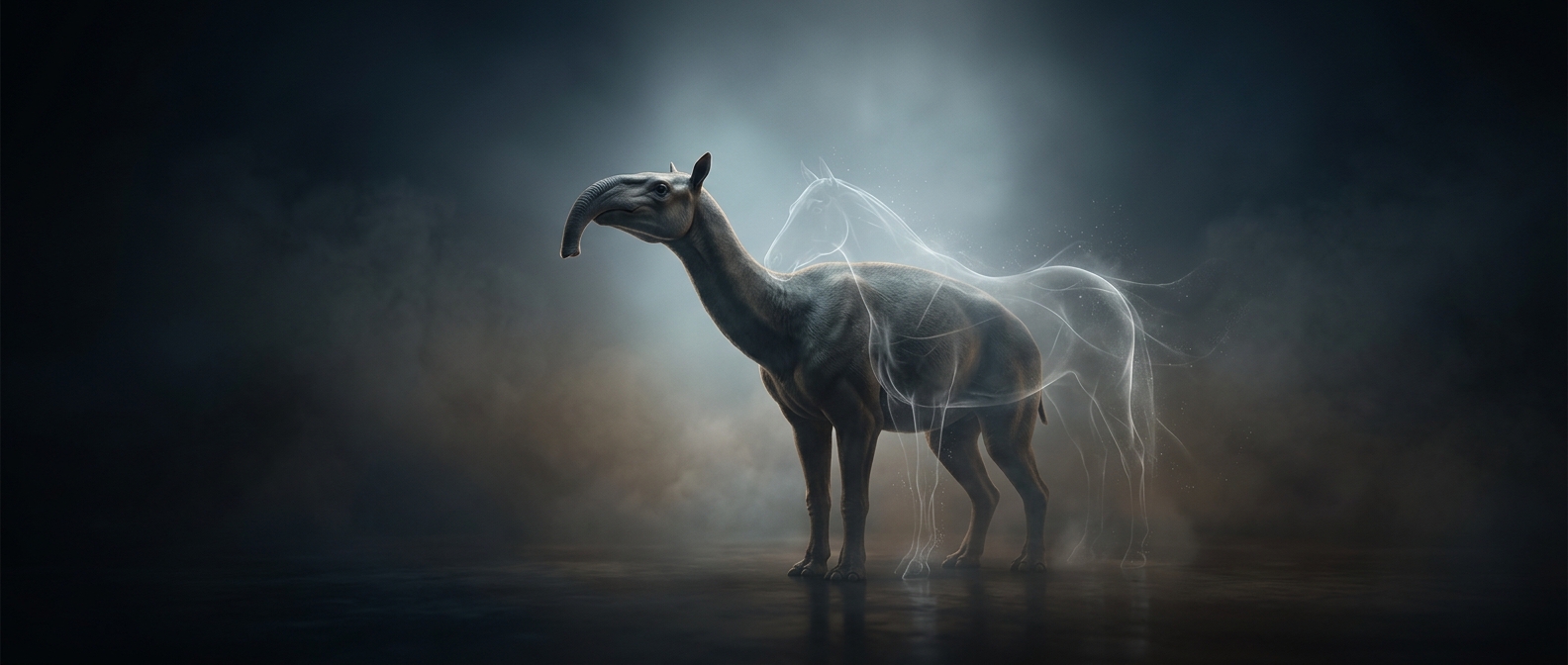
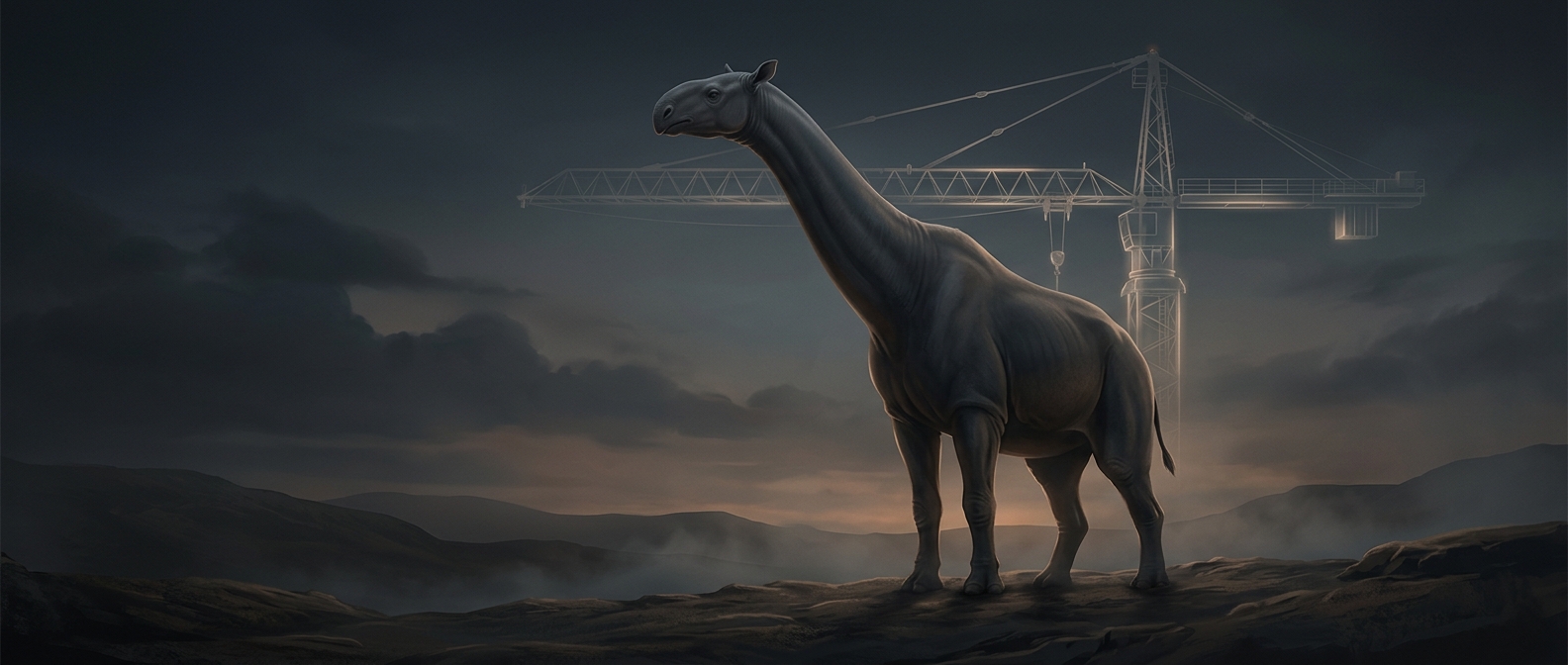
Paraceratherium’s height came from a different arrangement than a modern rhino’s: long limbs raised its massive body, while an extended neck helped bring its head to foliage above ground level. That combination would have made leaves on tall shrubs and trees easier to reach without needing to climb or tear down branches.
Its build also involved a basic engineering tradeoff. Longer legs create more height, but they must still support a heavy body with every step. The animal’s weight therefore had to be carried through substantial limb bones and joints; its height was not simply a matter of having unusually long legs.
The missing horn—and what fossils can show
Being related to rhinos did not mean Paraceratherium had every feature seen in living rhinos. A horn is made of keratin, the same material as hair and nails, rather than bone, so it does not fossilize like a skull. Paleontologists assess whether an extinct animal had a horn by examining the shape and surface of its skull, alongside comparisons with related animals. Paraceratherium is reconstructed as hornless, despite its rhinoceros kinship.
That difference is a useful reminder that familiar animal features can evolve—or disappear—within a lineage. In Paraceratherium, the striking adaptation was not a weapon on its nose but a body plan that put high foliage within reach.