Four tusks, built from incisors
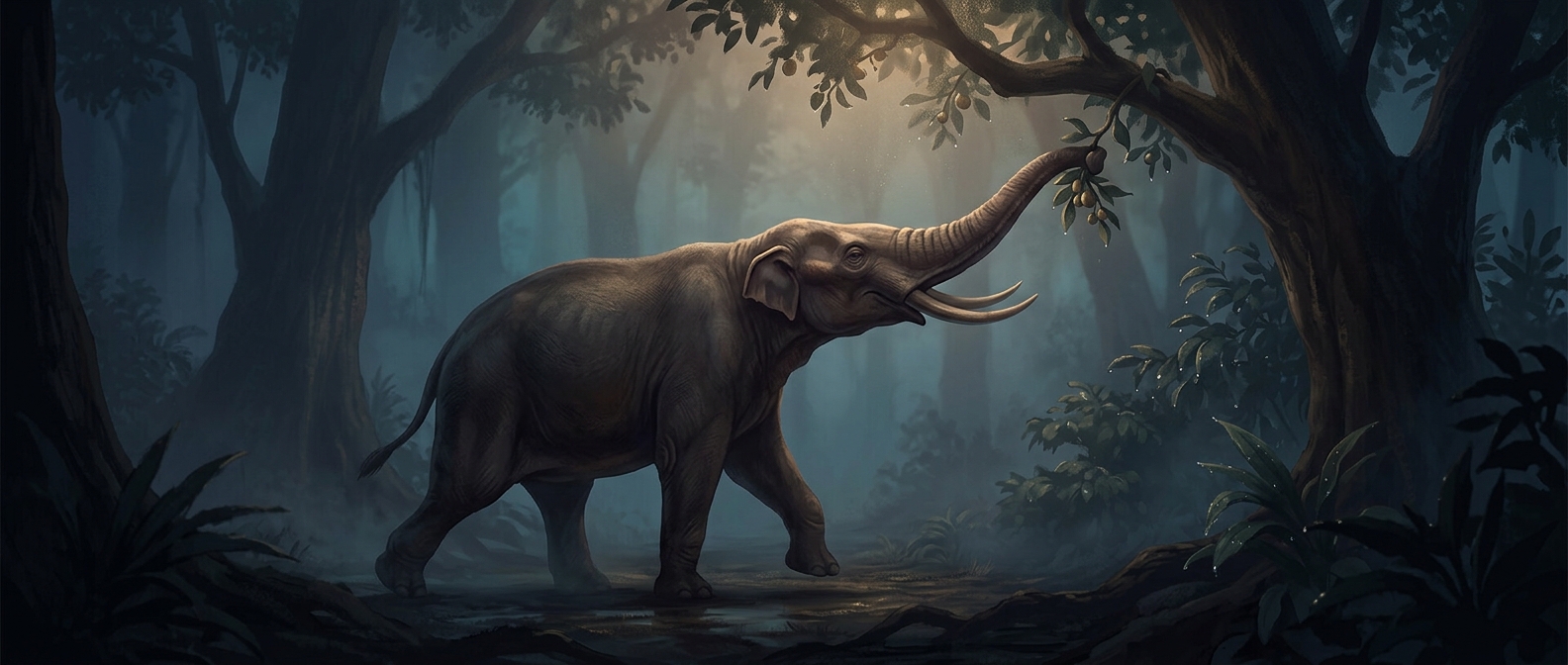
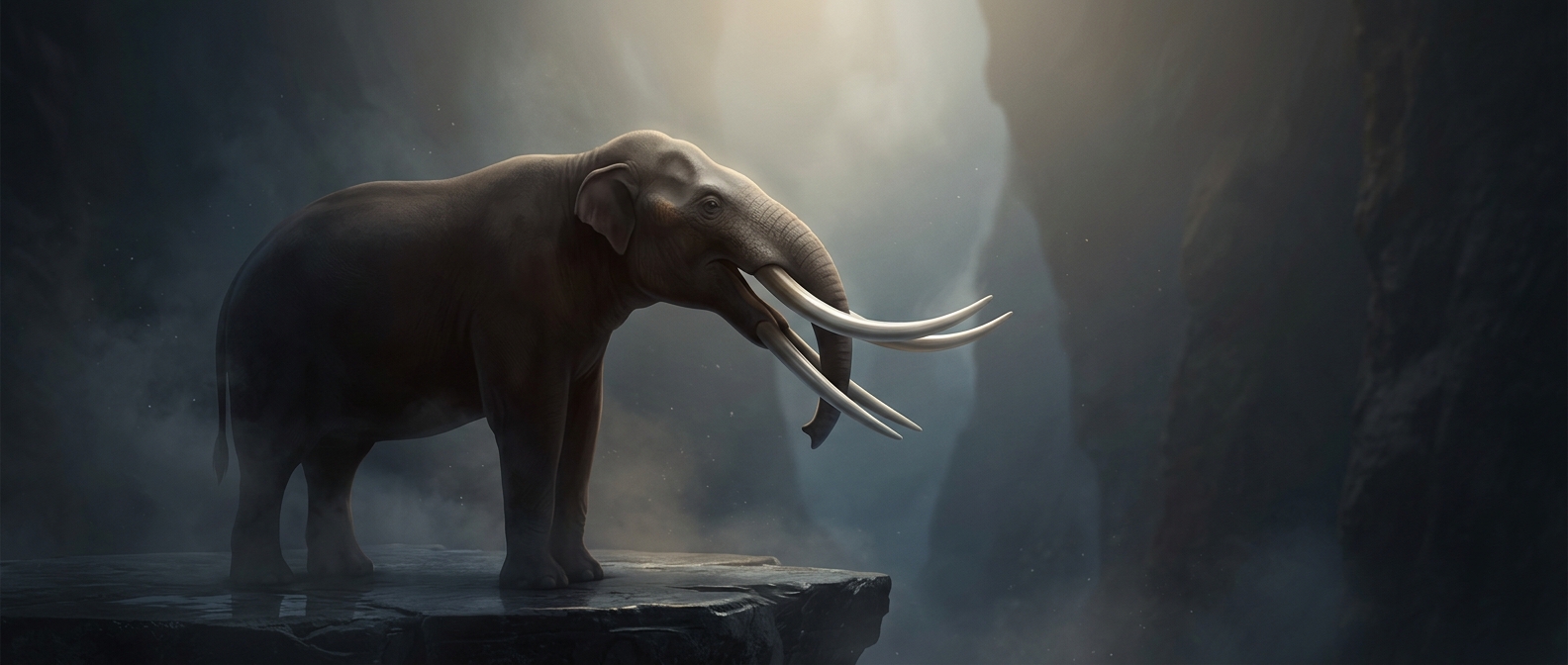
Gomphotherium’s tusks were enlarged front teeth, not a separate set of weapons. Like the tusks of living elephants, the upper pair grew from the upper jaw. The lower pair grew from the front of the lower jaw—but that jaw extended unusually far forward, carrying the tusks out beneath the upper ones.
That arrangement made the animal’s face look unlike an elephant’s. The lower tusks were broad and flattened in some forms, so the four could resemble two stacked pairs of blades. The jaw’s length was part of the design: without it, the lower tusks would sit farther back and would not project beneath the upper pair in the same way.
A different branch of the elephant family
Gomphotherium belonged to an extinct group of proboscideans—the larger animal order that includes elephants and their relatives. Its four-tusked appearance is a reminder that the familiar elephant face is only one version of a much broader evolutionary history. Proboscideans evolved varied combinations of jaw shape and tusks; Gomphotherium’s long lower jaw made its lower pair especially conspicuous.
The practical use of those lower tusks is less certain than their anatomy. Their shape suggests they could have helped with handling or scraping food, but a fossil skull alone cannot show exactly how the animal used them. What it does preserve is the striking engineering: a lengthened jaw turned front teeth into a second, lower set of projecting blades.