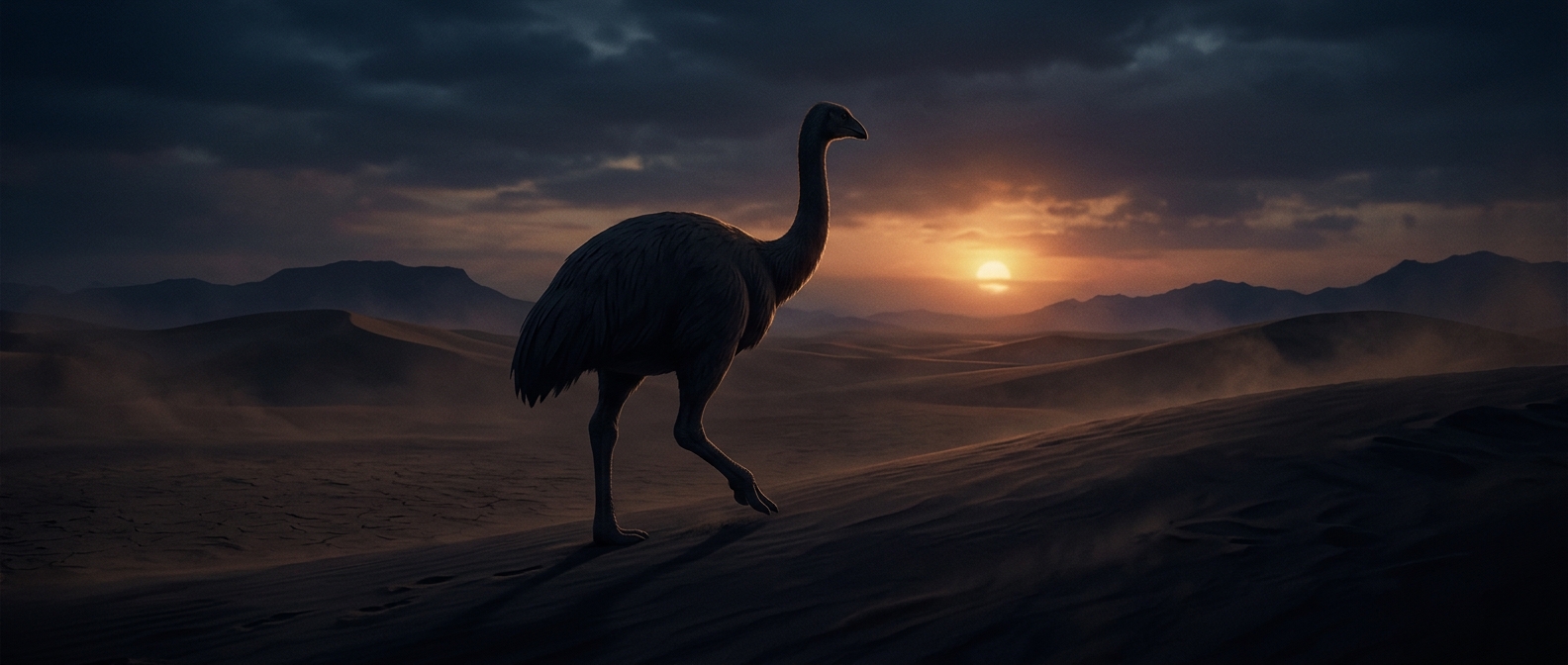
A desert today may preserve a very different past
A fossil found in Egypt’s desert records where an animal lived millions of years ago—not necessarily the climate it faced. The Sahara’s present aridity is comparatively recent on geological timescales. Ancient layers exposed by erosion can preserve remains from landscapes that were once much wetter, with rivers, wetlands, or wooded habitats.
To reconstruct that setting, paleontologists look beyond the bird’s bones. The surrounding rock can reveal whether sediments accumulated in flowing water, a lake, or dry conditions; fossil plants and other animals provide additional clues. Those clues help distinguish an animal that lived in an arid landscape from one whose remains were buried in a greener environment and later uncovered by desert erosion.
What flightlessness does—and doesn’t—tell us
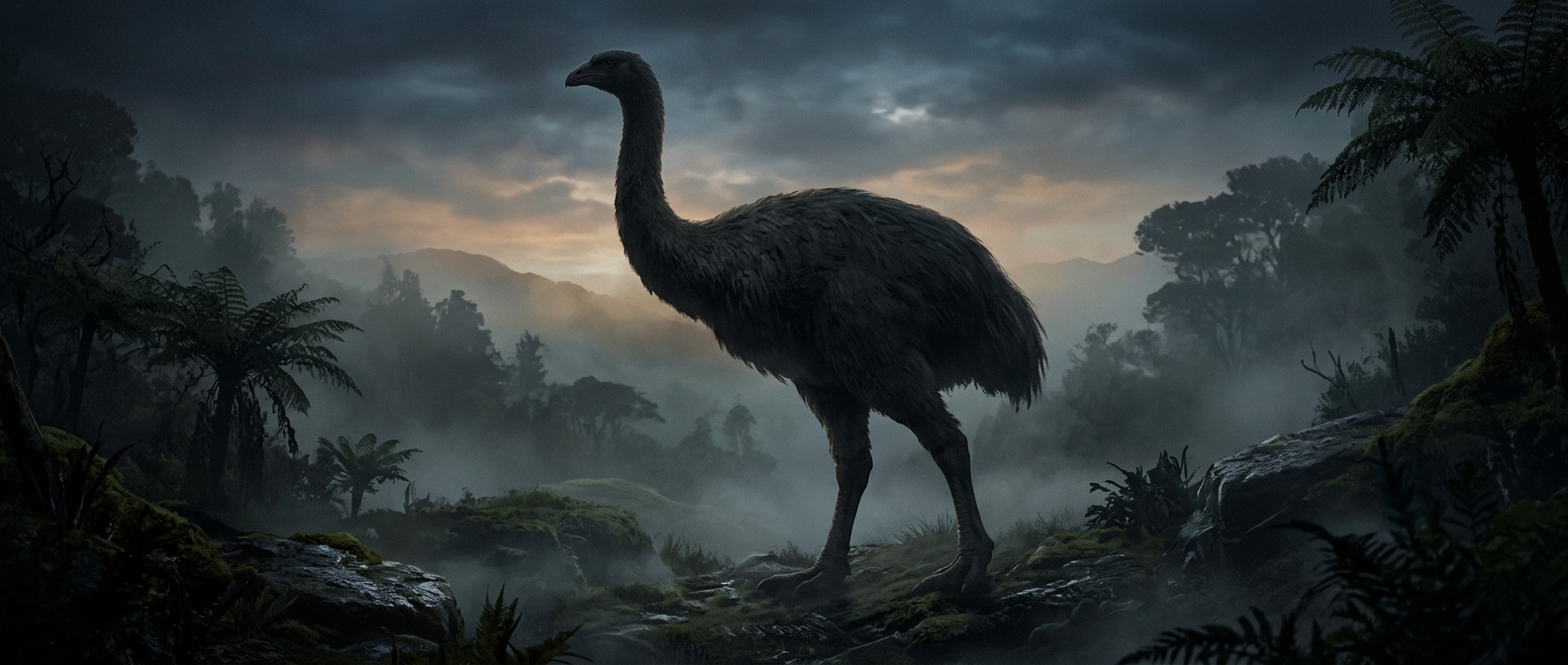
A large, flightless bird could not escape danger by taking off, so its survival depended on life on the ground: moving through its habitat, finding food and water, and avoiding predators. But flightlessness alone does not identify a particular climate. Large body size can be useful in more than one kind of environment, and the same basic body plan can persist under very different conditions.
That is why the fossil poses a real ecological question rather than supplying its own answer. Researchers must match the bird’s anatomy to evidence from the place and time it lived. The key distinction is between the desert where the fossil is found now and the landscape the bird actually inhabited—two settings that can be separated by immense changes in climate and geography.