How a bird lineage can lose its wings
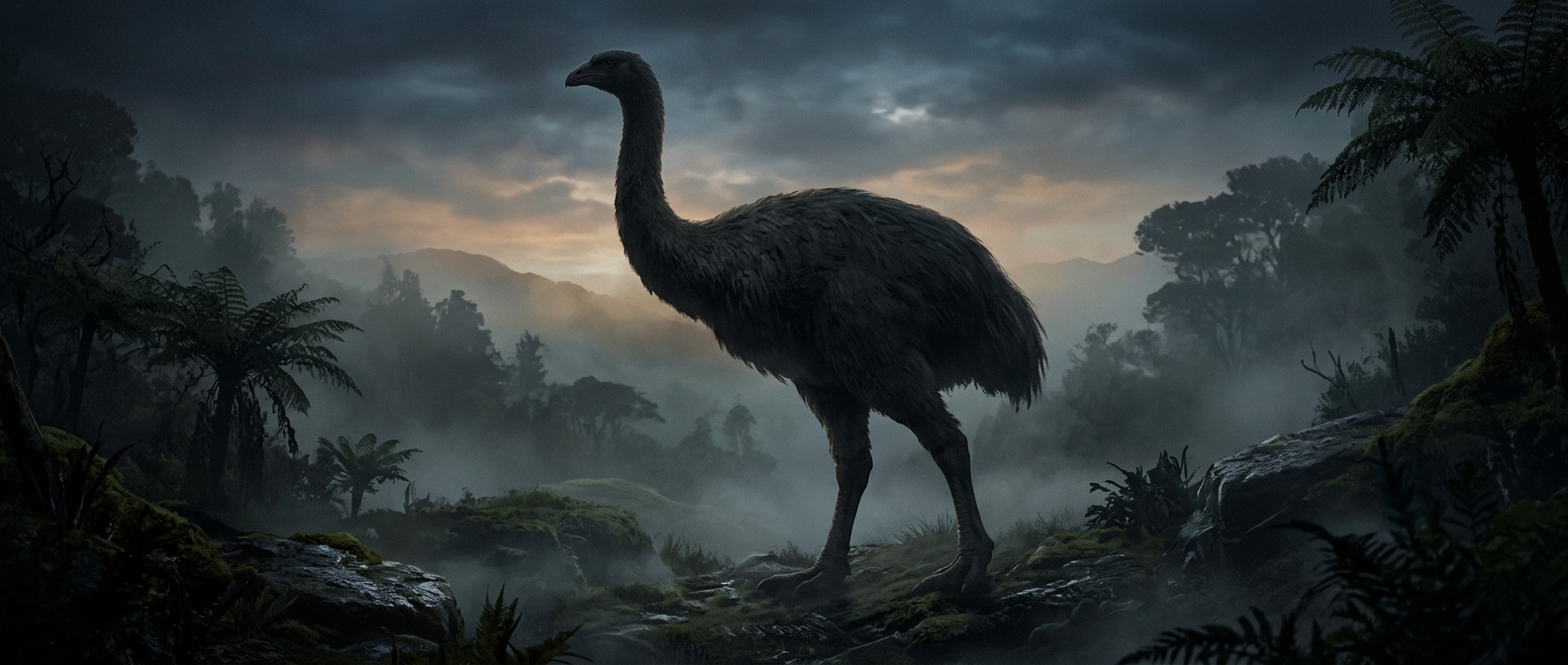
Moa did not become flightless simply because their wings shrank. Across generations, inherited changes can reduce a body part when it no longer contributes enough to survival or reproduction to maintain its full structure. As the forelimbs became less useful for flight, the bones that normally support a bird’s wing dwindled and, in moa, disappeared from the wing itself.
This is a gradual evolutionary change, not an individual bird losing bones during its life. Fossils preserve the result: moa had no wing framework comparable to the small, reduced wings retained by some other flightless birds.
Flightlessness reshaped the whole body
A bird’s wings are only one part of the machinery for flight. Flying also depends on powerful flight muscles and a sturdy chest skeleton to anchor them. With no wings to operate, moa did not need that flight apparatus. Their bodies instead evolved along a different path, including large size in several species and strong legs for moving on the ground.
The contrast with birds that still have tiny wings is striking: in moa, flightlessness was not a working system left idle. The wing structure itself had been lost.