A chair that seems to answer a presence
A rocking chair is built to move with very little effort: its curved runners let a small push become a gentle back-and-forth sway. Once moving, it gradually settles as friction takes energy from the motion. But a chair that is lightly balanced, standing on a sloping or uneven floor, or exposed to a passing air current can shift enough to start rocking again.
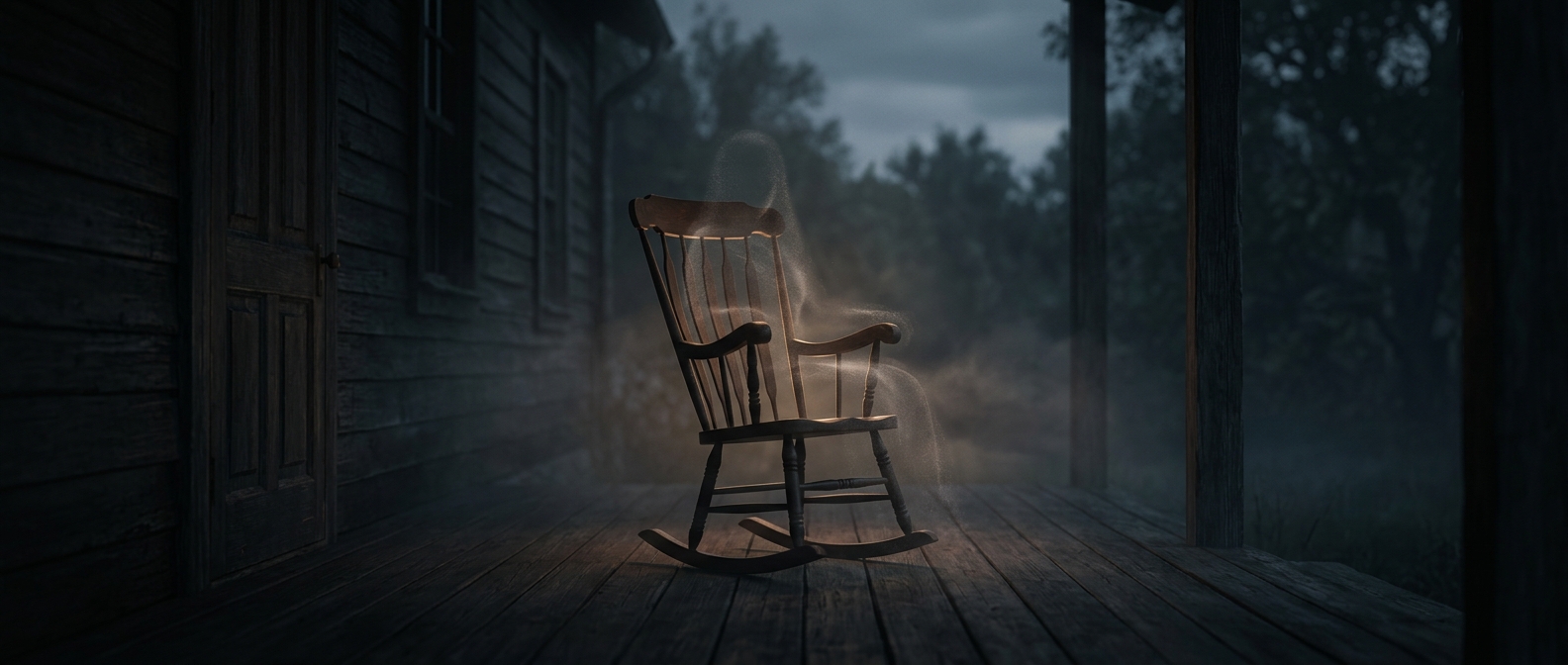
That ordinary movement leaves room for interpretation. In folklore, an empty chair in motion could be read not just as a strange event but as a sign that someone unseen had arrived. The chair’s familiar use—one person settling in while another might be nearby—makes the image especially suggestive: the object appears to respond to a guest no one can see.
Why the ambiguity lasts
A draft is a plausible physical cause, but it may be hard to notice. Air can move through a room when a door opens, a window leaks, or warm and cool air circulate. If the chair is already close to tipping into motion, a subtle disturbance may be enough; the movement then becomes more visible than its cause.
That gap between a noticeable effect and an invisible trigger is where the ghostly reading takes hold. The chair does not need to prove anything about who—or what—is in the room. Its motion simply turns an empty seat into a vivid suggestion of company.