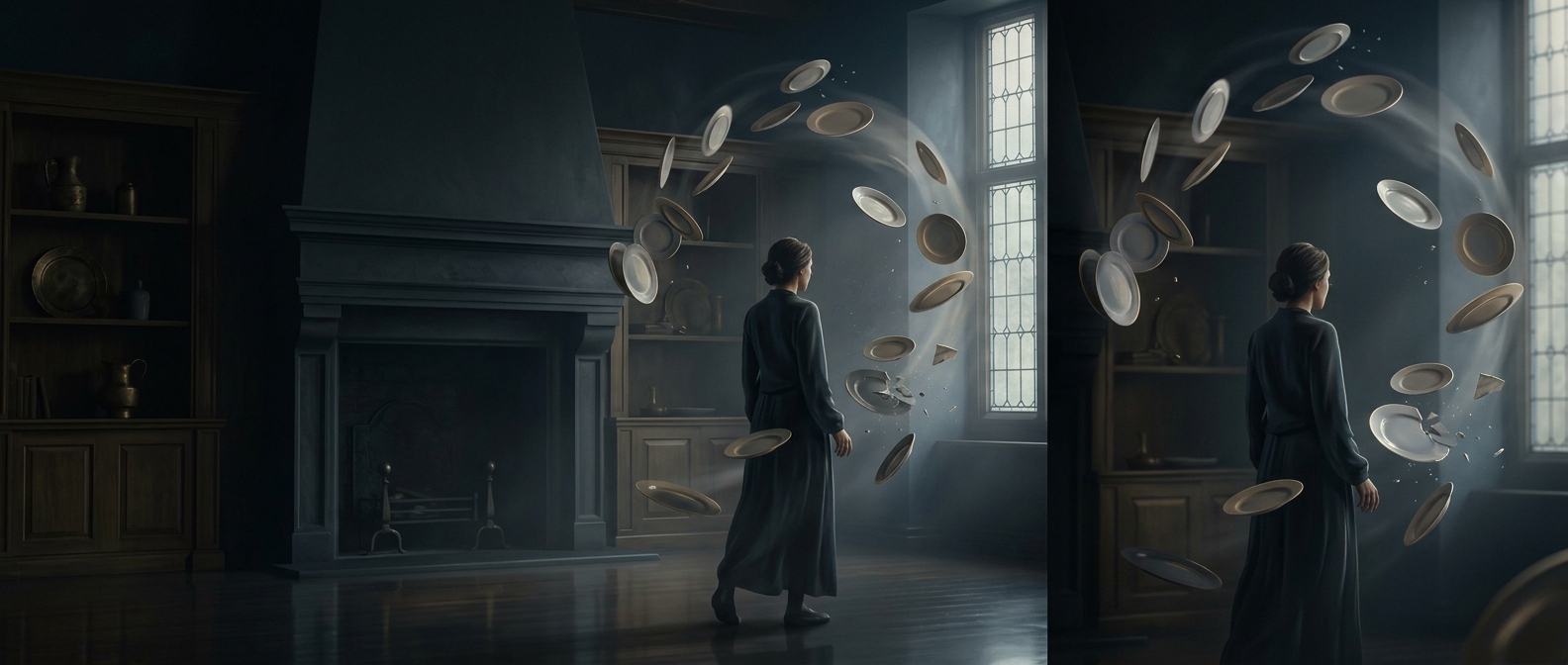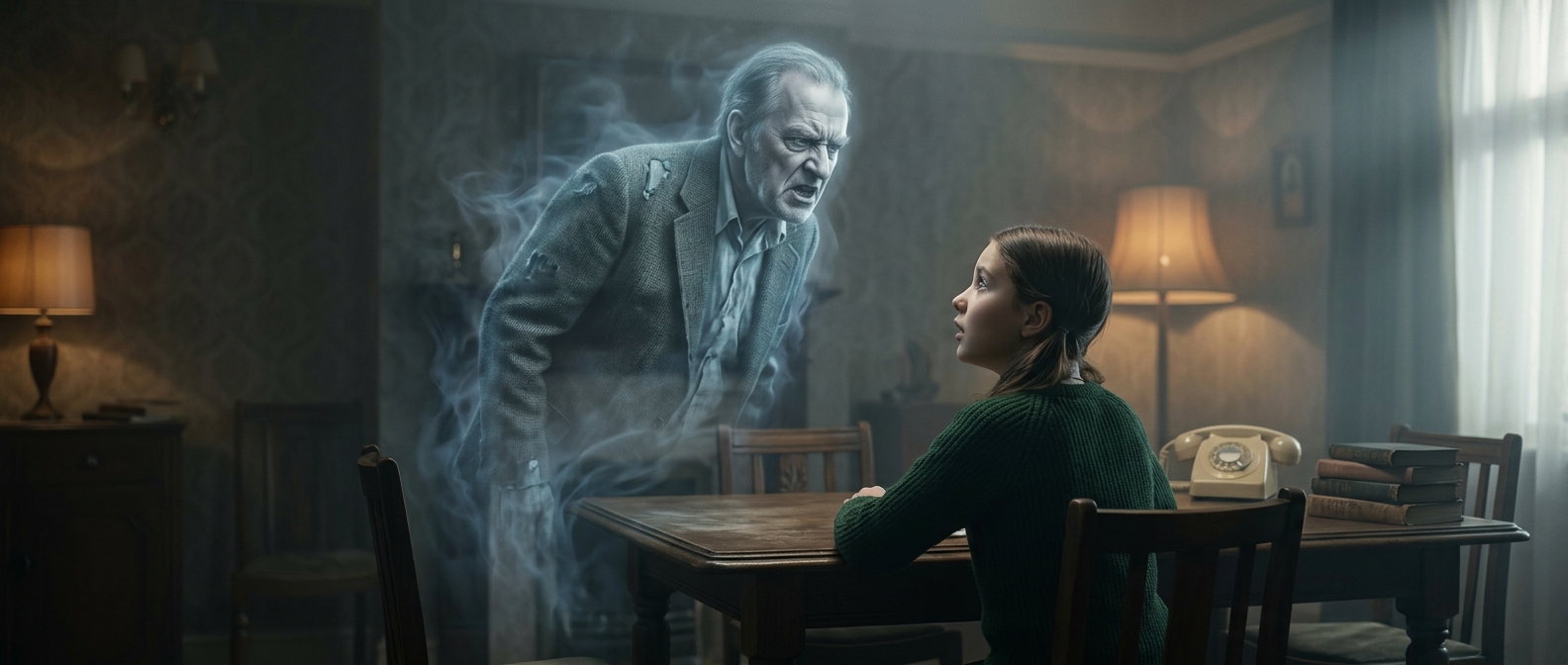
The voice that gave Enfield its ghost
In the Enfield case, the most unsettling detail was not simply that a child seemed to speak for someone dead. It was the gap between the speaker people could see and the identity the voice claimed: an 11-year-old girl, Janet Hodgson, producing a rough, low voice that presented itself as Bill, a former tenant of the house.
The voice supplied a small, grim biography. Bill said he had died in a chair from a hemorrhage—a bleed inside the body. That detail made the episode feel less like a vague haunting and more like an encounter with a particular person, attached to a particular place and death.
How a voice became a character
A voice can do more than make a strange sound: speech gives listeners clues about age, mood, and identity. In the reported episodes, Bill’s gravelly delivery and blunt manner helped distinguish him from Janet in the minds of those present. The contrast itself became part of the story: a child appeared to be speaking, but the voice sounded like an irritable older man.
The claim also gave witnesses something to question. They could ask who Bill was and how he had died, turning an eerie performance into an apparent exchange. Each answer made the figure seem more defined, while the chair and the former tenant’s story tied him to the house.
Why the detail endured
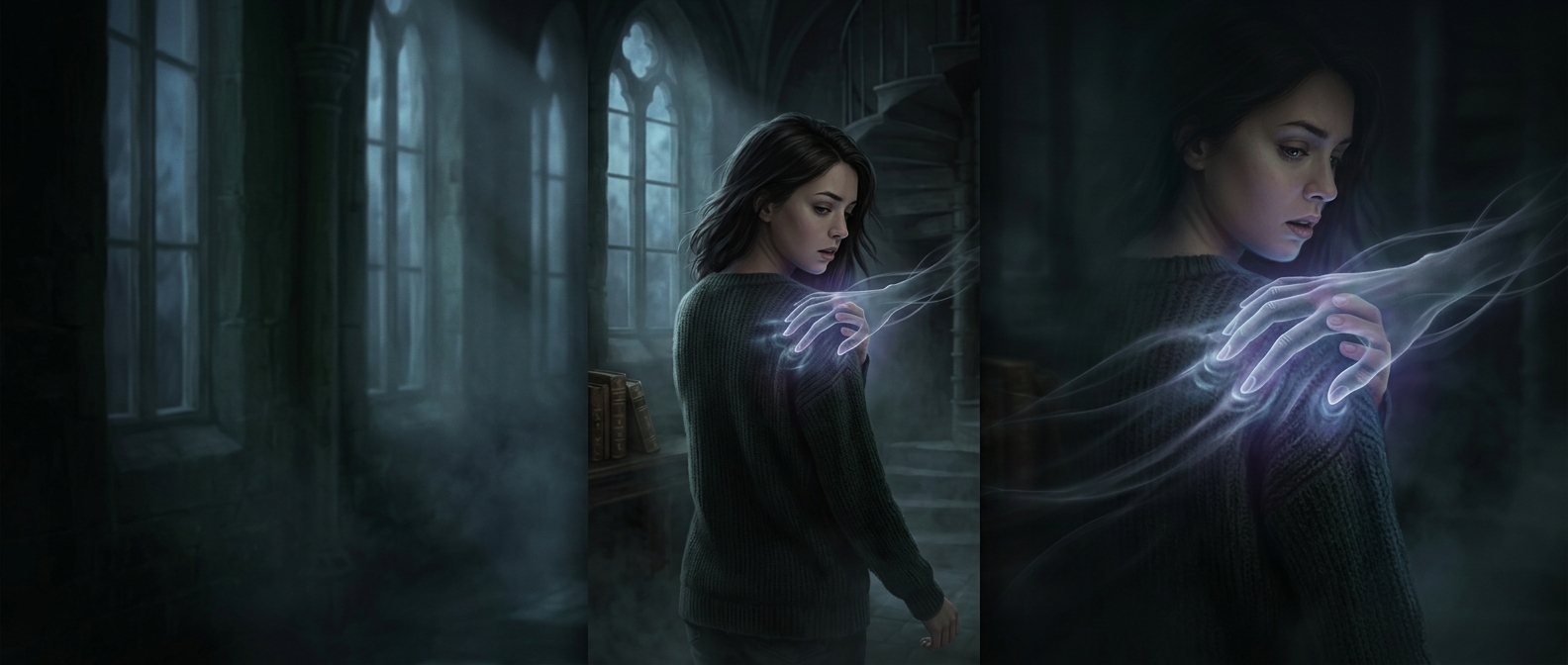
“Possession” is a label for the belief that another being is speaking or acting through a person. In Enfield, that interpretation drew force from the combination of an altered voice, a named dead tenant, and a death described in concrete terms. The story’s memorable image is therefore not just a child speaking in a strange register, but a dead man seeming to complain from the chair where he said his life ended.