Why a Corridor Seems to Remember
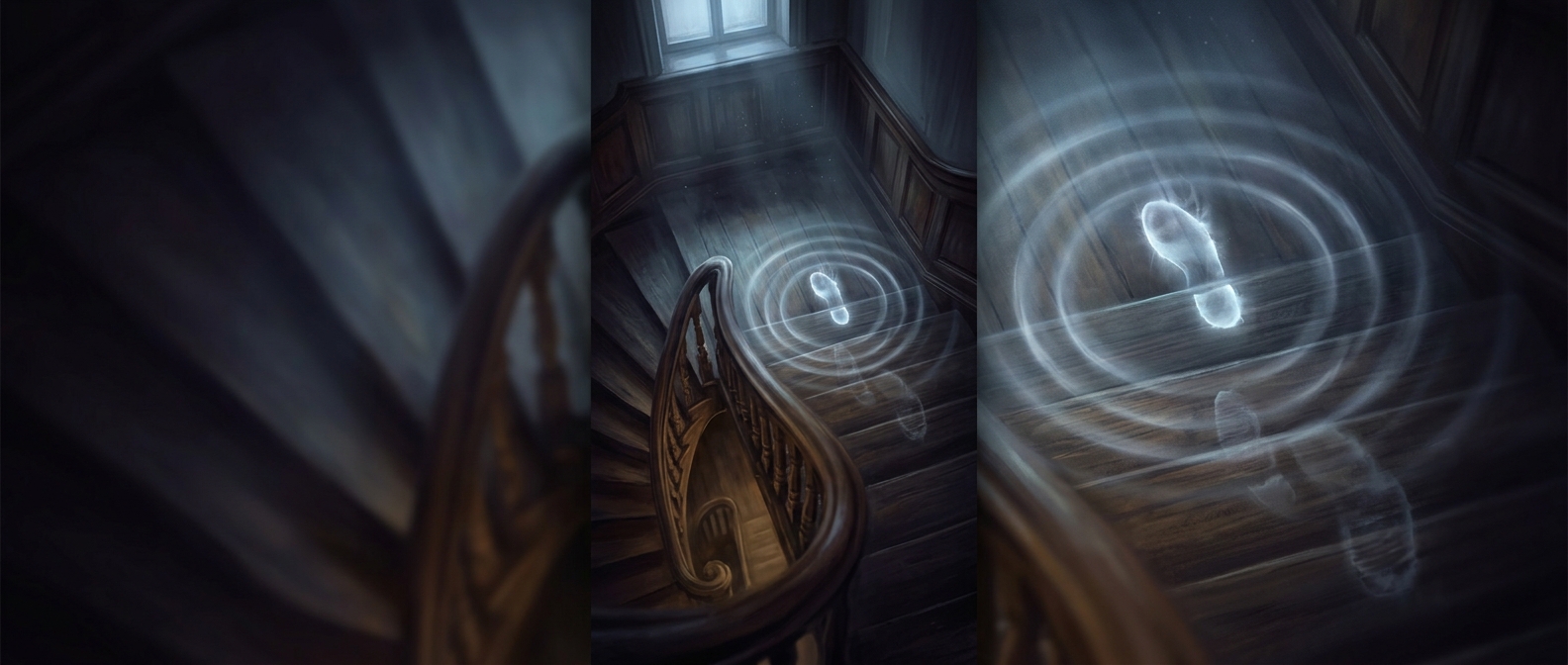
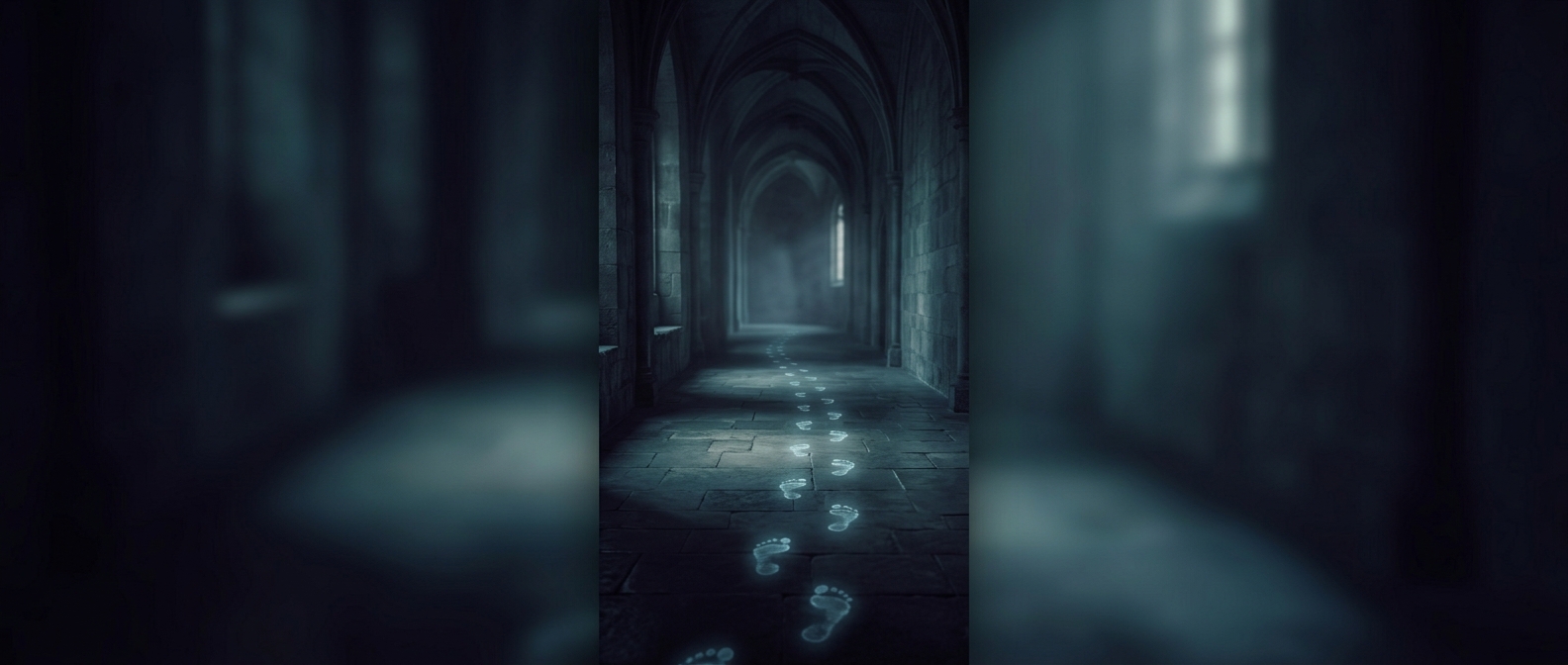
In some haunting traditions, unexplained footsteps are understood as a residual haunting: an impression left by intense events, rather than the deliberate actions of a spirit. The sound is imagined as an echo of ordinary movement—someone pacing, approaching, or crossing a hall—repeating after the people who once made it are gone.
That interpretation gives a particular weight to former wards and orphanages. Their corridors stand for lives shaped by separation, confinement, illness, or loss. A sound with no visible source can seem to belong to that history, turning an empty passage into a scene of remembered human presence. The haunting, in this view, is less a conversation with the dead than a place replaying what it has absorbed.
How an Unclear Sound Becomes Footsteps
Long, hard-surfaced corridors can carry and distort small noises: a pipe shifting, a distant door closing, or movement elsewhere in a building may arrive as separate taps. Because footsteps are familiar, listeners may group an uneven sequence of sounds into the pattern of someone walking. The setting supplies the story that the sound alone cannot confirm.
This does not prove that grief leaves a supernatural imprint. It explains why the belief feels coherent: the architecture makes faint sounds travel, while the building’s remembered purpose gives those sounds an imagined human source. A few taps in a vacant hall can therefore feel not merely like noise, but like someone still making their way through a place marked by absence.