Why a Poltergeist Makes a Racket
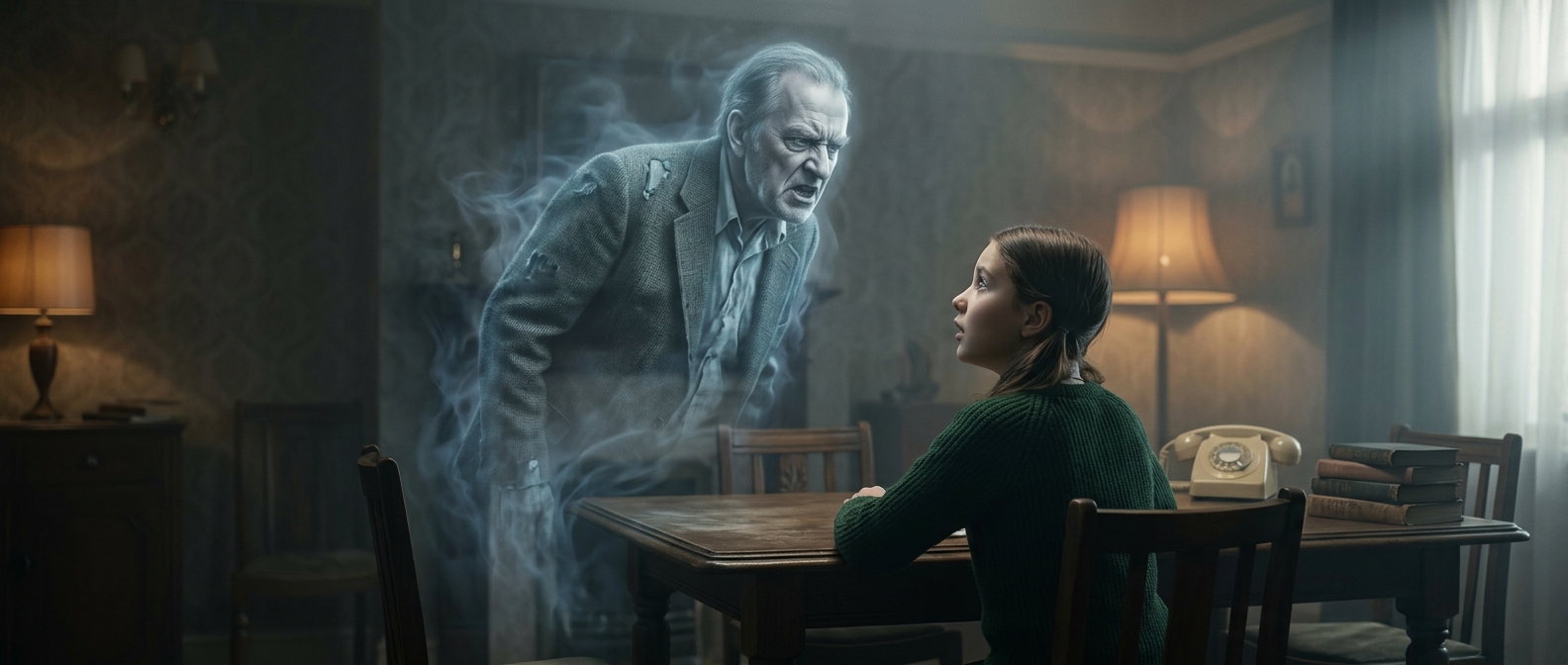
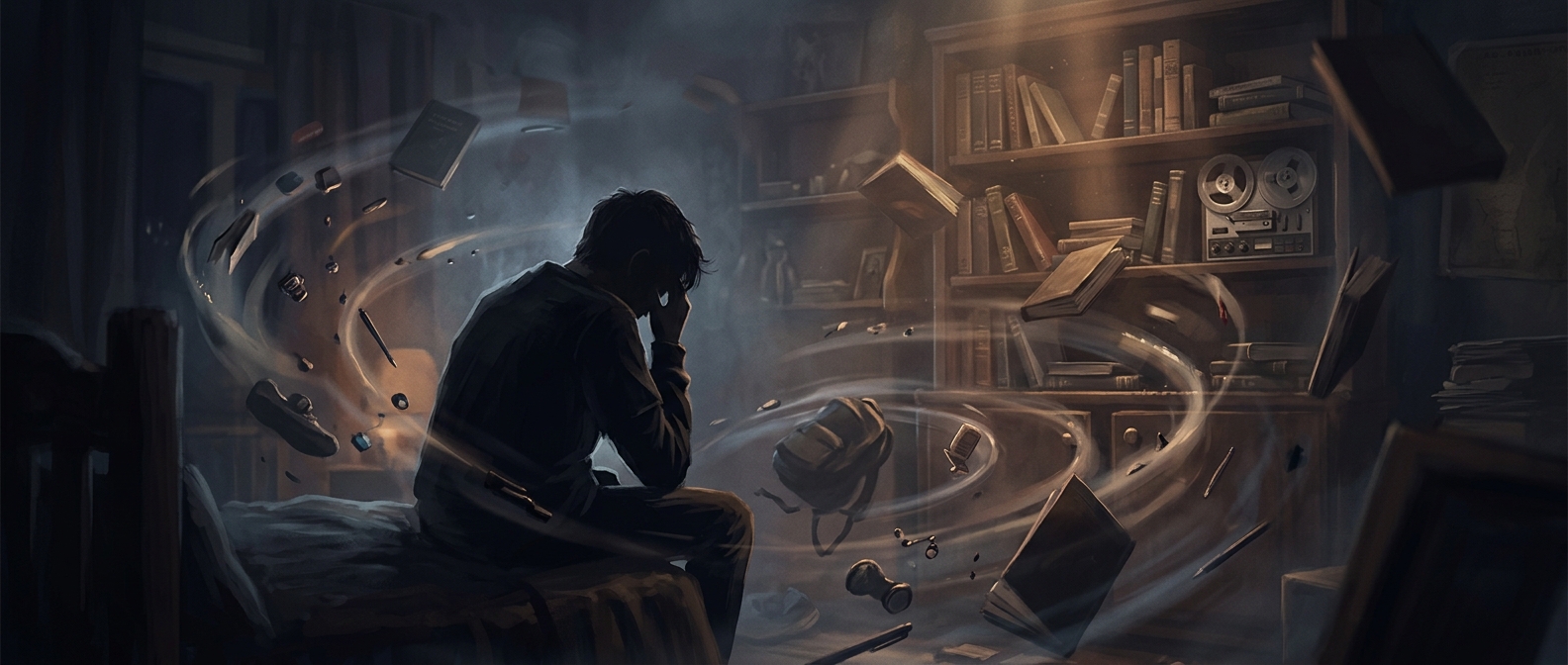
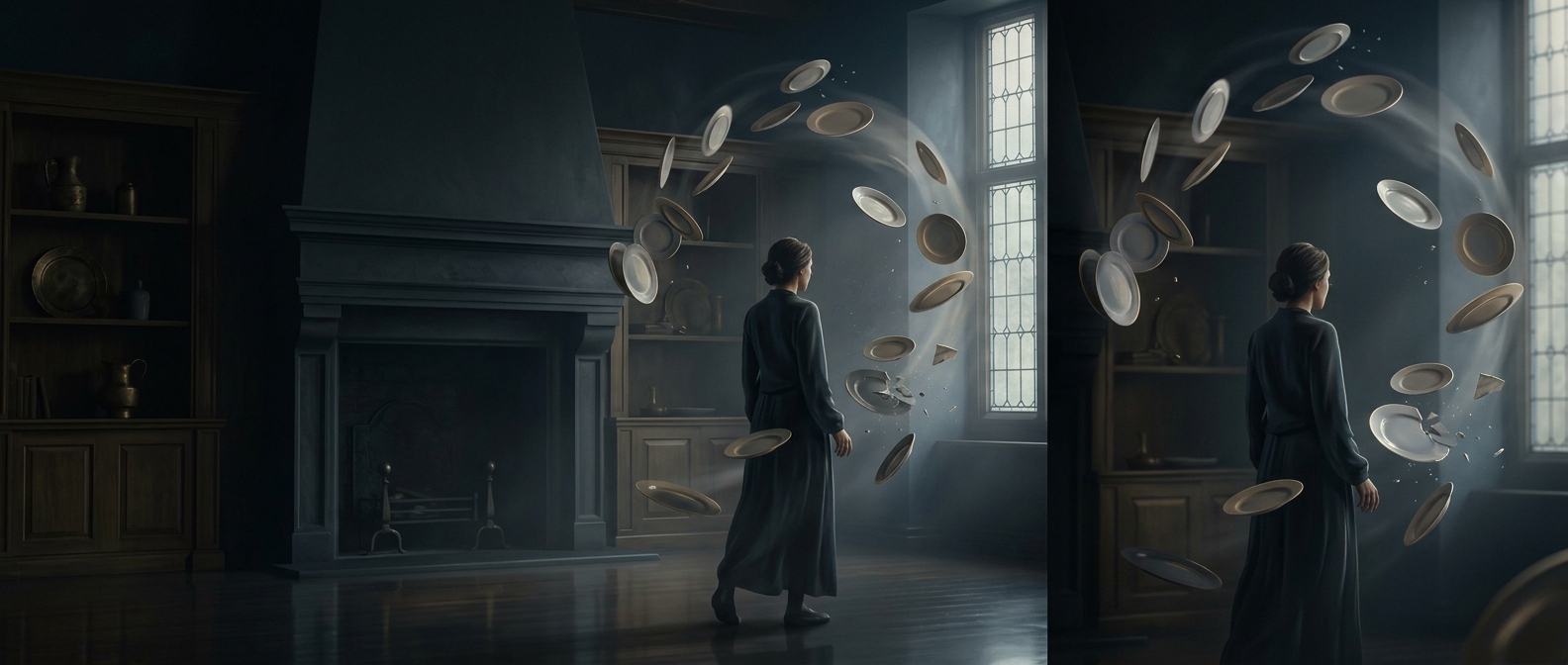
The word poltergeist comes from German: poltern means to make a clattering noise, and Geist means spirit. In folklore, the disturbance is the point. A spirit that cannot be seen becomes noticeable by upsetting the ordinary order of a home—making familiar objects move, doors bang, or rooms suddenly sound occupied.
That makes the poltergeist different from a ghost story centered on a visible apparition or a place’s past. Its presence is inferred from what seems to happen around people. The disruption acts like a message without words: something unseen is demanding notice, though the tradition does not always agree on what it wants.
Why the Home Matters
A plate or a door is effective in these stories because it belongs to everyday life. When an ordinary object behaves impossibly, the familiar home becomes uncertain. The disturbance can begin as an odd noise and grow into a pattern, giving the people in the story a reason to watch, argue, and search for an explanation.
That storytelling role helps explain the poltergeist’s enduring appeal: it turns an invisible presence into a problem the household must respond to. The folklore describes a supernatural interpretation, not evidence that spirits cause such events. But as a tale, its simplest trick is memorable—make the room itself seem to answer back.