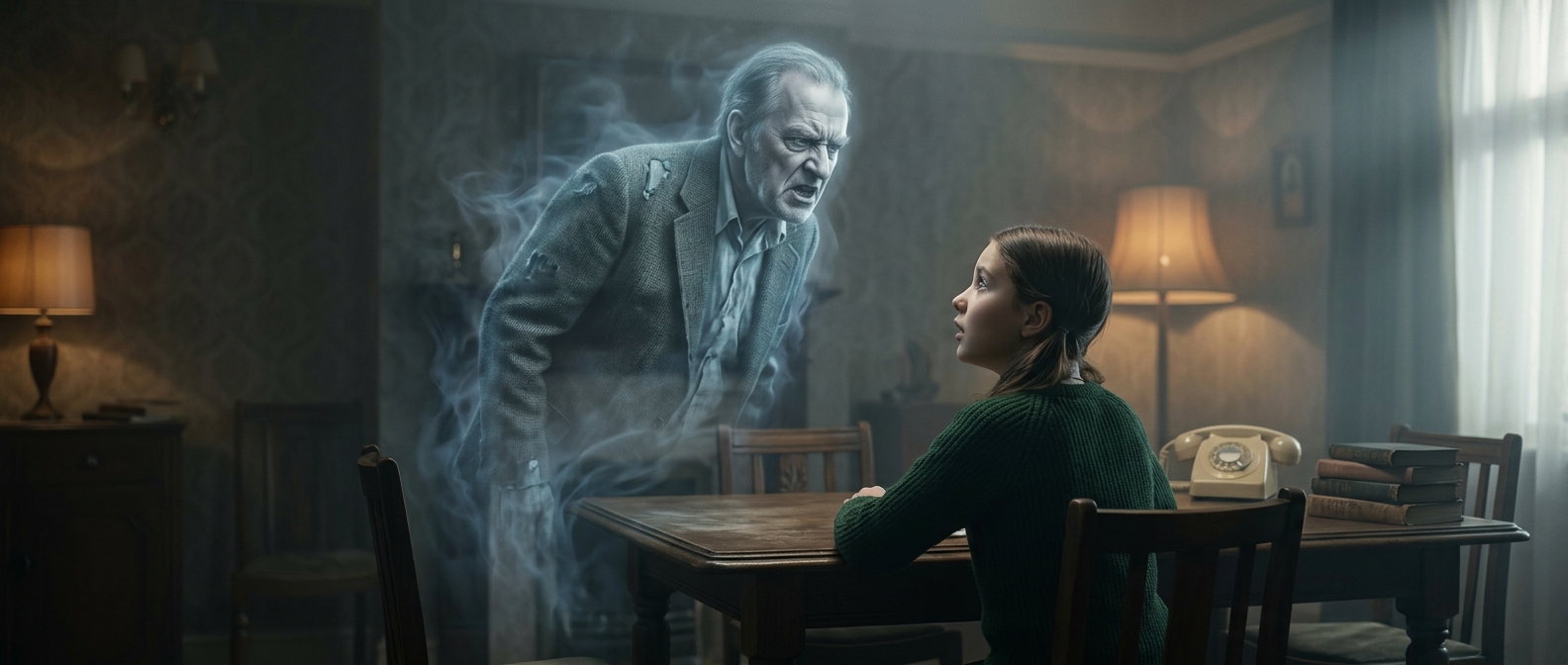
A “poltergeist” with a living center
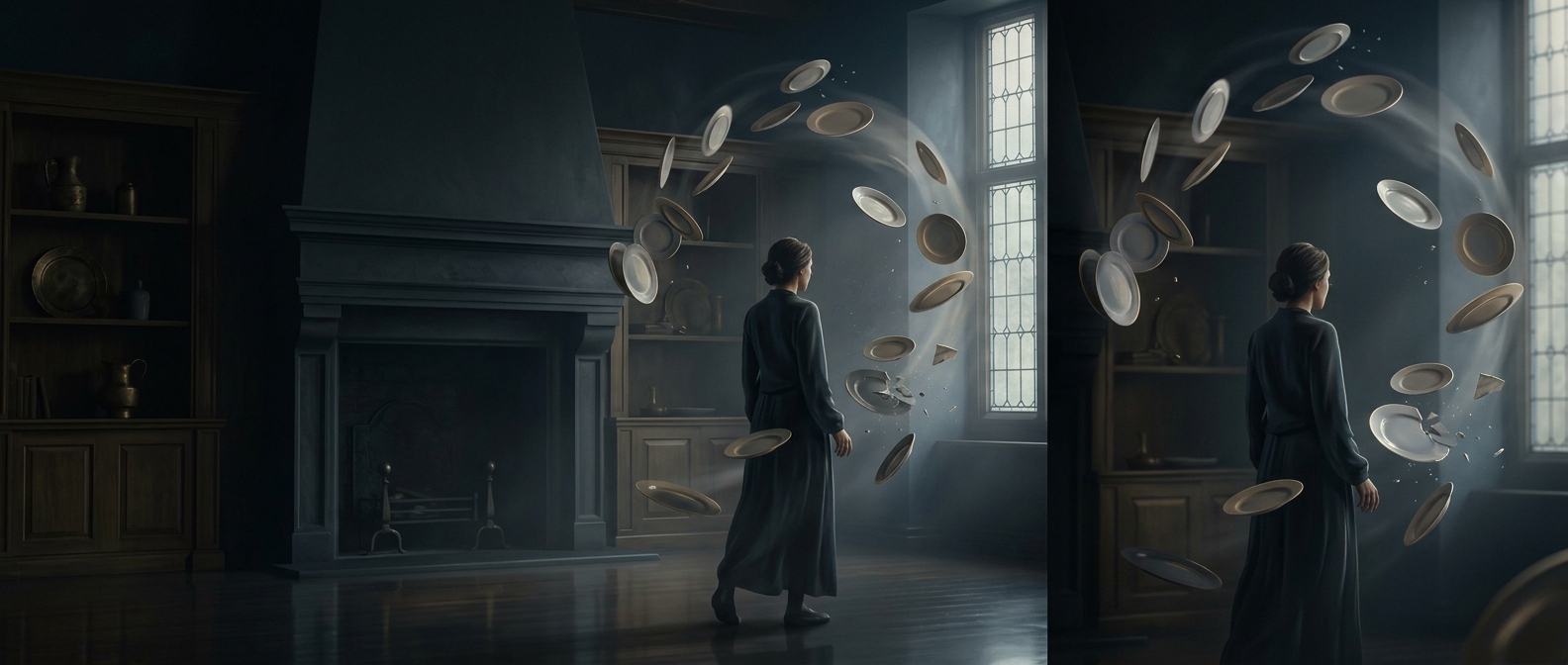
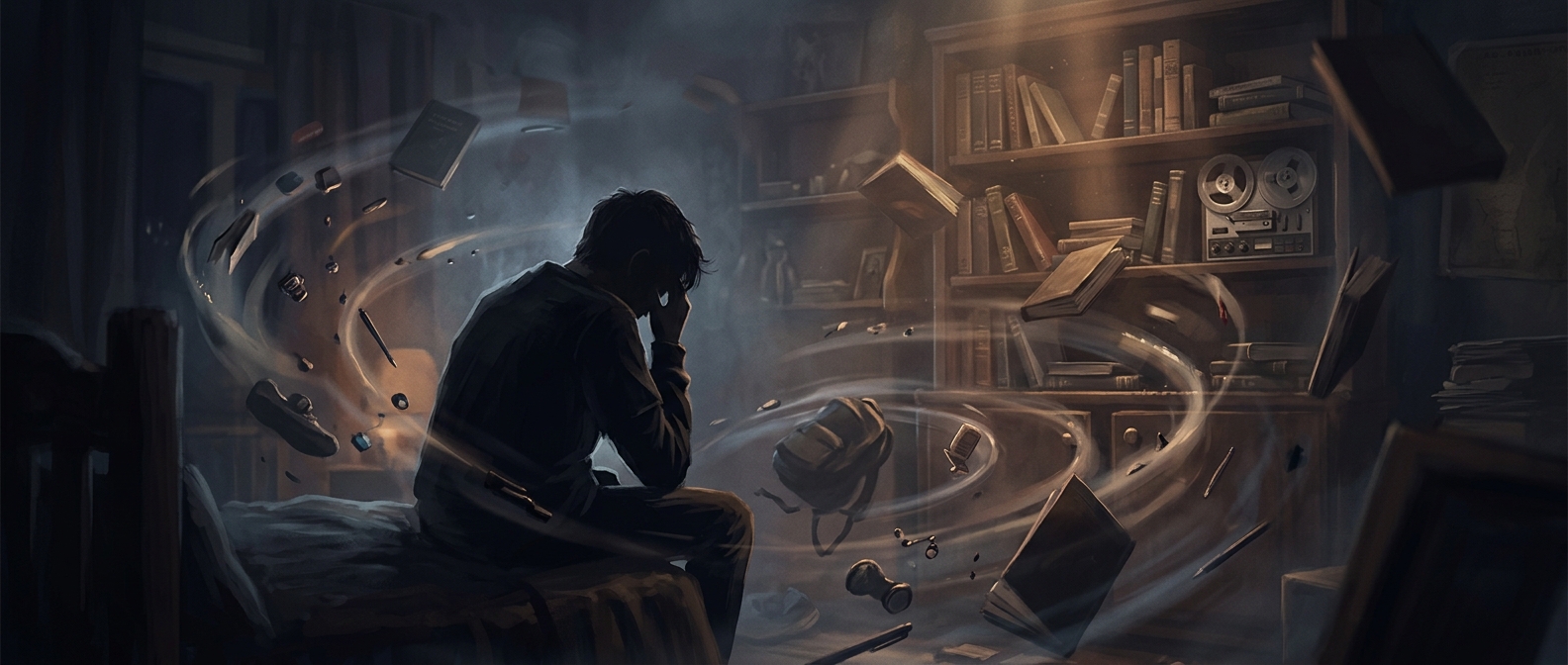
In the 1930s Bridgeport case, the disturbances clustered around a stressed 10-year-old girl: pans seemed to fly, and dishes were smashed. That pattern mattered to J. B. Rhine, a Duke University researcher known for investigating claims of psychic ability. Instead of treating the activity as the work of a dead person, he considered whether the girl might be causing it without intending to.
The distinction shifted the question from Who is haunting this house? to Could a person’s mind be moving objects? Rhine called that proposed ability psychokinesis—the supposed influence of the mind on physical things.
Why stress entered the explanation
Reports of poltergeist activity often describe objects moving or breaking in a particular household, sometimes with disturbances focused around one person. Rhine interpreted that concentration as a clue: in his view, emotional strain might somehow produce effects the person was not consciously creating. The child did not need to be deliberately throwing pans for his explanation to work; the proposed action was unconscious.
That was a striking alternative to a ghost story, but it was still an interpretation, not a demonstrated mechanism. The reported events did not establish that psychokinesis was real, nor that the girl had caused every disturbance. Rhine’s contribution was to frame the case as a possible human-centered phenomenon rather than simply assigning it to a spirit.
The idea also changed the image of the poltergeist. The “noisy spirit” might not be an invisible visitor at all, but a disturbance organized around a living person—one whose distress, in Rhine’s theory, could be expressed through the room itself.