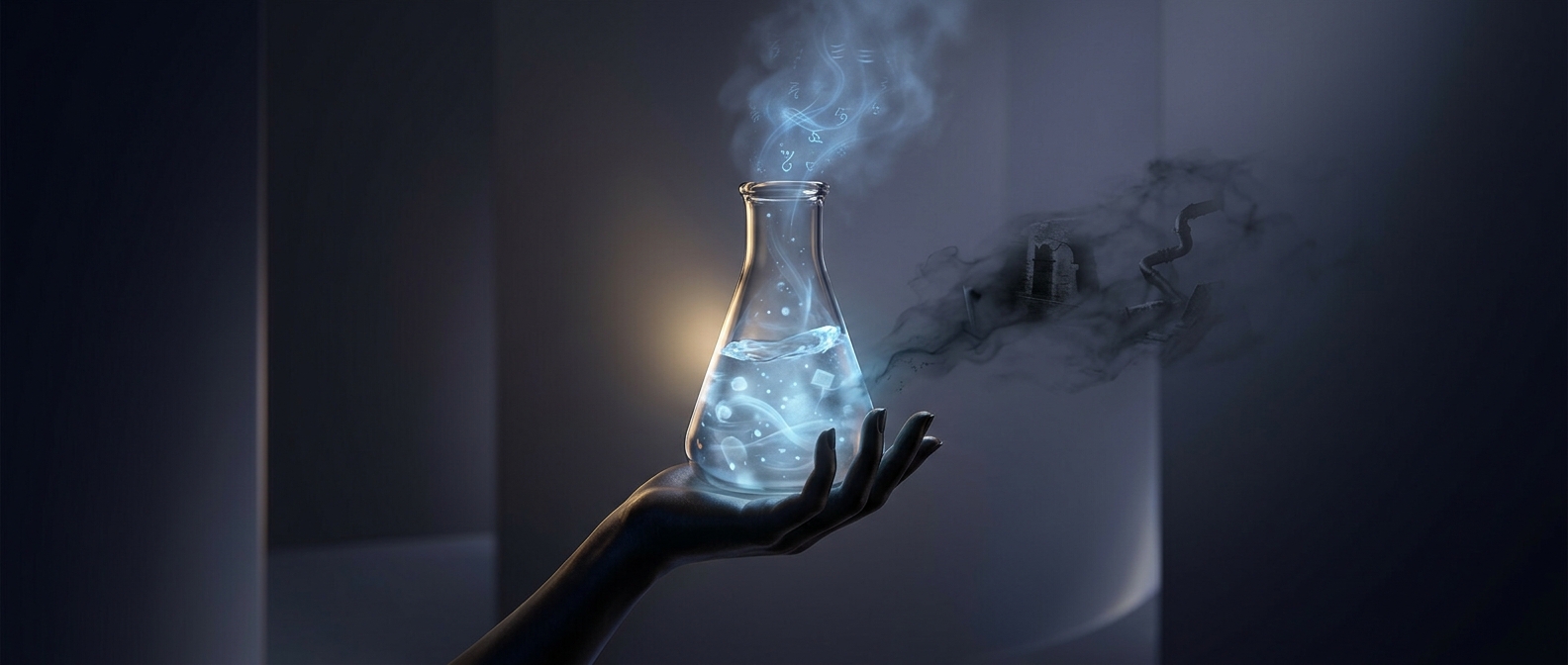
What “water memory” is meant to explain
In homeopathy, some preparations are diluted repeatedly until little or none of the starting substance is expected to remain. Practitioners often shake the liquid between dilutions, a step called succussion. The idea of water memory offers an explanation for how such a preparation could still have an effect: the water is said to retain information about what was once mixed into it, even after the substance itself has been diluted away.
That shifts the proposed action from chemistry based on how much ingredient is present to a kind of stored imprint. It is a distinctive claim because water does not ordinarily preserve a lasting record of every substance it encounters.
The selectivity problem
Water molecules continually form and break weak attractions with nearby molecules. Those arrangements change as the liquid moves, warms, cools, or encounters new materials. A lasting memory would therefore need to do more than leave some structure behind: it would need to preserve the identity of one chosen substance through dilution and handling, while not being overwritten by everything else the water meets.
That raises a practical question built into the claim. If water can retain a useful imprint from an ingredient, what keeps it from retaining comparable imprints from the container, the plumbing, or ordinary environmental contaminants? The proposed memory would have to be highly selective, not just persistent.
Why the idea matters
Water memory is central to the logic of extreme-dilution therapies: without it, dilution leaves no obvious ingredient-based route for the original substance to act. But the idea also makes the preparation process crucial. Supporters look to the sequence of dilution and shaking as a way of transmitting or strengthening the supposed imprint; conventional chemistry does not recognize a demonstrated mechanism by which that process gives water a durable, substance-specific record.
The striking implication is that the water would need to distinguish the remedy from its many other encounters—an especially demanding kind of memory for a liquid constantly exchanging molecules with its surroundings.