A blood sample as a “witness”
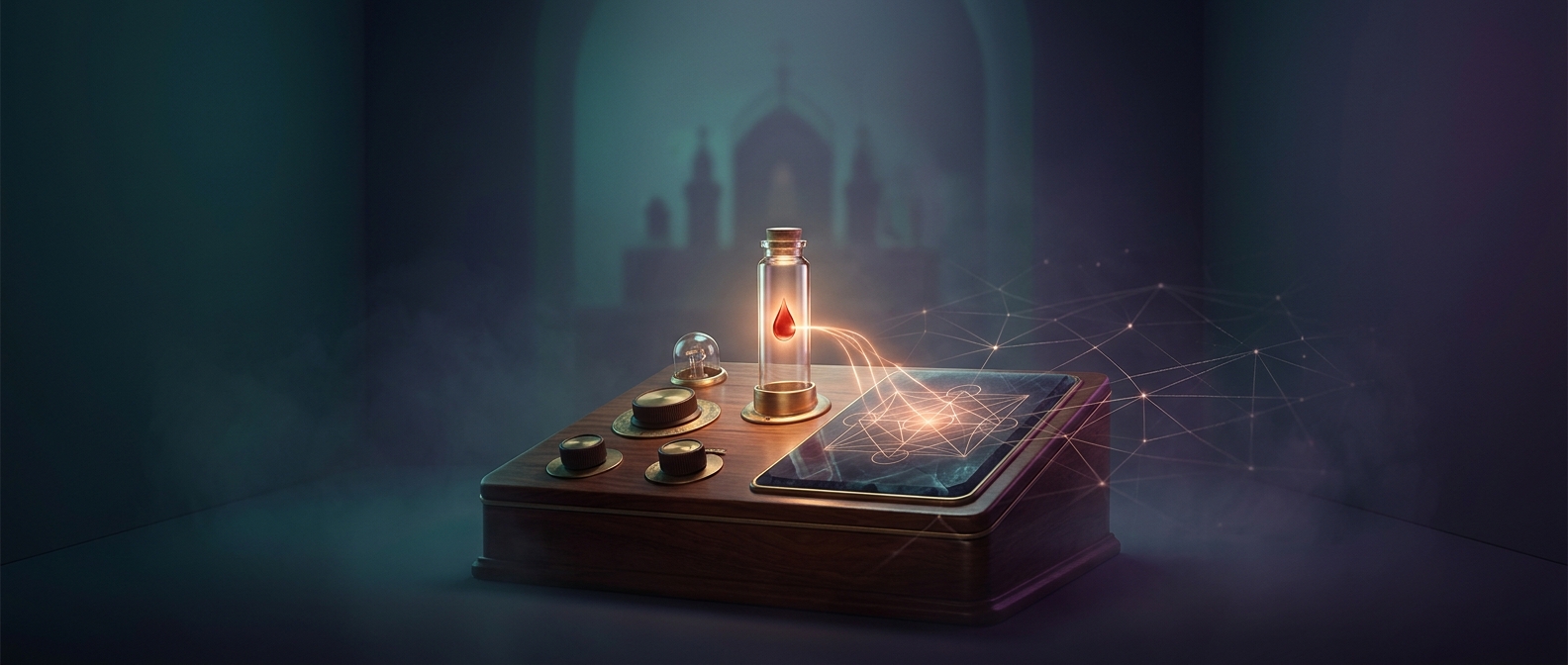
Radionics rests on the idea that a person has a distinctive, subtle pattern that can be detected and influenced at a distance. Practitioners treated a drop of blood—or sometimes another personal sample—as a “witness”: a stand-in they believed remained connected to the person it came from.
That supposed connection was the key to the remote diagnosis. The practitioner did not need the patient beside the machine; the sample was said to identify whose condition was being assessed, even from far away.
What the dials were meant to do
Radionics devices varied, but their controls were used to select or “tune” to particular conditions. The practitioner might handle the sample, adjust dials, and interpret the resulting sensations or settings as signs of imbalance. In treatment, the same process was believed to direct a corrective influence back to the person.
The machine’s role was therefore less like a conventional medical scanner, which detects measurable signals from the body, and more like an instrument within the practitioner’s method: its controls organized a search for the right reading or treatment. Being unplugged fit the claim that the process depended on subtle influence rather than ordinary electrical transmission.
A claim, not a medical mechanism
Radionics practitioners presented this as diagnosis and treatment, but the proposed distant connection has no established physical mechanism in medicine. The sample’s importance makes sense within the system’s own logic: it was not merely a specimen to analyze, but a link believed to let the practitioner act on someone who was nowhere in the room.