How a Magnetic Helmet Could Create a Sense of Presence
The temporal lobes help the brain interpret memory, emotion, and signals about where the body is in space. When activity in these networks is disrupted, a person’s own movements or feelings can seem unfamiliar—as though they belong to someone else. That makes the region a plausible place to investigate experiences such as sensing an unseen presence.
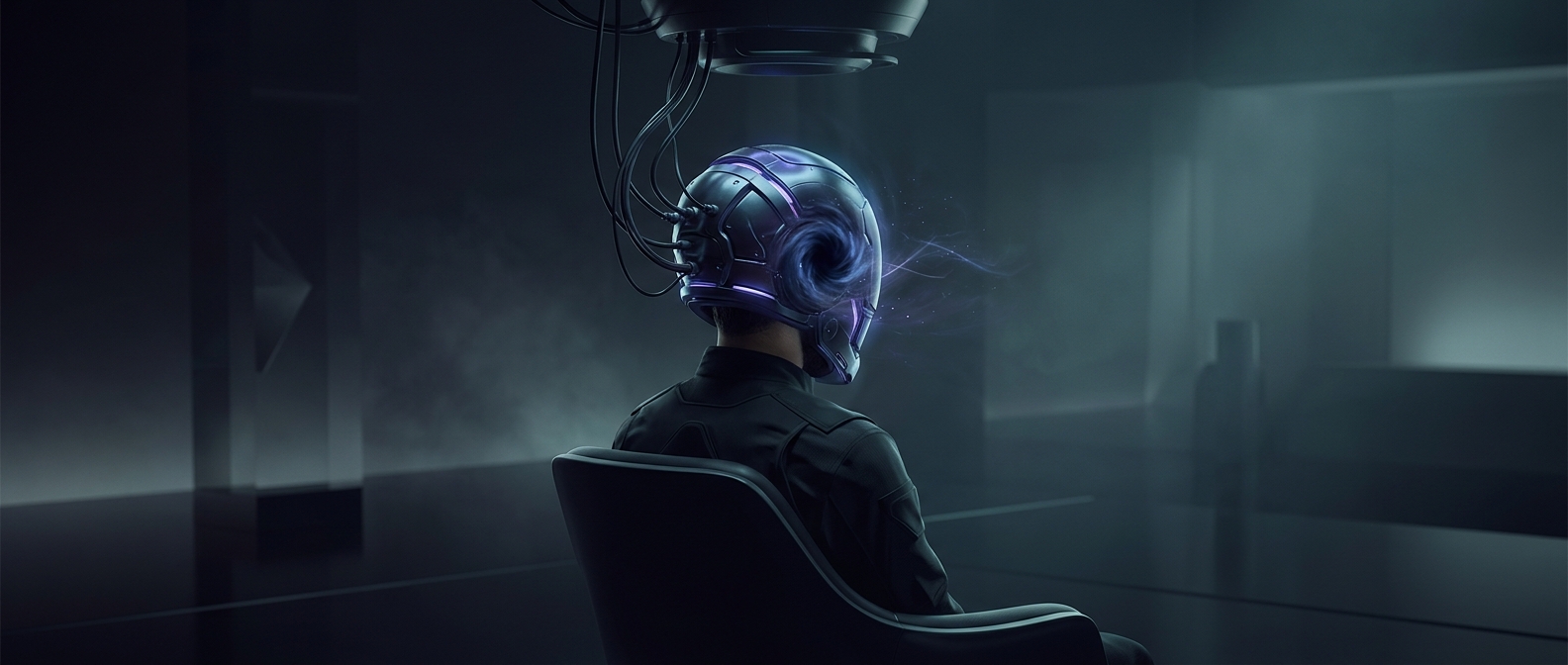
A so-called “God helmet” used coils near the sides of the head to produce weak, changing magnetic fields. The aim was to influence neural activity without surgery. Some wearers reported feeling that another being was nearby. The sensation can feel vivid because the brain normally assembles a coherent sense of “me” from many signals; when those signals are processed unusually, the resulting presence may seem external.
A Reported Experience, Not a Seizure in the Usual Sense
The phrase “micro-seizure” suggests a tiny clinical seizure, but that is not an established description of what the helmet did. The reported effect was a subjective experience during stimulation, not proof that the device triggered seizures. Researchers have also not established that magnetic stimulation reliably produces the sensation in everyone—or that one brain mechanism explains every such experience.
The important connection is more modest: a feeling that seems supernatural can arise from changes in ordinary brain processes involved in self-location and social presence. The experience may feel like someone is in the room, even when its source is the brain’s interpretation of its own signals.