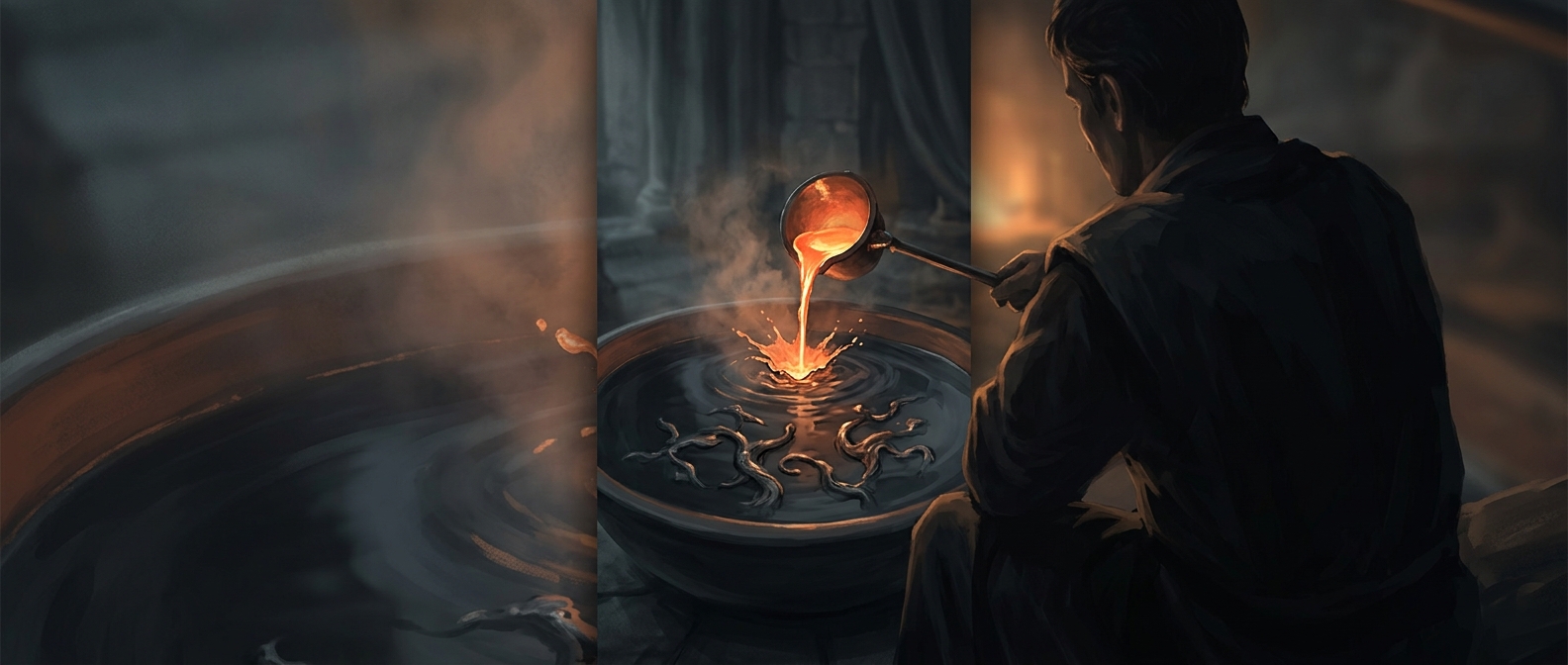
Why a Splash of Lead Becomes a Shape
In plumbomancy, the reading begins with a physical accident of cooling: liquid lead meets much colder water and solidifies quickly. As it hardens, the metal can break into irregular branches, knobs, or sheets. The result depends on how the lead enters the water, how it cools, and how the fragments settle—not on a fixed design stamped into the metal.
A practitioner then treats the uneven form as something to interpret. Like reading patterns in tea leaves, the practice turns an ambiguous shape into a prompt for meaning: one person might see a ring, another a road or a figure. Predictions about marriage or wealth belong to that symbolic reading, not to a demonstrated ability of the metal to reveal the future.
The Ritual Has a Physical Risk
The dramatic transformation can obscure a less symbolic fact: lead is poisonous. Heating it can create hazardous exposure, and pouring molten metal into water can cause violent splashing or bursts of steam as the water heats rapidly. The resulting pieces can also contaminate hands and nearby surfaces.
That contrast is part of what makes the ritual memorable: a fleeting, unpredictable shape is asked to carry a personal message. But the shape records the conditions of cooling; its meaning comes from the human interpretation that follows.