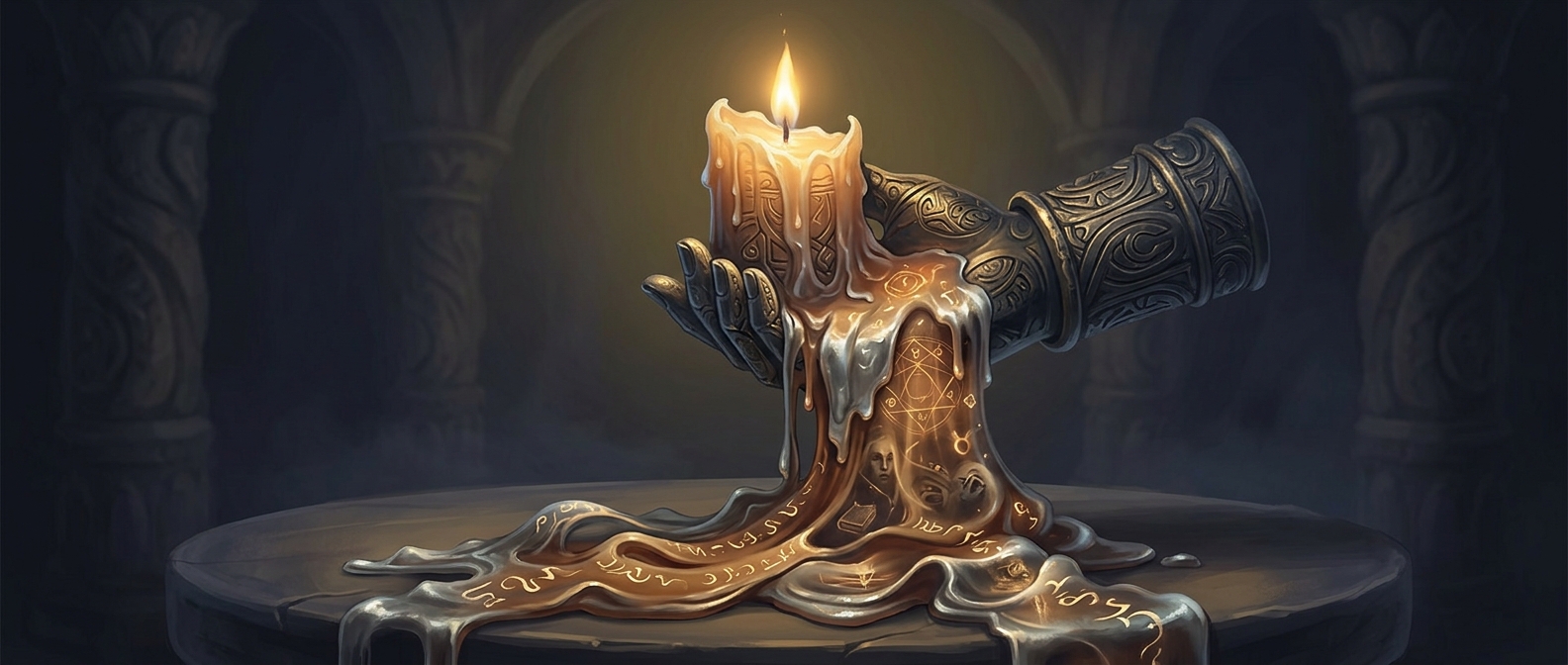
How wax becomes a reading
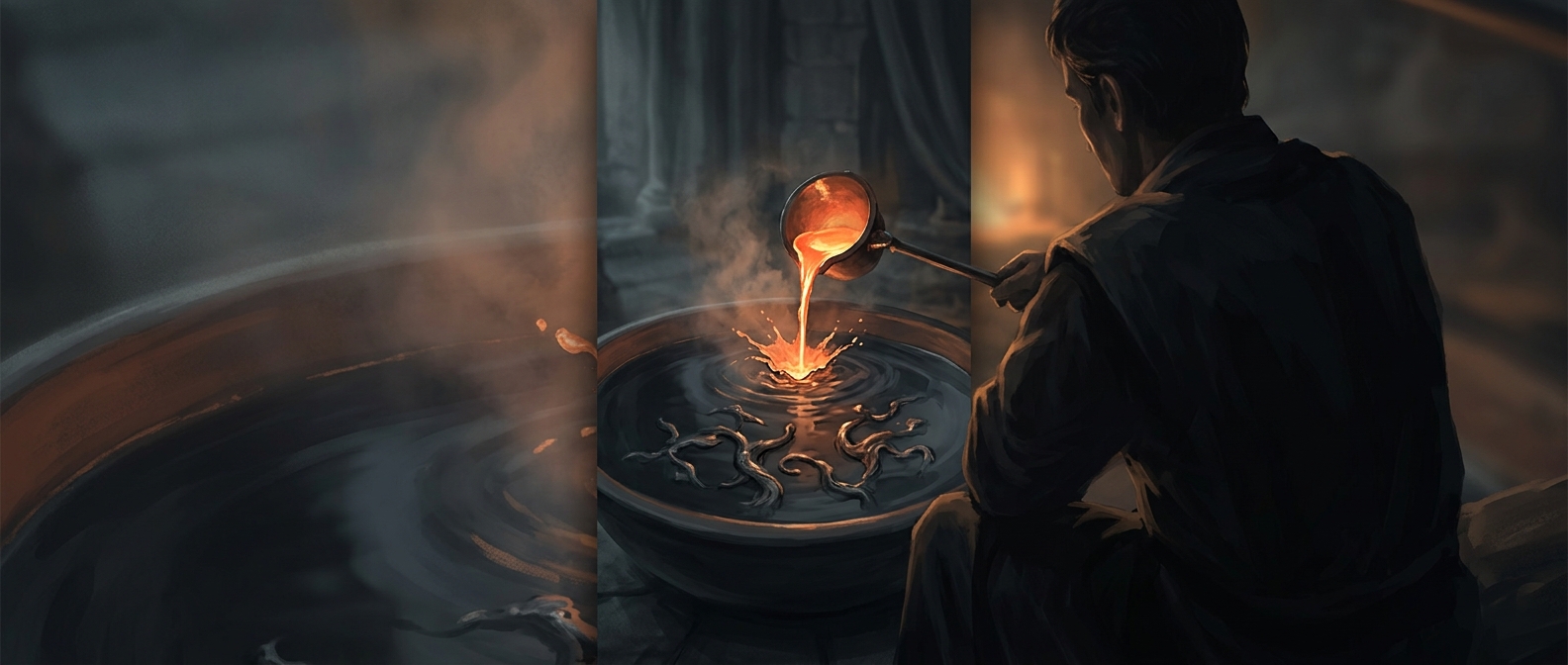
In ceromancy, the reading begins with a small physical transformation: warm wax enters cool water, where it hardens quickly into an irregular shape. The result may have a recognizable edge, hollow, or silhouette, but rarely a single obvious meaning. The reader turns the piece, looks at it from different angles, and considers what its forms resemble.
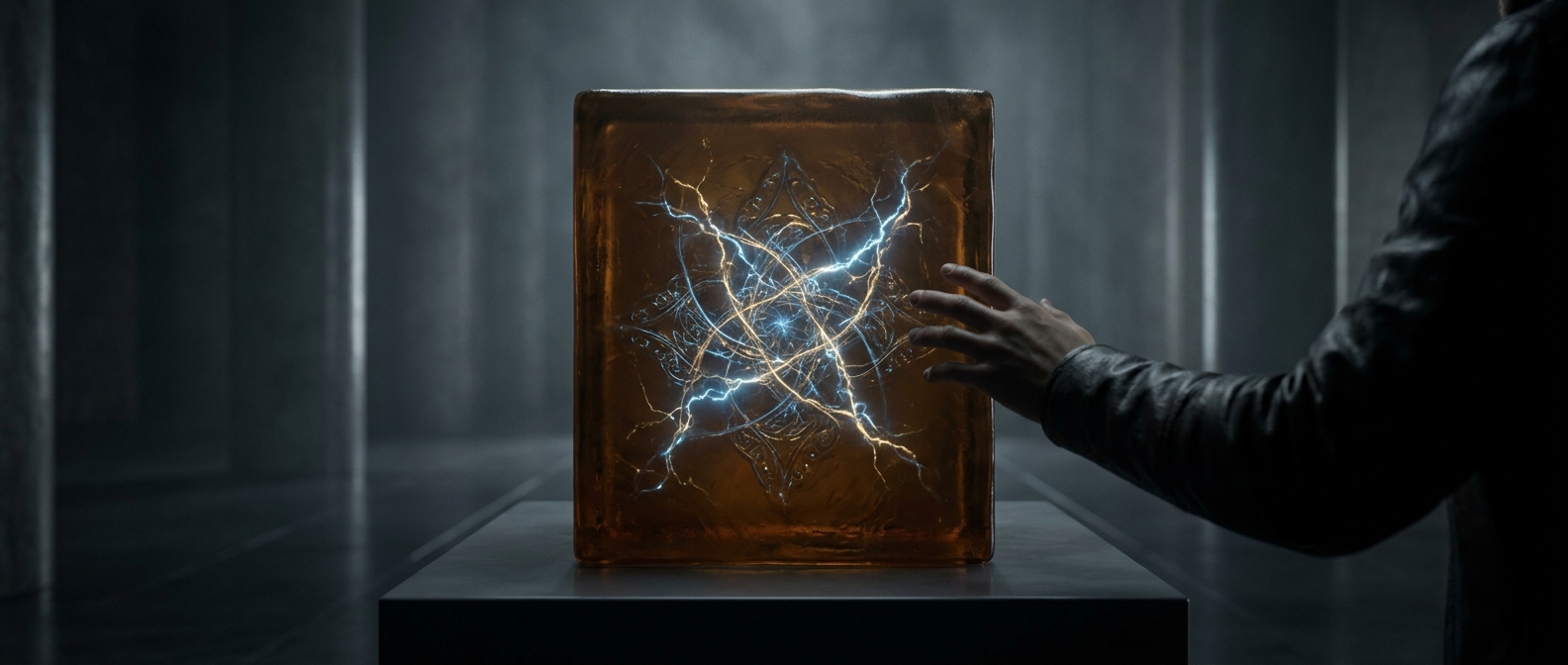
That open-endedness is part of the practice. A shape might suggest a road, a figure, or an obstacle, and the interpretation depends on the question being asked and the symbols the reader associates with it. The wax does not spell out a fixed message; it gives the reading something concrete to work from.
Why the shape can feel revealing
The ritual makes an uncertain question visible. Instead of keeping a worry or hope entirely in the mind, the person can examine an object and talk through the associations it brings up. In that sense, the reading can serve as a prompt for reflection: what stands out, and why might that image matter to the person asking?
Different readers may see different things in the same piece, so ceromancy is best understood as a symbolic practice rather than a reliable way to verify future events. Its distinctive moment is the pause after the wax cools, when an accidental shape becomes a focus for meaning.