How a Planchette Turned Hand Movements Into Writing
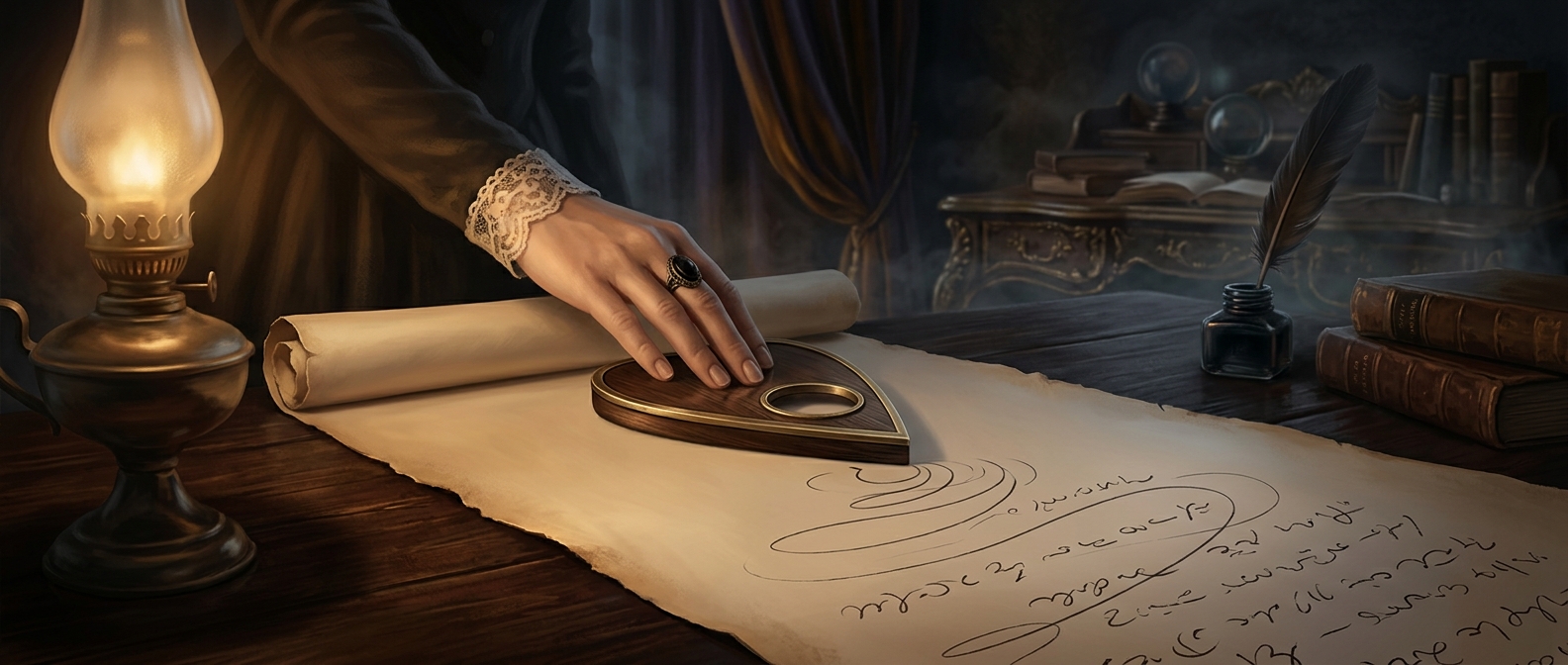
A planchette was a small writing aid: users rested their hands on it while a pencil fixed through the device touched paper. As the planchette moved, the pencil left a continuous line. Unlike ordinary handwriting, the motion was not meant to feel deliberately directed. The writer was expected to enter a trance-like state and let messages emerge without consciously composing them—a practice called automatic writing.
The Device Made an Invisible Process Visible
The planchette gave a physical shape to the idea that words could come from beyond a person’s ordinary awareness. Instead of simply reporting a message, users could watch it take form on the page. Its movement and the marks it produced were part of the experience: an uncertain sensation became a visible, lasting trace that could be read afterward.
That role is different from the familiar board-game planchette, which points to letters on a surface. A writing planchette carried a pencil, so its path itself produced the message. The key detail is how little the device needed to do: it translated a user’s movement into marks while leaving the source of the words open to interpretation. The paper preserved the result even after the trance-like episode had ended.